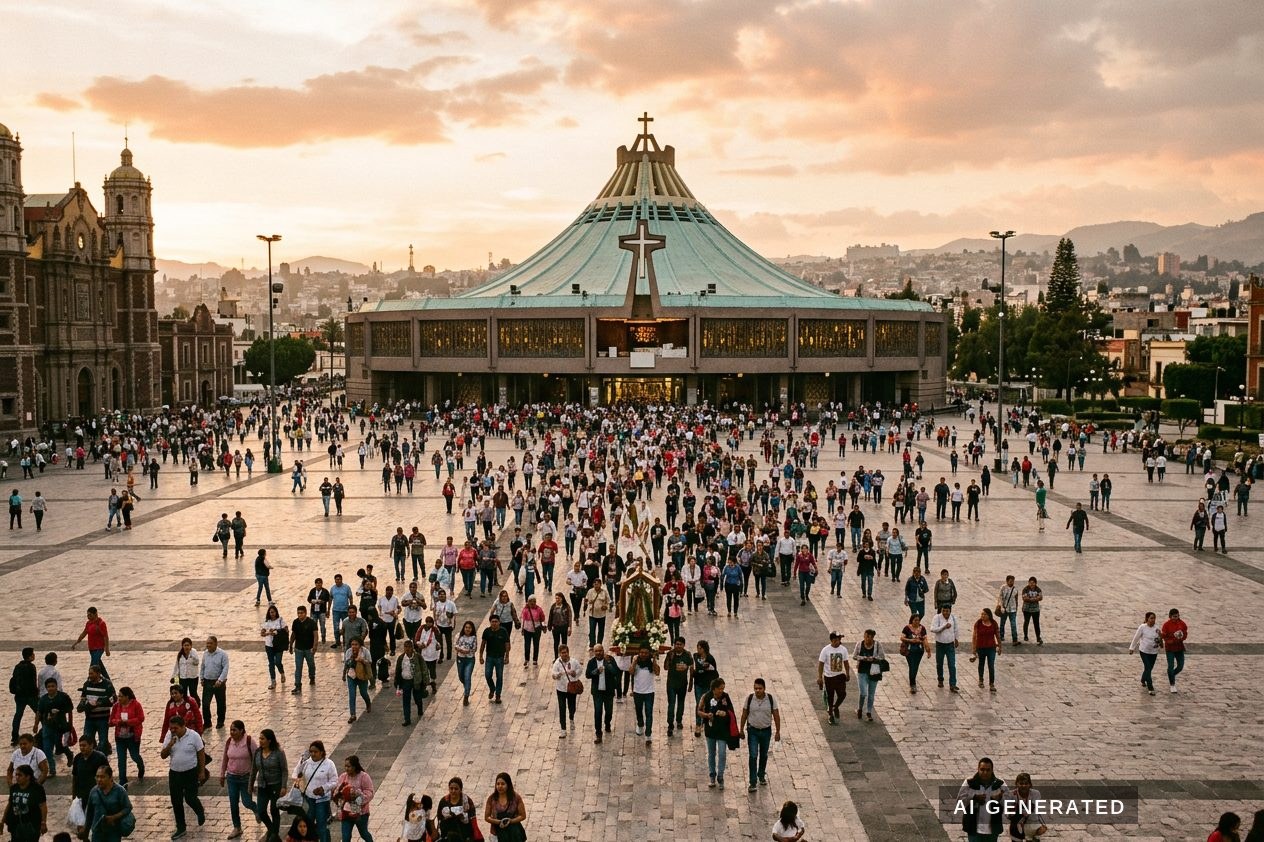
Mexico City, Mexico
Basilica of Our Lady of Guadalupe
The most visited Catholic shrine in the world, built around a cloak with an image of Mary that has been shown since 1531.
Biblical significance
Juan Diego, an indigenous convert, reported apparitions on Tepeyac hill in December 1531; the image is said to have appeared on his tilma of cactus fibre when he opened it to release the roses. Twenty million visit each year, peaking around 12 December. A moving walkway runs beneath the tilma to keep the queue flowing. The image became the central symbol of Mexican Catholic identity and of the independence movement.
Scripture
Loading the passage…
Open in YouVersion →Loading the passage…
Open in YouVersion →Excerpts from the World English Bible. Full text opens in the YouVersion Bible app.
Best time to go
12 December for the feast, if you can handle the millions.
Visitor notes
Free. The old basilica beside the new one is visibly sinking into the lakebed.
Coordinates
19.4847, -99.1177
On the map
Open the world atlasFind it on Google Maps
Basilica of Our Lady of Guadalupe on the map
Open directionsPlan your pilgrimage
Getting to Basilica of Our Lady of Guadalupe
Everything you need to turn this holy place into a journey. We may earn a commission from these partner links, at no extra cost to you.
Share your experience
Have you been here?
Rate this place and share your experience with other Christrails travellers.
Rate This Place
Be the first to rate this place
Visitor Experiences
No visitor experiences yet. Be the first to share yours.
Share this page
Nearby in this category
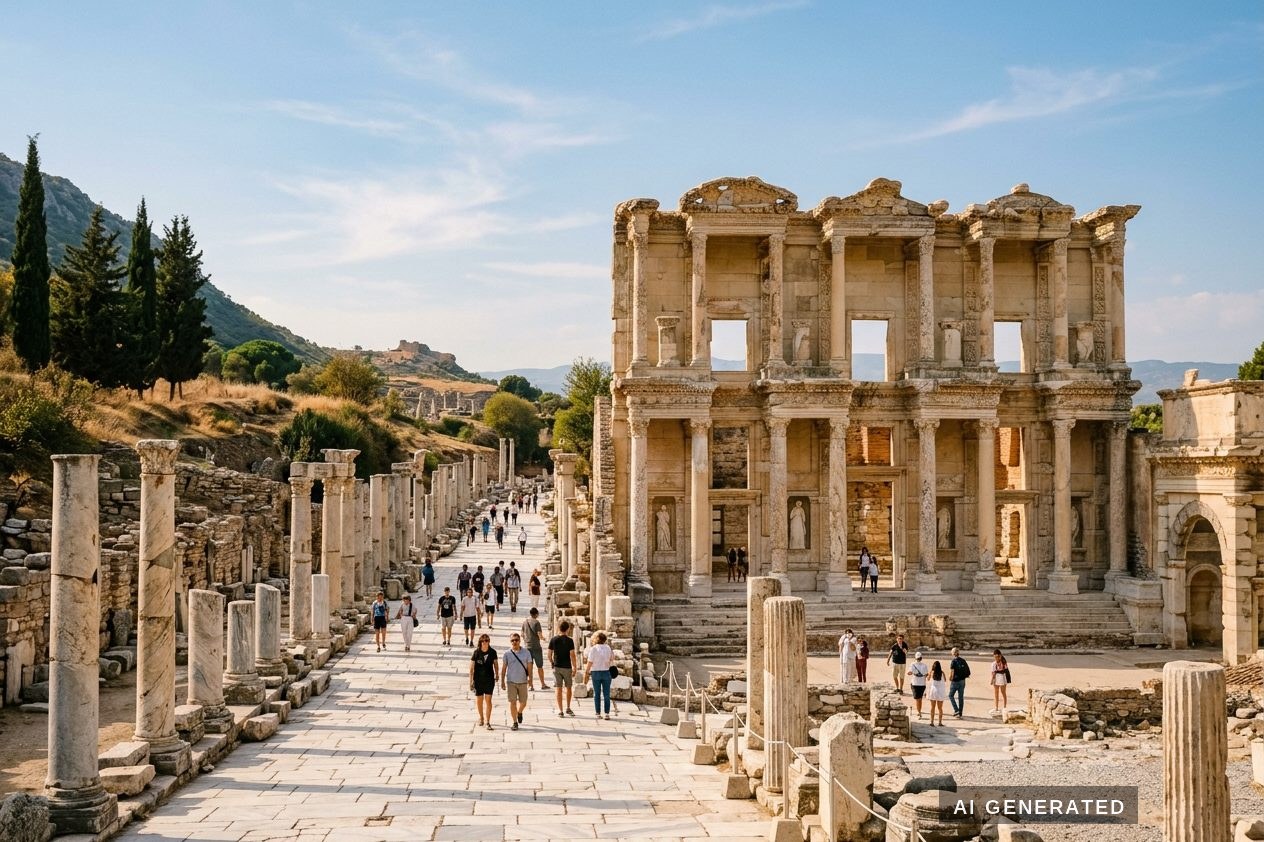 5/5 Significance
Selçuk, Turkey
Ephesus
Paul lived here for three years, and his preaching once caused a riot. The ruins are some of the best kept in the world.
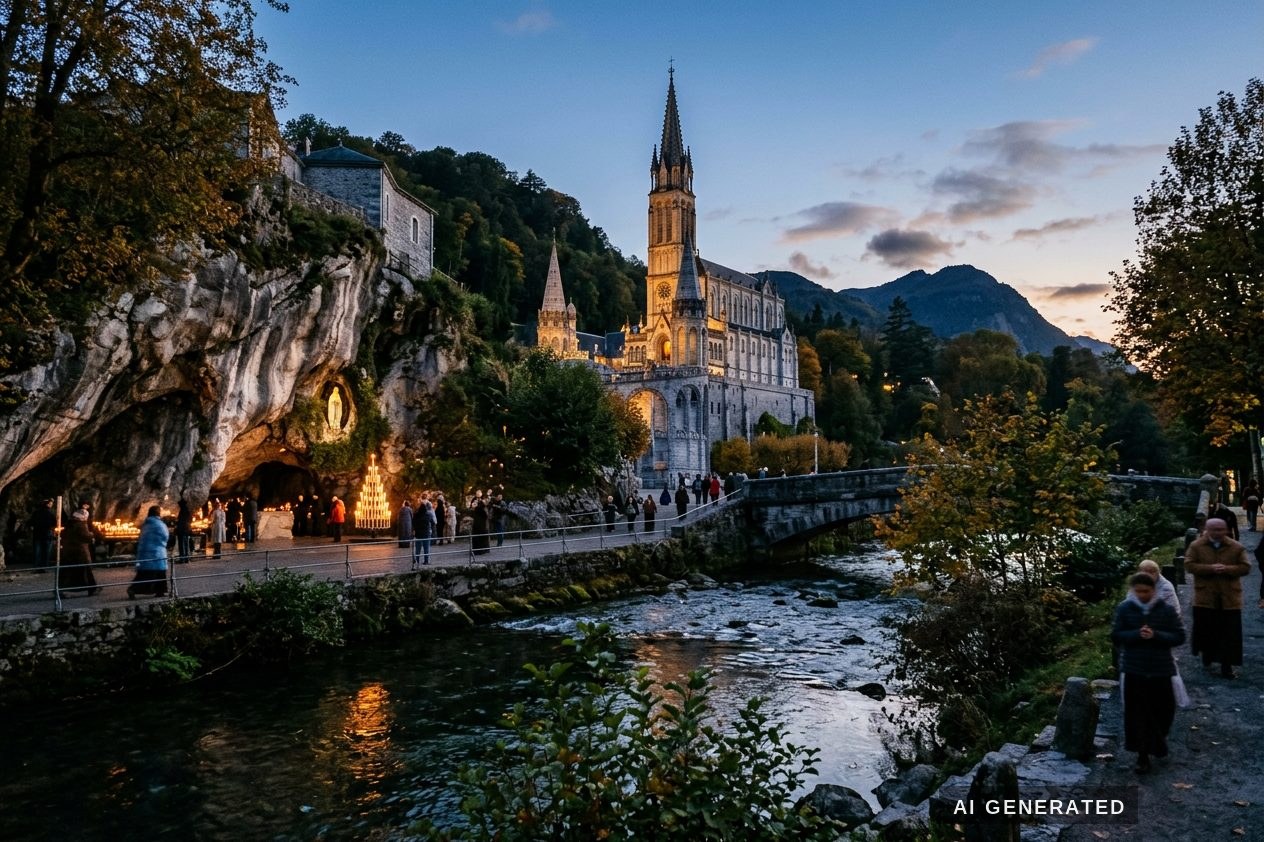 2/5 Significance
Lourdes, France
Sanctuary of Lourdes
A cave in the French mountains where a 14-year-old girl said Mary appeared to her in 1858. Six million people visit every year.
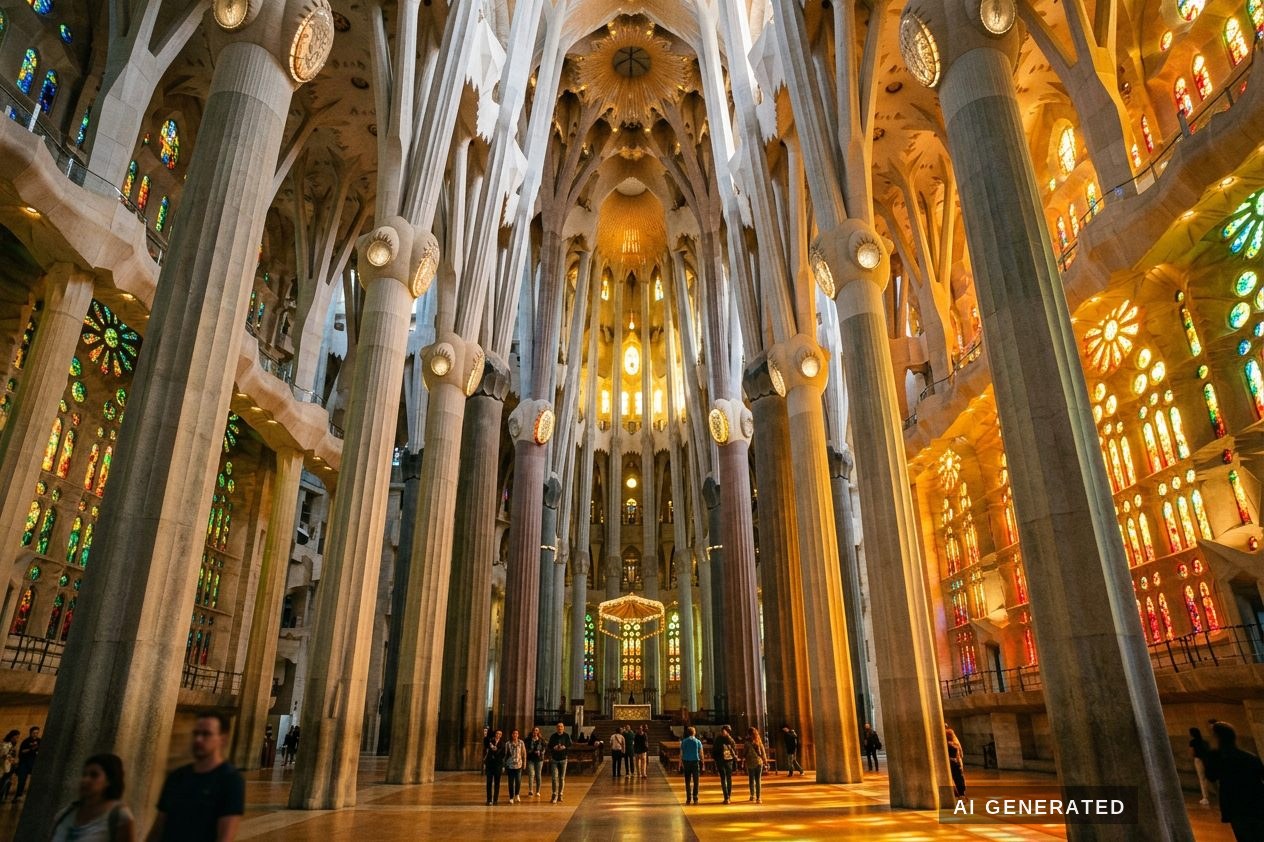 2/5 Significance
Barcelona, Spain
Sagrada Família
Gaudí's unfinished church in Barcelona. The whole Gospel story is carved into the walls, and the pillars look like trees.