Selçuk, Turkey
Ephesus
Paul lived here for three years, and his preaching once caused a riot. The ruins are some of the best kept in the world.
Biblical significance
Ephesus is where the New Testament and ancient ruins come together best. Paul lived here for about three years, Acts tells of the silversmiths' riot in its big theatre, one of the seven letters in Revelation is written to its church, and a famous church council met here in 431.
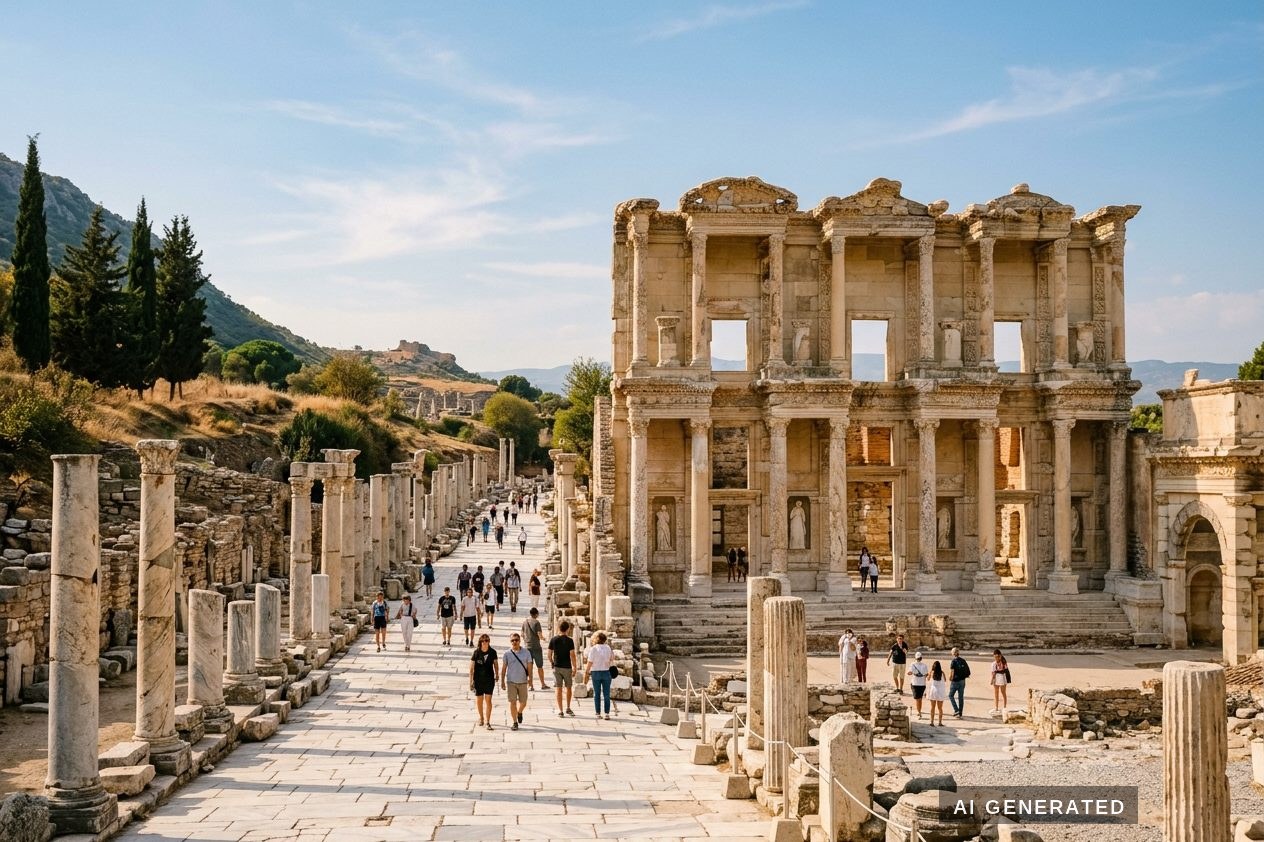
It is also one of the best-preserved ancient cities anywhere: marble streets, the beautiful front of the library, houses with wall paintings still on them, and a theatre with room for more than 20,000 people.
The marble streets, the Library of Celsus and the 25,000-seat Great Theatre where the silversmiths shouted for Artemis for two hours are all still there. Ephesus received one of Paul's major letters and one of the seven letters of Revelation. Tradition holds that John came here with Mary; the ruined Basilica of St John stands over his traditional grave on Ayasuluk Hill, and the House of the Virgin Mary sits in the hills above.
Scripture
Loading the passage…
Open in YouVersion →Loading the passage…
Open in YouVersion →Loading the passage…
Open in YouVersion →Excerpts from the World English Bible. Full text opens in the YouVersion Bible app.
History
The story of Ephesus
A great port city
Ephesus was the largest city of Roman Asia, with a population estimates put in the low hundreds of thousands, built around the Temple of Artemis — one of the seven wonders, of which only a single re-erected column now stands.
Paul's ministry
Acts 19 describes Paul teaching in the hall of Tyrannus and the riot led by Demetrius, whose trade in silver Artemis shrines was threatened. The great theatre where the crowd gathered is still there and still usable.
The Johannine tradition
Early church writers connect the apostle John and, in some traditions, Mary with Ephesus. John's tomb at Selçuk is an ancient tradition; the identification of the Meryem Ana house as Mary's home rests on nineteenth-century visions and has never been claimed as historically proven, though popes have visited it.
Council and decline
The Third Ecumenical Council met here in 431. The harbour then silted up over the following centuries, the coast retreated some 5 km, and the city was gradually abandoned — which is why so much of it survives.
Excavation
Austrian archaeologists have worked the site since 1895; the Library of Celsus façade was re-erected in the 1970s and the Terrace Houses were opened under a protective roof in 2006.
On the ground
What you can see today
The Library of Celsus
A two-storey marble façade of 117 AD, the emblem of the site, at the foot of Curetes Street.
The Great Theatre
The setting of the Acts 19 riot, cut into Mount Pion with a view down the marble Harbour Street.
The Terrace Houses
Separately ticketed and worth it: wealthy Roman homes with mosaic floors and wall paintings, under a modern shelter with walkways.
Curetes Street and the public buildings
The Temple of Hadrian, the latrines, the Odeon and the Prytaneion, all along one downhill walk.
Nearby at Selçuk
The Basilica of St John over the traditional tomb, the Ephesus Archaeological Museum, the lone column of the Artemision, and the Isa Bey Mosque.
Meryem Ana Evi
The House of the Virgin Mary, a small stone chapel in pine woods on Bülbül Dağı, 7 km uphill from the site.
The visit
What to expect when you arrive
- Time needed
- 3–4 hours for the site; a full day with Selçuk and Meryem Ana
- Walk
- About 3 km downhill from the Upper Gate to the Lower Gate
- Shade
- Almost none — marble reflects the heat
- Heat
- Summer regularly above 35 °C; visit at opening or late afternoon
- Crowds
- Cruise groups from Kuşadası arrive mid-morning and thin after 15:00
- Accessibility
- Main street is paved but sloping and uneven; partial wheelchair access
Practicalities
Step by step: how to get there
- 1
Nearest airport
İzmir Adnan Menderes, about an hour north, with direct trains and buses towards Selçuk.
- 2
By train or bus to Selçuk
Selçuk is the gateway town, 3 km from the ruins, with regular regional trains from İzmir and dolmuş minibuses from Kuşadası.
- 3
From Selçuk to the gates
Taxi, dolmuş or a hot 40-minute walk. Ask your taxi to drop you at the Upper (South) Gate so the whole site is downhill, and arrange a pickup at the Lower Gate.
- 4
From cruise ships
Kuşadası port is about 20 km away; ship excursions and local taxis both do the run in half an hour.
Checklist
Before you go
- Separate tickets for the main site, the Terrace Houses and the Basilica of St John; the Museum Pass Turkey covers them if you are visiting several sites.
- Opening hours are longer in summer — last entry is well before closing.
- Start at the Upper Gate and walk down; the reverse is a punishing climb.
- Hat, sunglasses, high-factor sunscreen and at least a litre of water per person.
- Sturdy shoes — the marble is slippery and the paving is broken in places.
- Toilets and cafés at both gates, almost nothing in between.
- Modest dress is needed for Meryem Ana and the Isa Bey Mosque.
Etiquette
Visiting respectfully
- Meryem Ana is a place of prayer for Christians and Muslims alike — quiet voices, no photography inside the chapel.
- Do not climb on ruins, walls or column drums; wardens intervene.
- Stay on the marked walkways in the Terrace Houses; the mosaics are being conserved.
- Removing stones, tesserae or pottery fragments from the site is a criminal offence in Turkey.
Best time to go
April-May or September-October; summer is fierce and packed.
Visitor notes
Enter at the upper gate and walk downhill. The Terrace Houses are a worthwhile extra ticket.
Coordinates
37.9395, 27.3417
On the map
Open the world atlasKeep going
Continue the trail
Find it on Google Maps
Ephesus on the map
Open directionsPlan your pilgrimage
Getting to Ephesus
Everything you need to turn this holy place into a journey. We may earn a commission from these partner links, at no extra cost to you.
Share your experience
Have you been here?
Rate this place and share your experience with other Christrails travellers.
Rate This Place
Be the first to rate this place
Visitor Experiences
No visitor experiences yet. Be the first to share yours.
Share this page
Nearby in this category
 5/5 Significance
Jerusalem, Israel
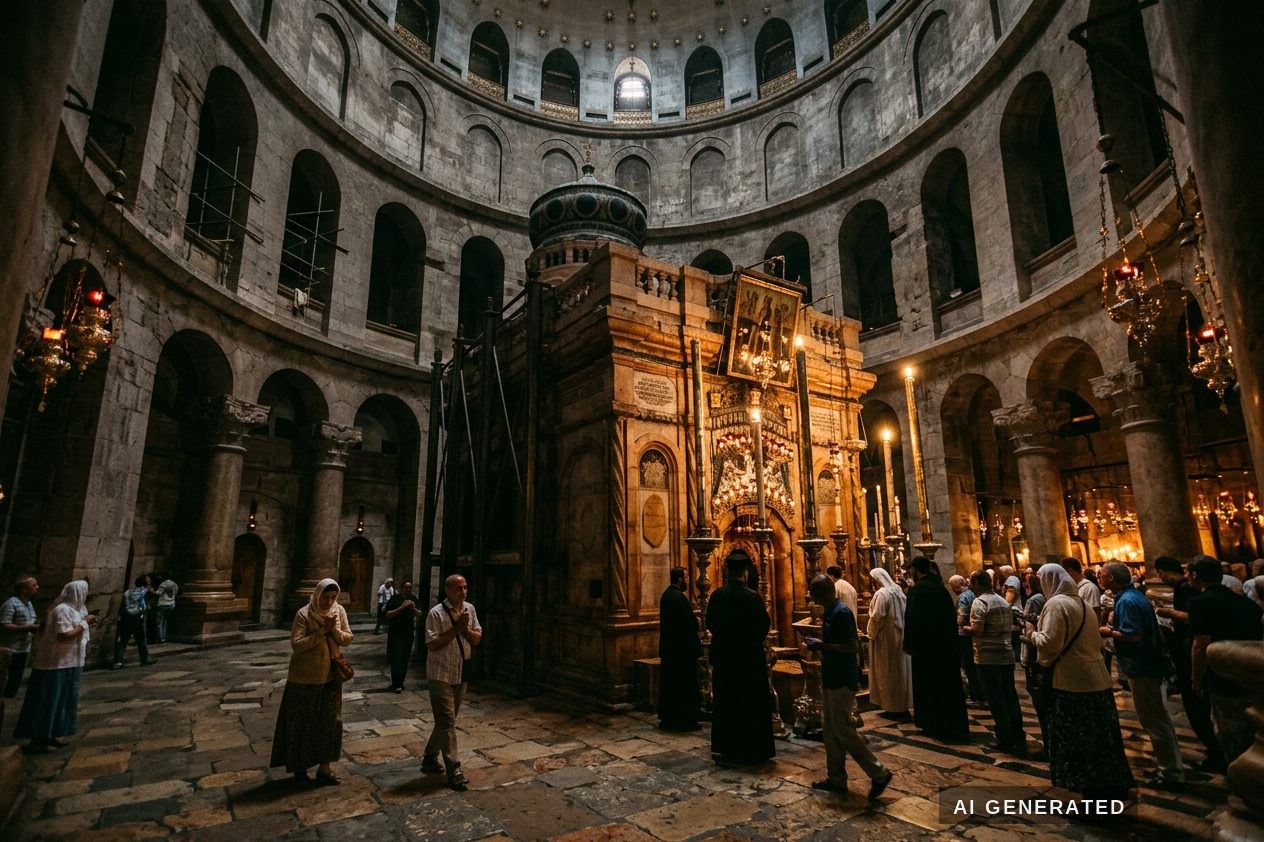
Church of the Holy Sepulchre
The church built where Christians believe Jesus was crucified and buried, and where he rose again. Six different churches share the same building.
 4/5 Significance
Vatican City, Vatican City
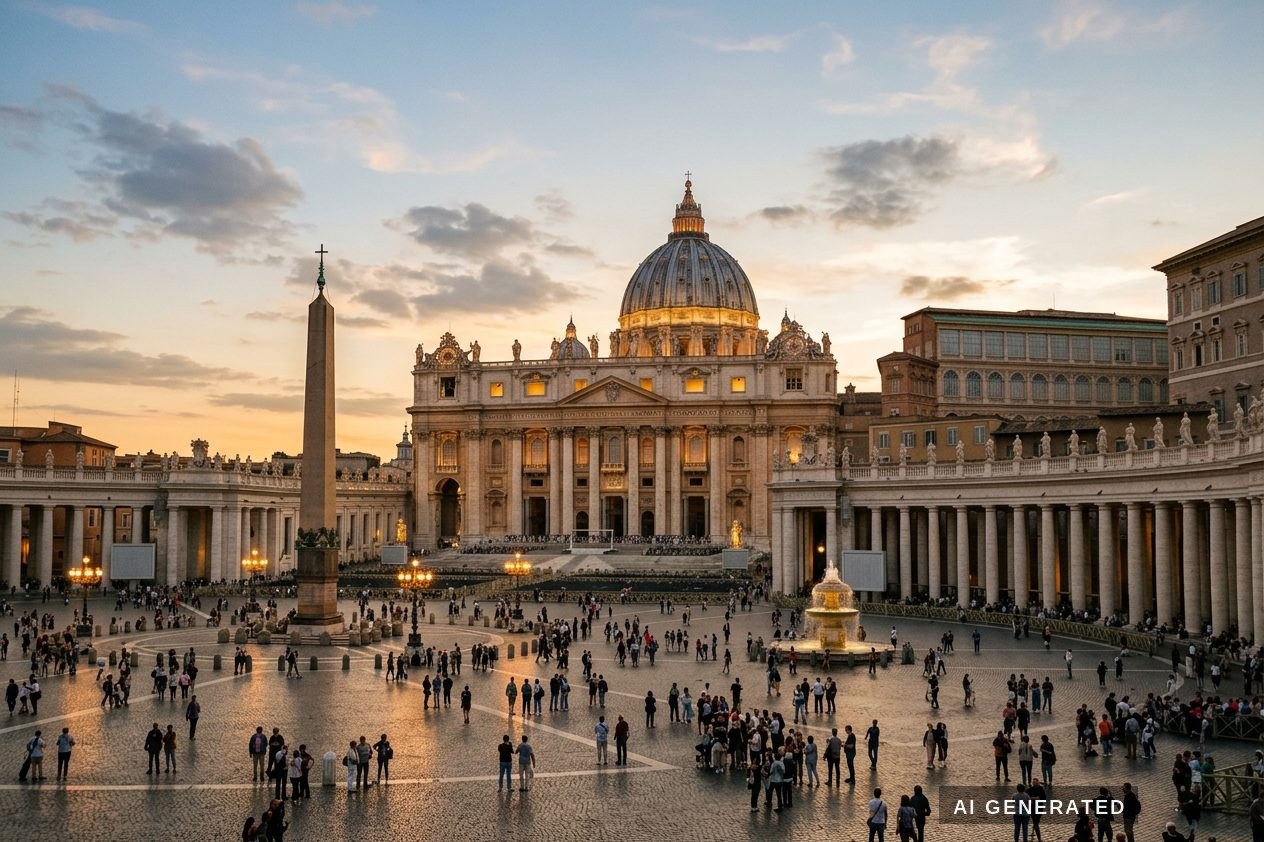
St Peter's Basilica
The biggest church ever built, with Michelangelo's dome over the tomb of Peter the fisherman.
 5/5 Significance
Bethlehem, Palestine
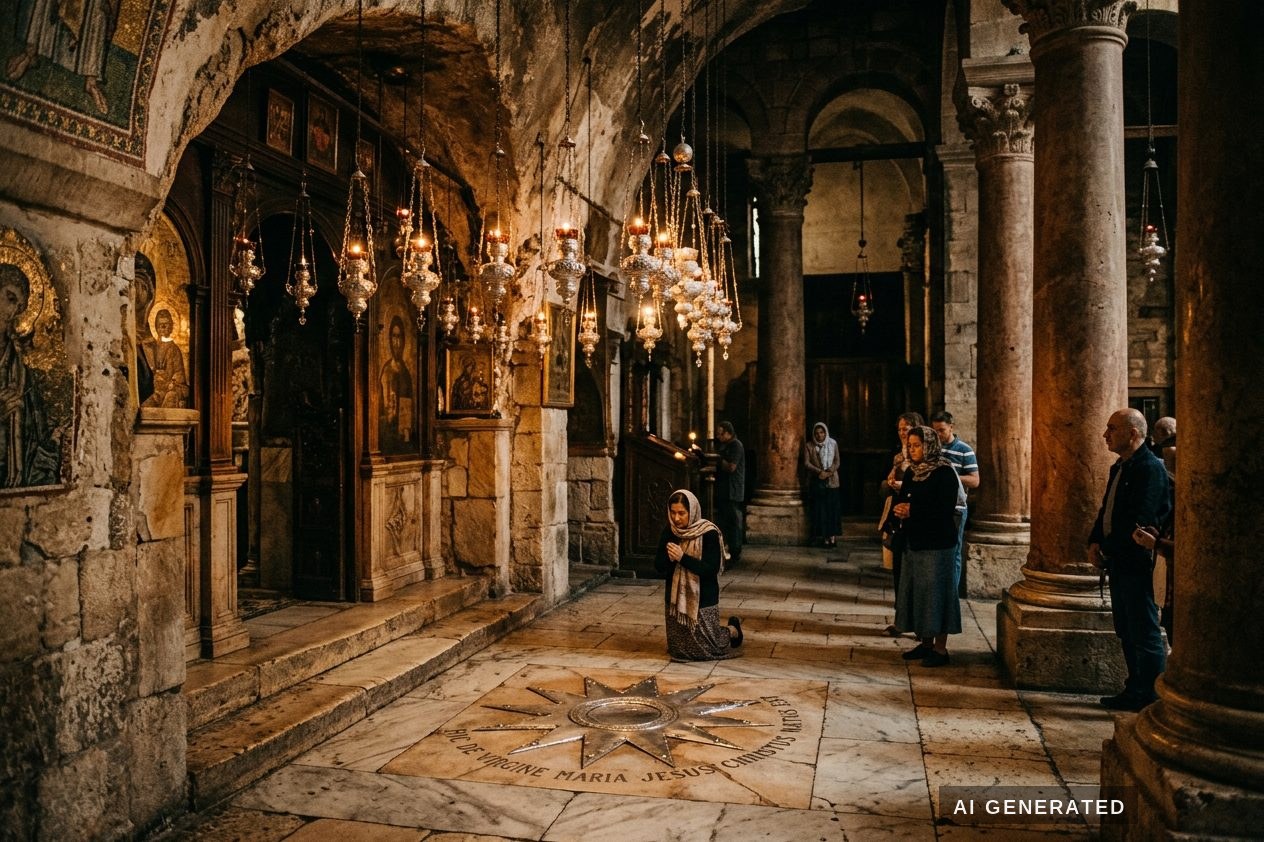
Church of the Nativity
The oldest church still used every day. It stands over the cave where Jesus is believed to have been born, marked with a silver star.