Bethlehem, Palestine
Church of the Nativity
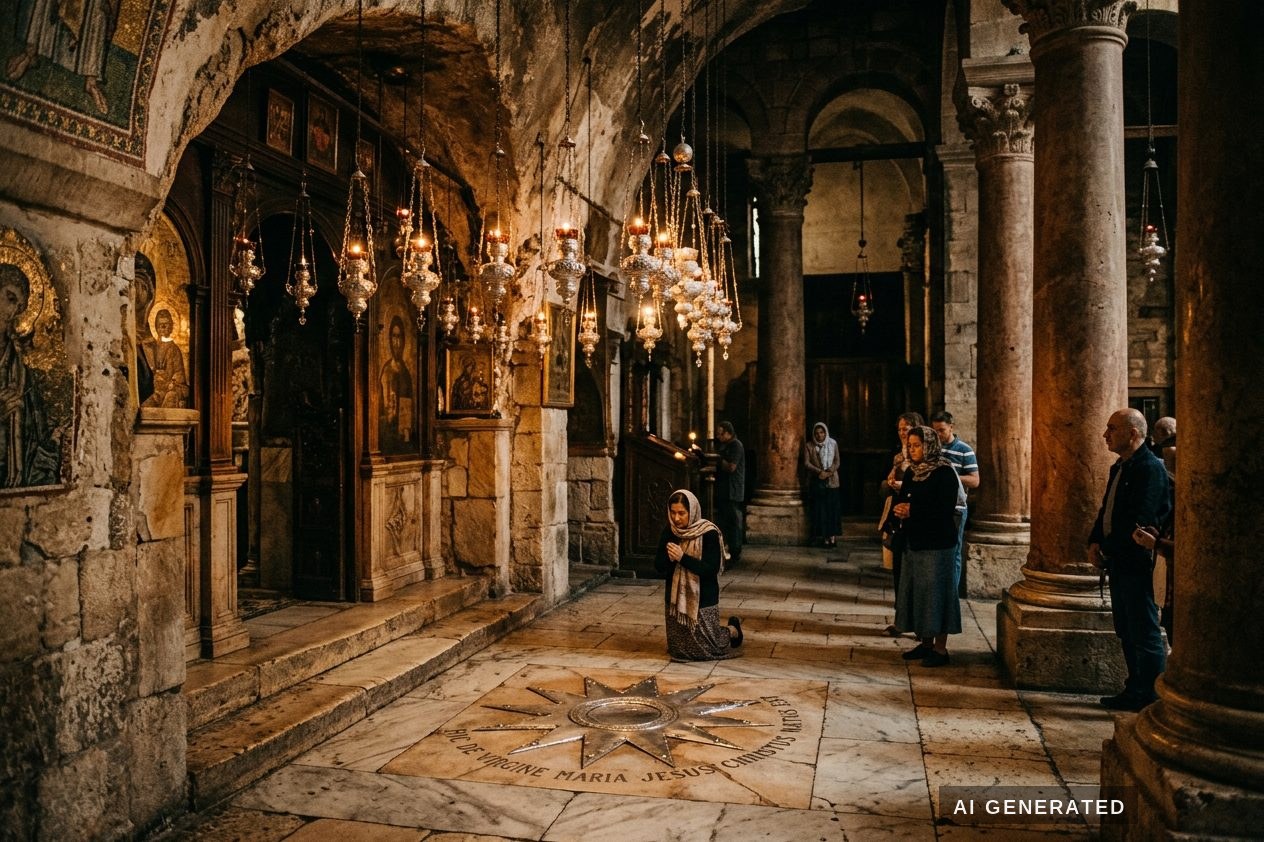
The oldest church still used every day. It stands over the cave where Jesus is believed to have been born, marked with a silver star.
Biblical significance
This church in Bethlehem is built over a cave that Christians were already calling the birthplace of Jesus by about 155 AD. That is very early — people were still alive who had heard it from the generation before. It is one of the oldest Christian places that has been honoured without a break.
It is also the oldest church in the Holy Land that is still used every day. The building put up by Emperor Justinian in the 500s survived wars, invasions and centuries of change almost intact, and UNESCO made it a World Heritage Site in 2012.
Justinian's sixth-century basilica replaced Constantine's fourth-century one and has never closed since. You enter through the Door of Humility, a metre-high opening cut down to stop looters riding horses inside. Beneath the chancel, the Grotto of the Nativity holds the silver star inscribed Hic de Virgine Maria Jesus Christus natus est. The mosaic floor of the original Constantinian church survives under trapdoors in the nave.
Scripture
Loading the passage…
Open in YouVersion →Loading the passage…
Open in YouVersion →Loading the passage…
Open in YouVersion →Excerpts from the World English Bible. Full text opens in the YouVersion Bible app.
History
The story of Church of the Nativity
A cave remembered
Second-century writers record a cave at Bethlehem venerated as Jesus' birthplace. The Gospels mention a manger but not a cave; the cave tradition is early and consistent, though it is tradition rather than excavated proof.
Constantine's church, 339
Helena and Constantine built an octagonal shrine directly over the cave with a basilica in front of it. Sections of that first church's mosaic floor survive under wooden trapdoors in the nave.
Justinian's rebuilding, 6th century
After damage in the Samaritan revolt, Justinian replaced the church with the larger five-aisled basilica that still stands. Its low, awkward Door of Humility was narrowed in the Ottoman period, partly to stop carts and animals being driven inside.
Spared in 614
A persistent tradition holds that the Persian army spared the church because a mosaic on its façade showed the Magi in Persian dress. The story is old and plausible, but not independently documented.
Restoration, 2013–2020
A major campaign stabilised the roof and cleaned the twelfth-century wall mosaics and painted columns, revealing gold-ground angels that had been invisible under soot for generations. The site left UNESCO's danger list in 2019.
On the ground
What you can see today
The Door of Humility
A metre-and-a-bit-high entrance that forces everyone to stoop into the basilica — the most photographed threshold in Bethlehem.
Justinian's nave
Four rows of pink limestone columns, many still carrying faint medieval paintings of saints, under an open timber roof.
Constantinian mosaic floor
Geometric fourth-century mosaic visible through hatches set into the present floor.
The Grotto of the Nativity
Reached by stairs either side of the altar. A fourteen-pointed silver star set in the marble marks the traditional birthplace; the Altar of the Manger stands opposite.
St Catherine's Church and St Jerome's caves
The adjoining Franciscan church, from which Midnight Mass is broadcast at Christmas, connects to caves where Jerome is said to have translated much of the Latin Vulgate.
Manger Square and the Milk Grotto
The square outside, and a five-minute walk away the chalk-white Milk Grotto chapel, a quiet counterweight to the basilica crowds.
The visit
What to expect when you arrive
- Time needed
- 1–2 hours including the grotto queue and St Catherine's
- Grotto queue
- Typically 30–90 minutes midday; short first thing
- Crowds
- Tour-group peaks late morning; Advent and Christmas are exceptionally busy
- Terrain
- Flat nave, steep narrow stairs down to the grotto
- Accessibility
- Basilica accessible; the grotto is stairs only
- Border crossing
- Bethlehem is in the West Bank — bring your passport
Practicalities
Step by step: how to get there
- 1
From Jerusalem by bus
Arab buses from the station near Damascus Gate run to Bethlehem in roughly 45 minutes, dropping near the checkpoint or in town; walk or take a short taxi to Manger Square.
- 2
By taxi or organised tour
Israeli taxis usually cannot cross; most visitors change vehicles at the checkpoint or book a Bethlehem-based driver or half-day tour that handles both sides.
- 3
Documents
Carry your passport for the return crossing into Jerusalem. Foreign visitors normally pass without difficulty; allow extra time in the afternoon.
- 4
On foot in town
Manger Square is compact — the basilica, St Catherine's, the Milk Grotto and the old market are all within about ten minutes' walk.
Checklist
Before you go
- Entry to the basilica is free; some adjoining museums and the Milk Grotto accept donations.
- Hours shorten on major Orthodox, Catholic and Armenian feast days, when the grotto may close for liturgy.
- Modest dress — shoulders and knees covered.
- Come before 09:00 if the grotto matters to you.
- Shekels are standard, cards work in larger shops; carry small notes for taxis.
- Olive-wood workshops around the square are a genuine local craft, not only souvenirs.
- Toilets and cafés are on Manger Square, not inside the church.
Etiquette
Visiting respectfully
- The grotto is shared by Greek Orthodox, Armenian and Catholic clergy under a strict schedule; follow the priest on duty without argument.
- Photography without flash is allowed, but you will have seconds at the star — decide in advance whether you want a photo or a moment.
- Silence in the grotto; conversation carries badly in the stone chamber.
- Do not touch the mosaics or lean on painted columns.
- Bethlehem is a living Palestinian city — ask before photographing people.
Best time to go
November to March; avoid Christmas week unless the crowd is the point.
Visitor notes
Free. Bethlehem is in the West Bank — bring your passport for the checkpoint. Combine with the Milk Grotto and Shepherds' Field.
Coordinates
31.7042, 35.2075
On the map
Open the world atlasKeep going
Continue the trail
- BethlehemBethlehem, PalestineThe town itself, beyond Manger Square.
- Church of the Holy SepulchreJerusalem, IsraelThe crucifixion and resurrection counterpart, an hour north.
- JerusalemJerusalem, IsraelBase most visitors travel from.
- Cave of the PatriarchsHebron, PalestineHebron, further south on the same road.
Find it on Google Maps
Church of the Nativity on the map
Open directionsPlan your pilgrimage
Getting to Church of the Nativity
Everything you need to turn this holy place into a journey. We may earn a commission from these partner links, at no extra cost to you.
Share your experience
Have you been here?
Rate this place and share your experience with other Christrails travellers.
Rate This Place
Be the first to rate this place
Visitor Experiences
No visitor experiences yet. Be the first to share yours.
Share this page
Nearby in this category
 5/5 Significance
Jerusalem, Israel
Church of the Holy Sepulchre
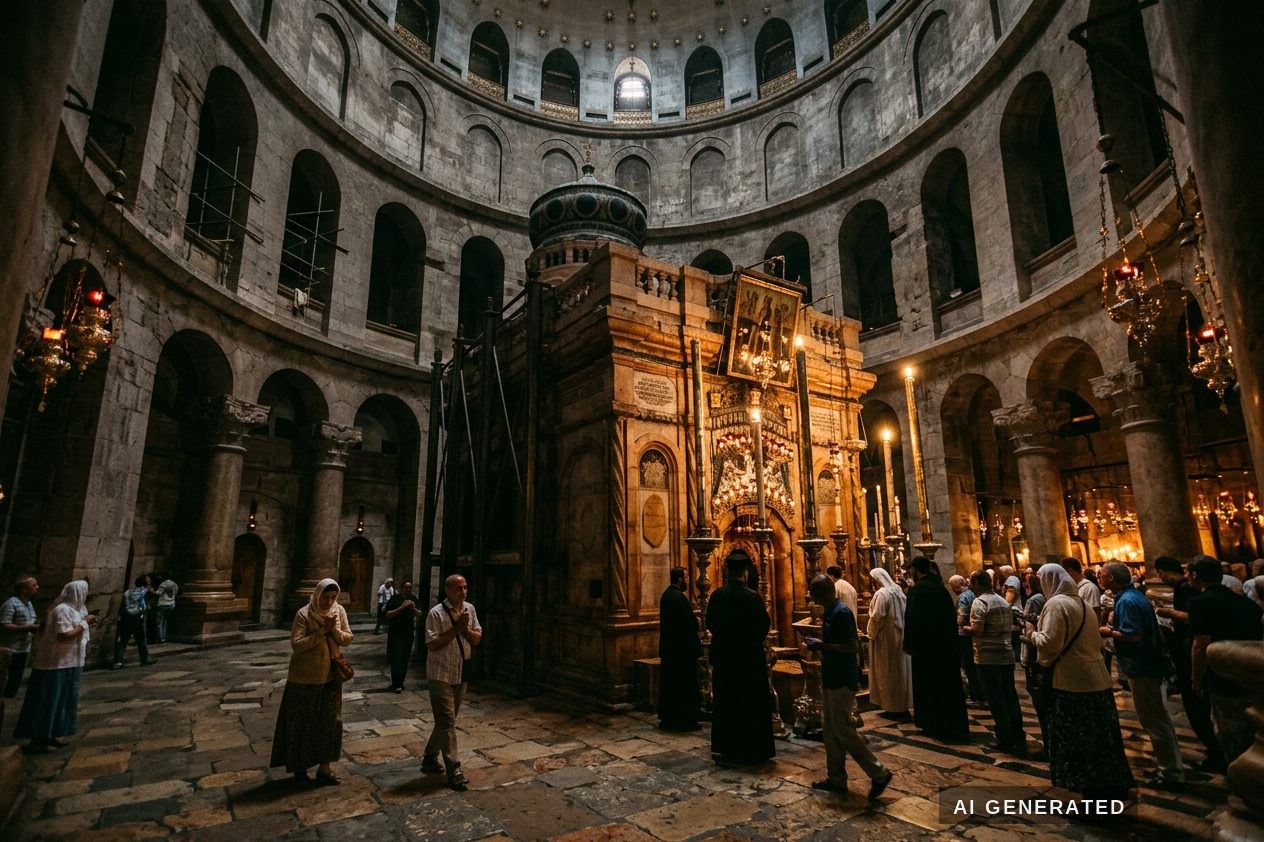
The church built where Christians believe Jesus was crucified and buried, and where he rose again. Six different churches share the same building.
 5/5 Significance
Tiberias, Israel
Sea of Galilee
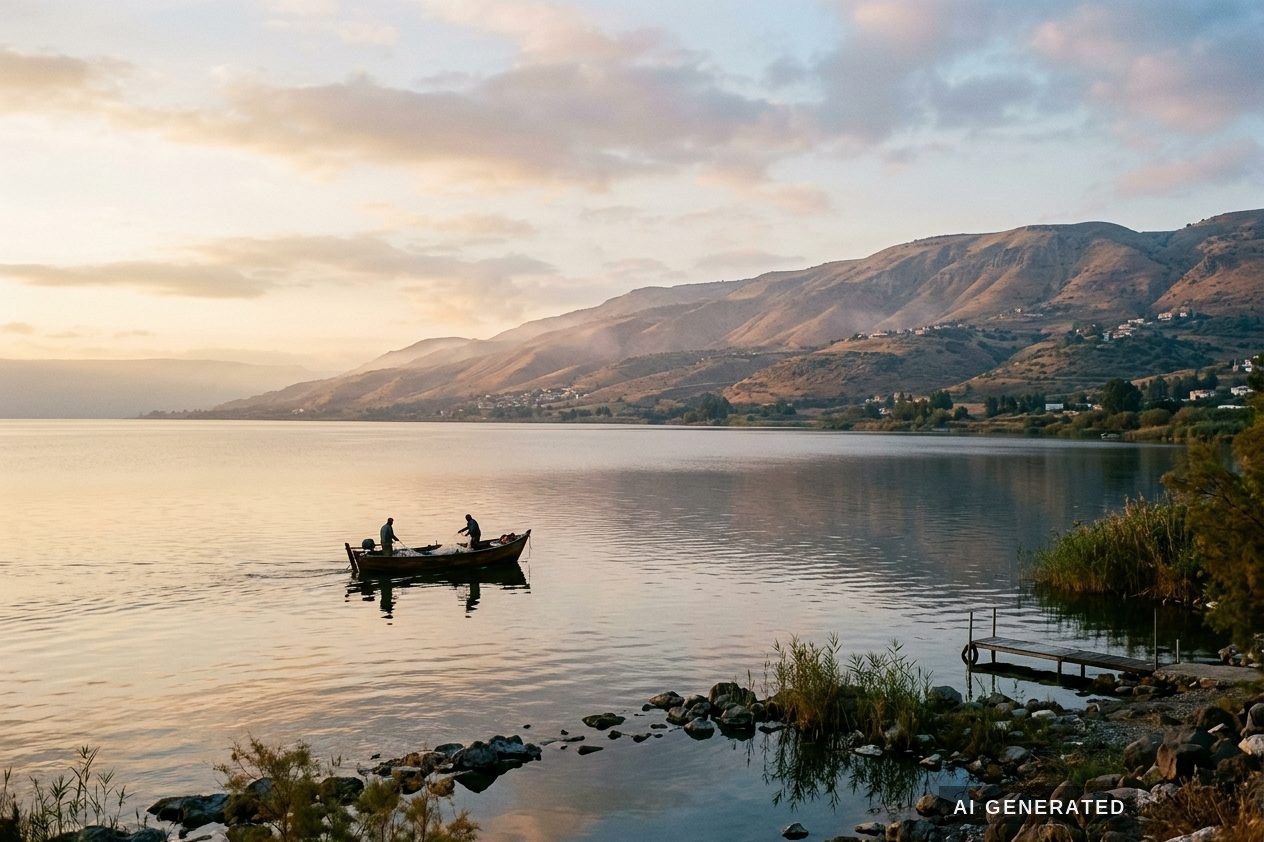
A large freshwater lake, 210 metres below sea level, where Jesus did most of his teaching and healing.
 4/5 Significance
Santiago de Compostela, Spain
Camino de Santiago
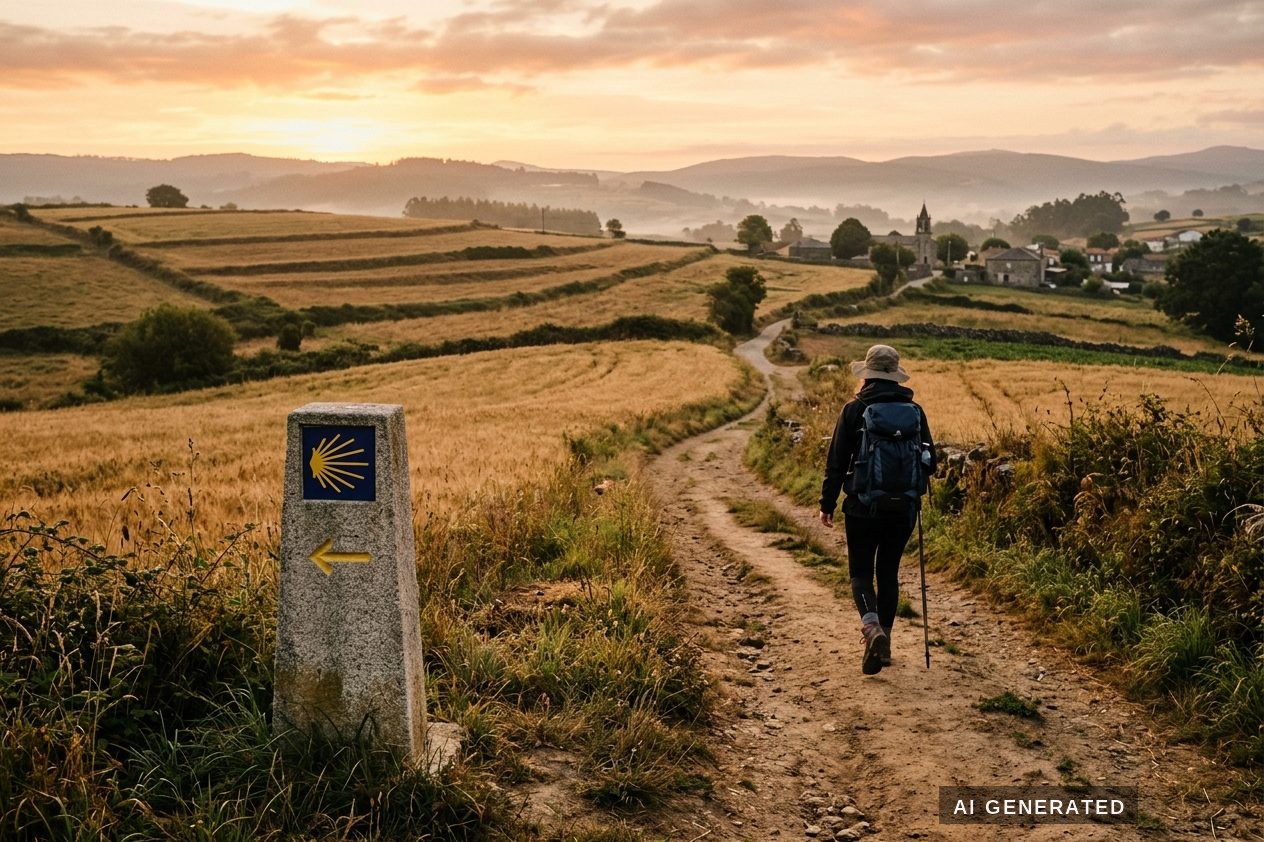
A walking route of about 800 km across northern Spain to the tomb of Saint James. People have walked it for over 1,000 years.