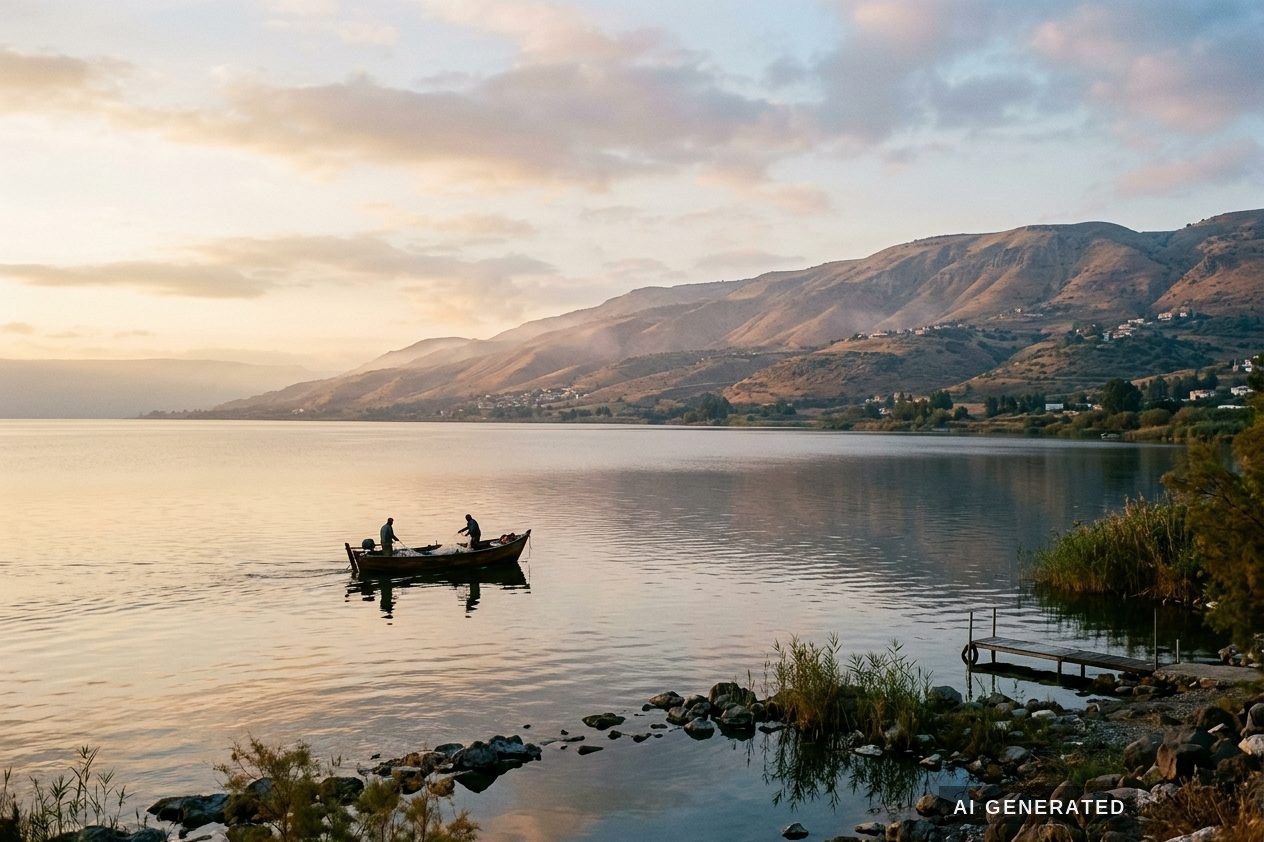
Tiberias, Israel
Sea of Galilee
A large freshwater lake, 210 metres below sea level, where Jesus did most of his teaching and healing.
Biblical significance
This is a freshwater lake about 21 km long, lying more than 200 metres below sea level, with the villages of Jesus' ministry all around it. Calling the first disciples, teaching the crowds, feeding thousands, walking on water, calming the storm and the breakfast on the beach after the resurrection all happened within sight of this water.
It is not one church or one ruin. It is a whole landscape you travel through, so the best visits treat it as a two-day loop rather than a quick stop.
Thirteen miles long, the Kinneret is the setting for the calling of the fishermen, the calming of the storm, the walking on water and the breakfast on the shore. The northern shore holds Capernaum, Tabgha and the Mount of Beatitudes within a few kilometres of one another. In 1986 a drought exposed a first-century fishing boat in the mud near Kibbutz Ginosar; it is now conserved and on display.
Scripture
Loading the passage…
Open in YouVersion →Loading the passage…
Open in YouVersion →Loading the passage…
Open in YouVersion →Excerpts from the World English Bible. Full text opens in the YouVersion Bible app.
History
The story of Sea of Galilee
A working lake
In the first century the shore supported a chain of fishing and processing towns — Capernaum, Bethsaida, Magdala, Tiberias — with a salted-fish trade reaching well beyond Galilee. The Gospel scenes of nets, boats and hired crews describe a real local economy.
Herod's Tiberias
Herod Antipas founded Tiberias on the western shore around 20 AD. It later became a centre of Jewish learning where much of the Jerusalem Talmud was compiled.
Byzantine pilgrimage
From the fourth century, churches were raised at Tabgha over the traditional site of the multiplication of loaves and fishes, and on the slope above for the Sermon on the Mount. The famous loaves-and-fishes mosaic dates from this period.
The Galilee boat, 1986
A drought exposed the hull of a first-century fishing boat in the mud near Ginosar. It is not linked to any Gospel event, but it shows exactly what kind of vessel the disciples used, and is now conserved and displayed nearby.
Magdala, 2009
Building work for a guesthouse uncovered a first-century synagogue at Magdala with a carved stone table — one of very few synagogues from Jesus' lifetime yet excavated anywhere in Galilee.
On the ground
What you can see today
Capernaum
The best-preserved village site, with the synagogue and the house of Peter.
Mount of Beatitudes
An octagonal church of 1938 in gardens above the lake, with the classic view south along the shore.
Tabgha
Two quiet churches: the Byzantine loaves-and-fishes mosaic, and the small black-basalt Church of the Primacy of Peter on the water's edge.
Magdala
First-century synagogue, excavated streets and harbour, and a modern chapel with a boat-shaped altar.
The Jesus Boat at Ginosar
The conserved first-century hull in a purpose-built museum hall at Kibbutz Ginosar.
Boat crossings and the shore itself
Wooden boats cross from Tiberias to Ginosar; several public beaches and the Yardenit baptismal site sit on the southern shore.
The visit
What to expect when you arrive
- Time needed
- A full day minimum; two days to do the shore properly
- Getting around
- Sites are 5–20 km apart — a car or tour makes the difference
- Heat
- Below sea level and humid; summer afternoons are punishing
- Best season
- March–May and October–November for green hills and mild air
- Crowds
- Group circuits move clockwise mid-morning; reverse the loop to avoid them
- Atmosphere
- Beatitudes and Tabgha are genuinely quiet; Tiberias is a resort town
Practicalities
Step by step: how to get there
- 1
Nearest hubs
Ben Gurion Airport is about 2–2.5 hours by road; Haifa and Nazareth are closer bases to the west.
- 2
By car
Route 90 runs down the western shore and Route 92 up the eastern one, so the whole lake is an easy day's circuit with parking at every major site.
- 3
By bus
Regular services link Tiberias with Nazareth, Haifa and Jerusalem; local lake buses are infrequent and leave long walks between sites.
- 4
By boat
Scheduled and chartered crossings run from Tiberias to Ginosar and Capernaum — the one way to read the Gospel scenes from the water.
- 5
On foot
The Jesus Trail (Nazareth to Capernaum, about 65 km) and the Gospel Trail are waymarked multi-day walking routes for pilgrims who want to arrive slowly.
Checklist
Before you go
- Individual sites charge small entry fees; several churches ask only for a donation.
- Most church sites close for a long midday break — plan the loop around it.
- Modest dress is enforced at Capernaum, Tabgha and Magdala.
- Sun hat, refillable water, and swim things if you plan a beach stop.
- Fuel and cash machines are easy in Tiberias and rare on the eastern shore.
- Book Galilee accommodation ahead over Jewish holidays, when the lake fills with domestic visitors.
Etiquette
Visiting respectfully
- Tabgha and the Mount of Beatitudes are run by religious communities and used for prayer — keep voices low in the gardens as well as the churches.
- Swimming is for the marked beaches, not the church shorelines.
- Ask before photographing groups being baptised at Yardenit; for them it is a sacrament, not a photo stop.
- Carry your litter out — the shore is a protected water source.
Best time to go
Spring, when the hills are green and the heat is bearable.
Visitor notes
Boats cross from Tiberias to Ginosar. The shoreline sites are best done by car or organised day tour.
Coordinates
32.8000, 35.5900
On the map
Open the world atlasKeep going
Continue the trail
Watch the site
Sea of Galilee on film
This chapter of the documentary begins at Sea of Galilee.
Watch on YouTubeFind it on Google Maps
Sea of Galilee on the map
Open directionsPlan your pilgrimage
Getting to Sea of Galilee
Everything you need to turn this holy place into a journey. We may earn a commission from these partner links, at no extra cost to you.
Share your experience
Have you been here?
Rate this place and share your experience with other Christrails travellers.
Rate This Place
Be the first to rate this place
Visitor Experiences
No visitor experiences yet. Be the first to share yours.
Share this page
Nearby in this category
 5/5 Significance
Jerusalem, Israel
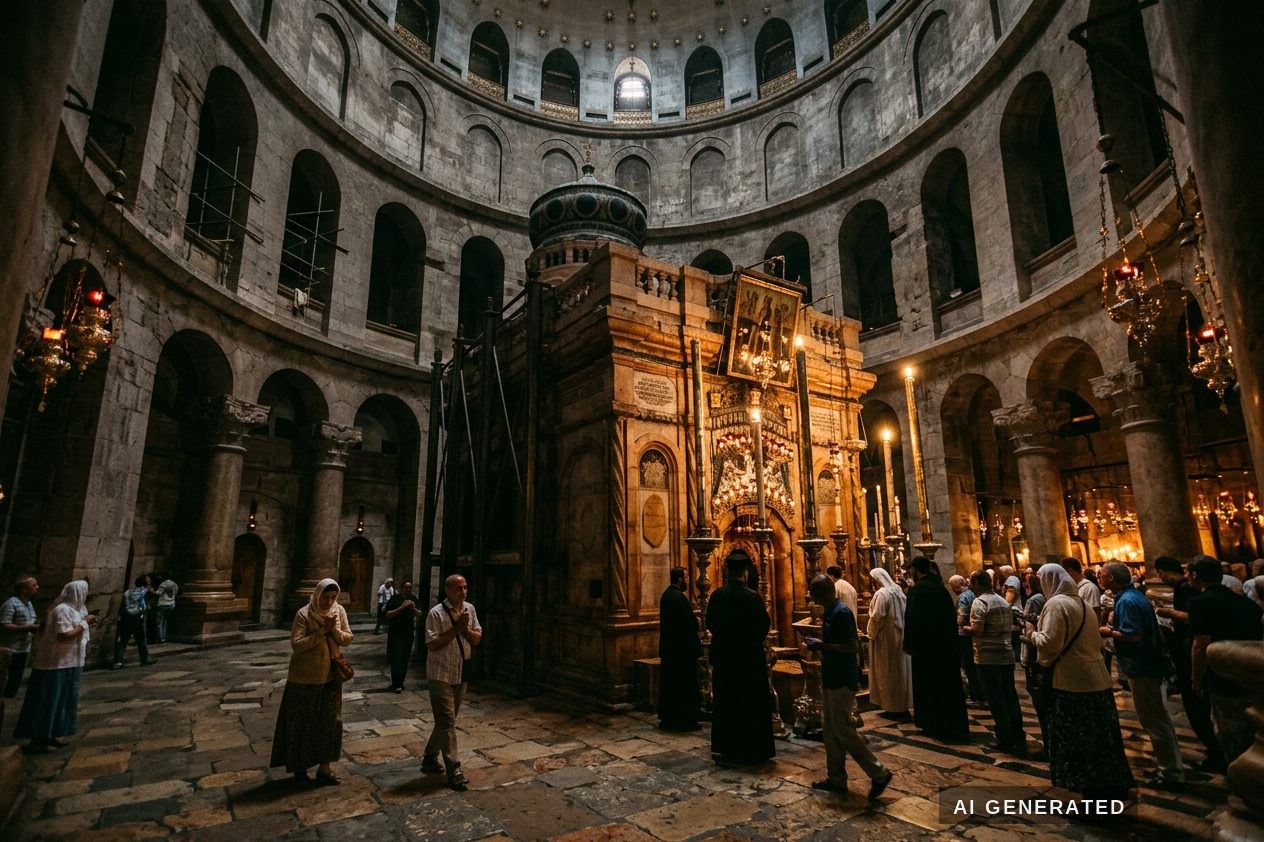
Church of the Holy Sepulchre
The church built where Christians believe Jesus was crucified and buried, and where he rose again. Six different churches share the same building.
 5/5 Significance
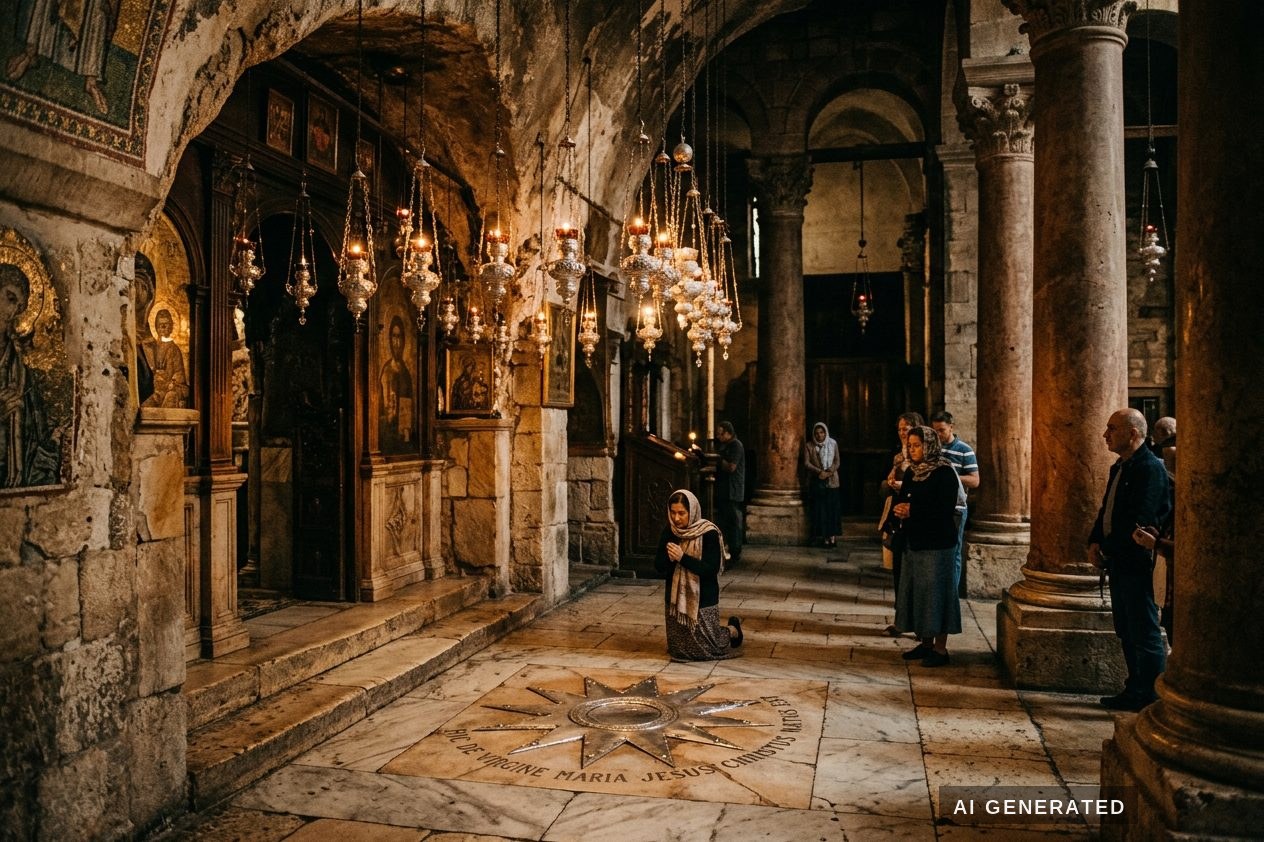
Bethlehem, Palestine
Church of the Nativity
The oldest church still used every day. It stands over the cave where Jesus is believed to have been born, marked with a silver star.
 5/5 Significance
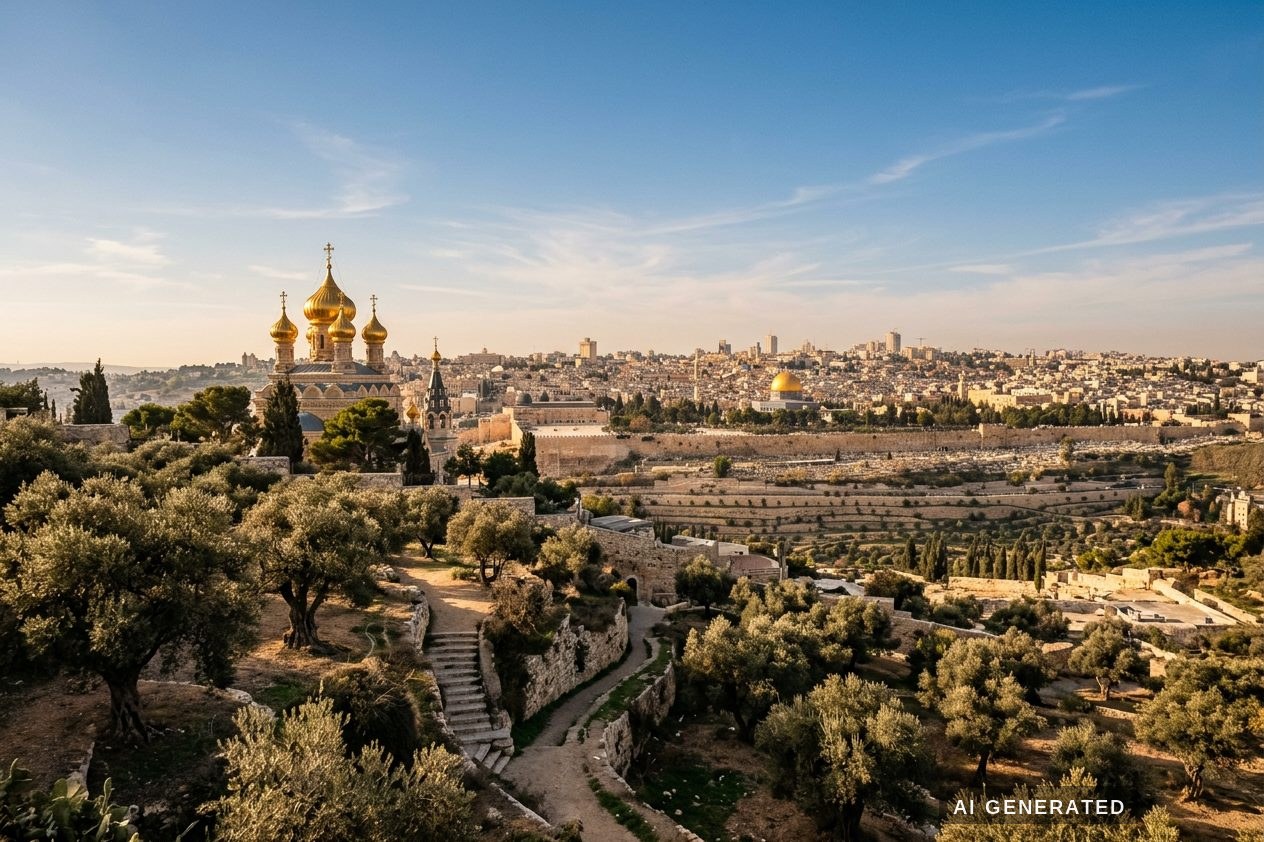
Jerusalem, Israel
Mount of Olives
The hill just east of the Old City where Jesus cried, prayed, was arrested and went up to heaven. The view is famous.