Capernaum, Israel
Capernaum
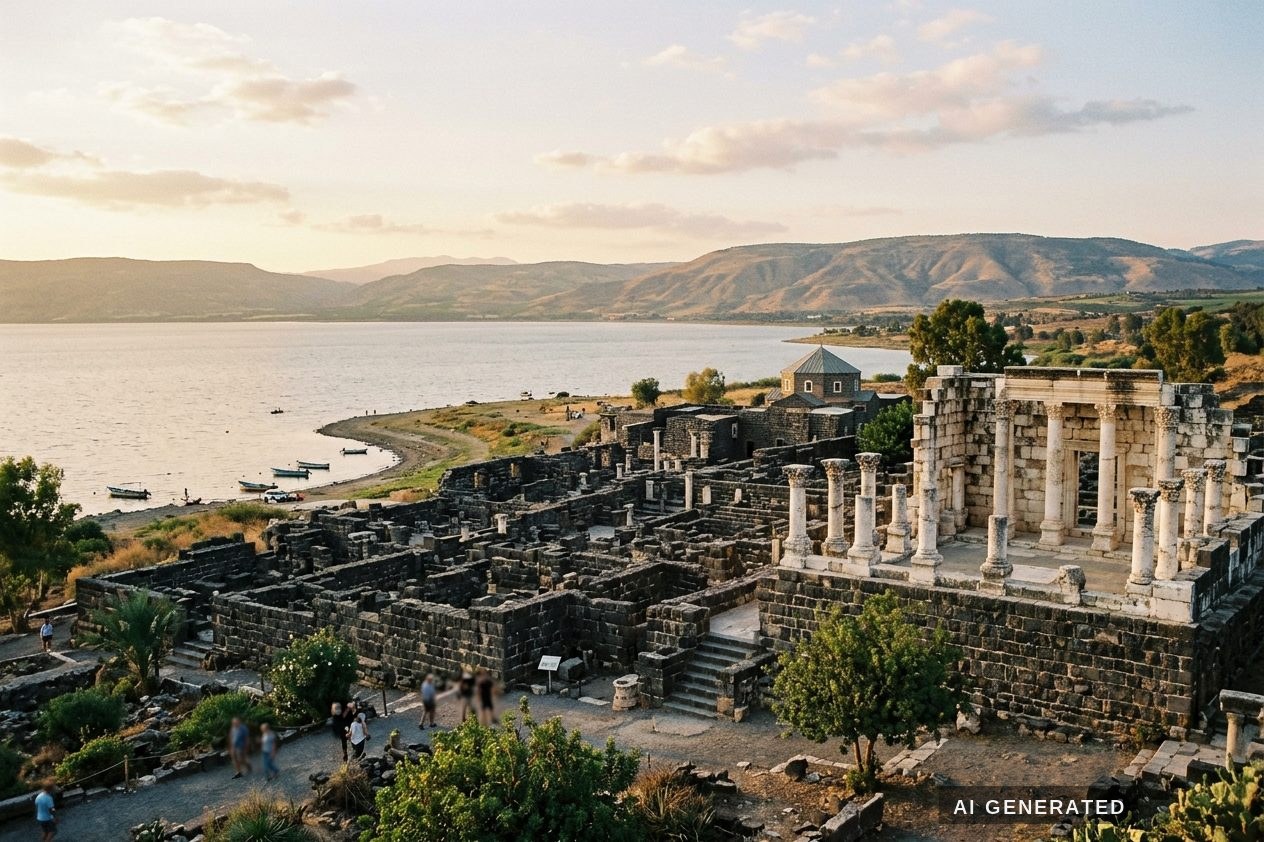
The small fishing village Jesus used as his home base. You can still see the synagogue and a house believed to be Peter's.
Biblical significance
Matthew calls Capernaum Jesus' 'own town'. This little fishing village by the lake is where he lived and worked in Galilee. Here he called Peter, Andrew, James and John, taught in the synagogue, and healed Peter's mother-in-law in a house just a few steps away.
What makes it special is how much is still here. You walk along the real black stone streets of a village from Jesus' time, past the walls of the houses, with the lake right at the end of the path. Very few Gospel places let you stand this close to what is described.
Matthew calls it "his own city". Excavations have uncovered a fourth-century white limestone synagogue built directly on the black basalt foundations of the first-century one where Jesus taught. Nearby, a modest first-century house was converted into a house-church by the mid-first century and enclosed in an octagonal church in the fifth — the strongest archaeological case anywhere for a named New Testament residence.
Scripture
Loading the passage…
Open in YouVersion →Loading the passage…
Open in YouVersion →Loading the passage…
Open in YouVersion →Excerpts from the World English Bible. Full text opens in the YouVersion Bible app.
History
The story of Capernaum
A first-century fishing village
Capernaum sat on the trade road along the north-west shore of the Sea of Galilee, with a customs post and a garrison. Excavated houses are small, single-storey basalt structures around shared courtyards — a working village of perhaps a thousand people.
The house of Peter
Beneath the modern church, archaeologists found a first-century house whose main room was plastered, unusually, and later enclosed by an octagonal Byzantine church. Graffiti scratched in the plaster includes Christian invocations. The identification as Peter's house rests on that continuity of veneration — strong circumstantial evidence rather than proof.
The white synagogue
The striking limestone synagogue dates to the fourth or fifth century, not to Jesus' lifetime. It stands directly on the black basalt foundations of an earlier synagogue, which may well be the one the Gospels describe.
Decline and rediscovery
The village faded after the seventh century and was lost under scrub until the Franciscans bought the land in 1894 and began the excavations that continue in phases today.
On the ground
What you can see today
The synagogue
Carved limestone columns, benches and Jewish motifs, with the darker earlier foundation clearly visible where the pavement has been cut away.
The house of Peter and the modern church
A 1990 church on pillars hovers above the excavation; a glass floor lets you look straight down into the octagonal church and the house below.
The village quarter
Basalt walls, doorways, olive presses and grinding stones laid out along the old lanes.
The lakeshore
A short walk past the site brings you to the water, with the Golan Heights across the lake.
The Greek Orthodox Church of the Holy Apostles
Red-domed and photogenic, on the neighbouring plot with its own entrance.
The visit
What to expect when you arrive
- Time needed
- 45–90 minutes
- Crowds
- Coach groups late morning; quiet at opening and after 15:00
- Terrain
- Flat, well-kept gravel and paved paths
- Shade
- Very little — the site is open to full sun
- Heat
- Galilee summers regularly exceed 35 °C; go early
- Accessibility
- Largely step-free, including the church ramp
Practicalities
Step by step: how to get there
- 1
Nearest bases
Tiberias (about 20 km) and Nazareth are the usual bases; Ben Gurion Airport is roughly two and a half hours by road.
- 2
By car
The simplest option. Capernaum is signposted off Route 87 with a car park at the gate. Most visitors combine it with Tabgha and the Mount of Beatitudes on one loop.
- 3
By bus
Buses from Tiberias run along the lake road; the stop leaves a walk of a kilometre or so to the entrance, with no shade.
- 4
By boat or tour
Half-day Galilee tours from Tiberias or Nazareth typically bundle Capernaum with a lake crossing to Ginosar, where the first-century 'Jesus boat' is displayed.
Checklist
Before you go
- A modest entrance fee is charged at the gate; cash is safest.
- Opening hours are daytime only and the site closes earlier than you might expect in winter.
- Strict dress code: no shorts above the knee, shoulders covered — wraps are lent at the gate but limited.
- Hat, sunglasses and more water than you think you need.
- Toilets at the entrance; no café on site.
- Combine with Tabgha and the Mount of Beatitudes, both within 10 minutes' drive.
Etiquette
Visiting respectfully
- The modern church above Peter's house is an active place of prayer — groups often celebrate Mass there.
- Keep off the excavated walls; the basalt is fragile and the ban is enforced.
- Photography is fine outdoors; be discreet inside the church and during services.
- Franciscan custodians run the site — follow the dress code without negotiation.
Best time to go
Morning, before the coach parties.
Visitor notes
Small entry fee. Run by the Franciscans; modest dress enforced.
Coordinates
32.8807, 35.5751
On the map
Open the world atlasKeep going
Continue the trail
- Sea of GalileeTiberias, IsraelThe lake this village lived from, with boat crossings from Tiberias.
- NazarethNazareth, IsraelJesus' home town, about an hour west.
- Bethany Beyond the JordanAl-Maghtas, JordanThe baptism site downstream, on the Jordanian bank.
- MegiddoMegiddo, IsraelMajor Old Testament tell an hour south-west, on the same driving loop.
Watch the site
Capernaum on film
This chapter of the documentary begins at Capernaum.
Watch on YouTubeFind it on Google Maps
Capernaum on the map
Open directionsPlan your pilgrimage
Getting to Capernaum
Everything you need to turn this holy place into a journey. We may earn a commission from these partner links, at no extra cost to you.
Share your experience
Have you been here?
Rate this place and share your experience with other Christrails travellers.
Rate This Place
Be the first to rate this place
Visitor Experiences
No visitor experiences yet. Be the first to share yours.
Share this page
Nearby in this category
 5/5 Significance
Jerusalem, Israel
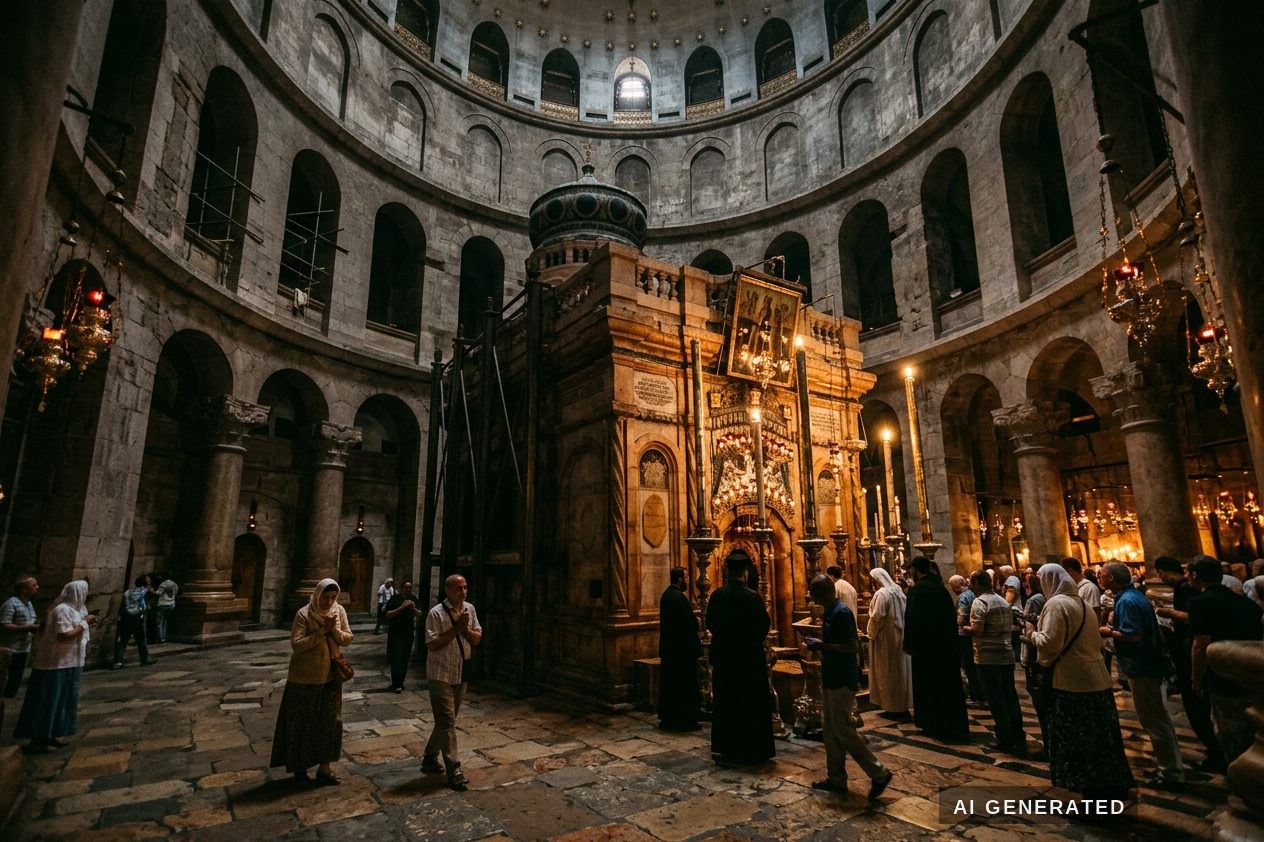
Church of the Holy Sepulchre
The church built where Christians believe Jesus was crucified and buried, and where he rose again. Six different churches share the same building.
 4/5 Significance
Vatican City, Vatican City
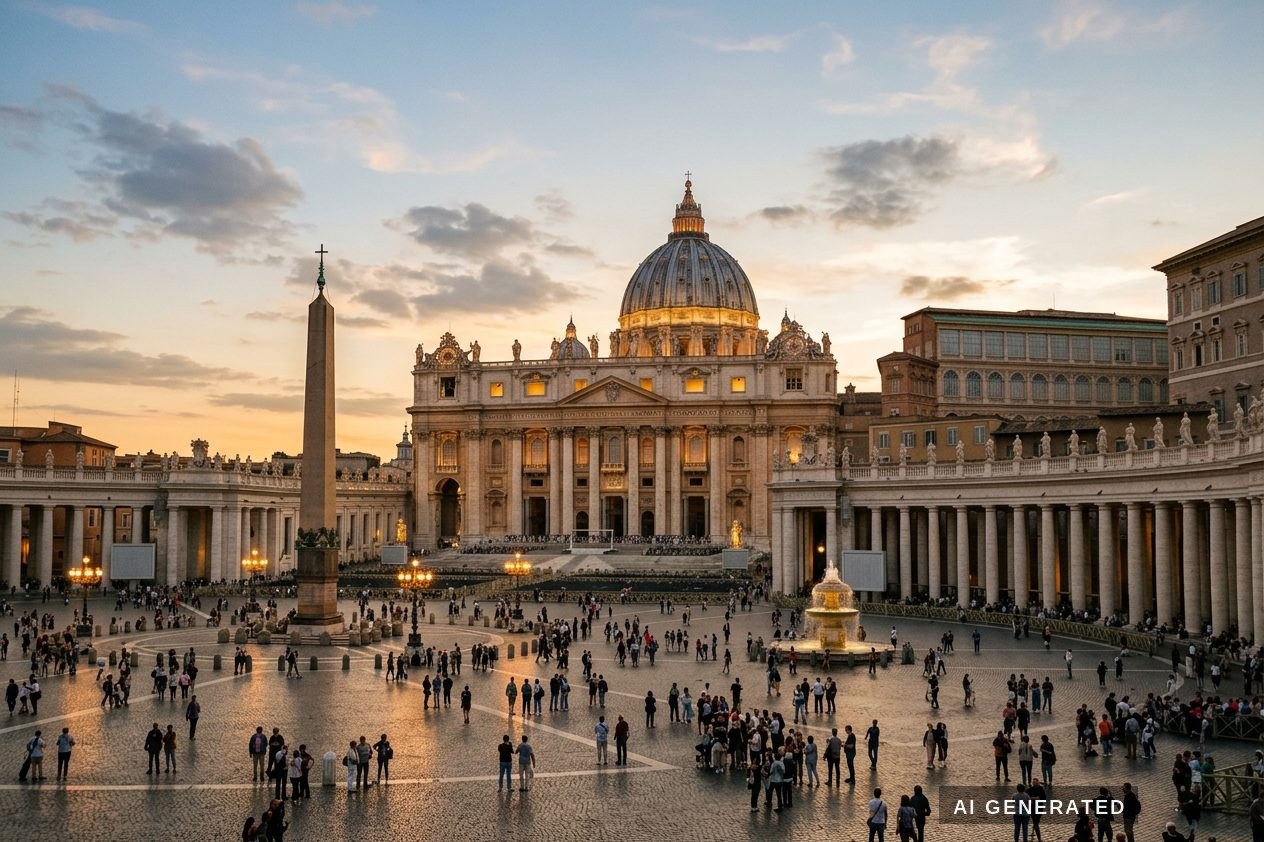
St Peter's Basilica
The biggest church ever built, with Michelangelo's dome over the tomb of Peter the fisherman.
 5/5 Significance
Bethlehem, Palestine
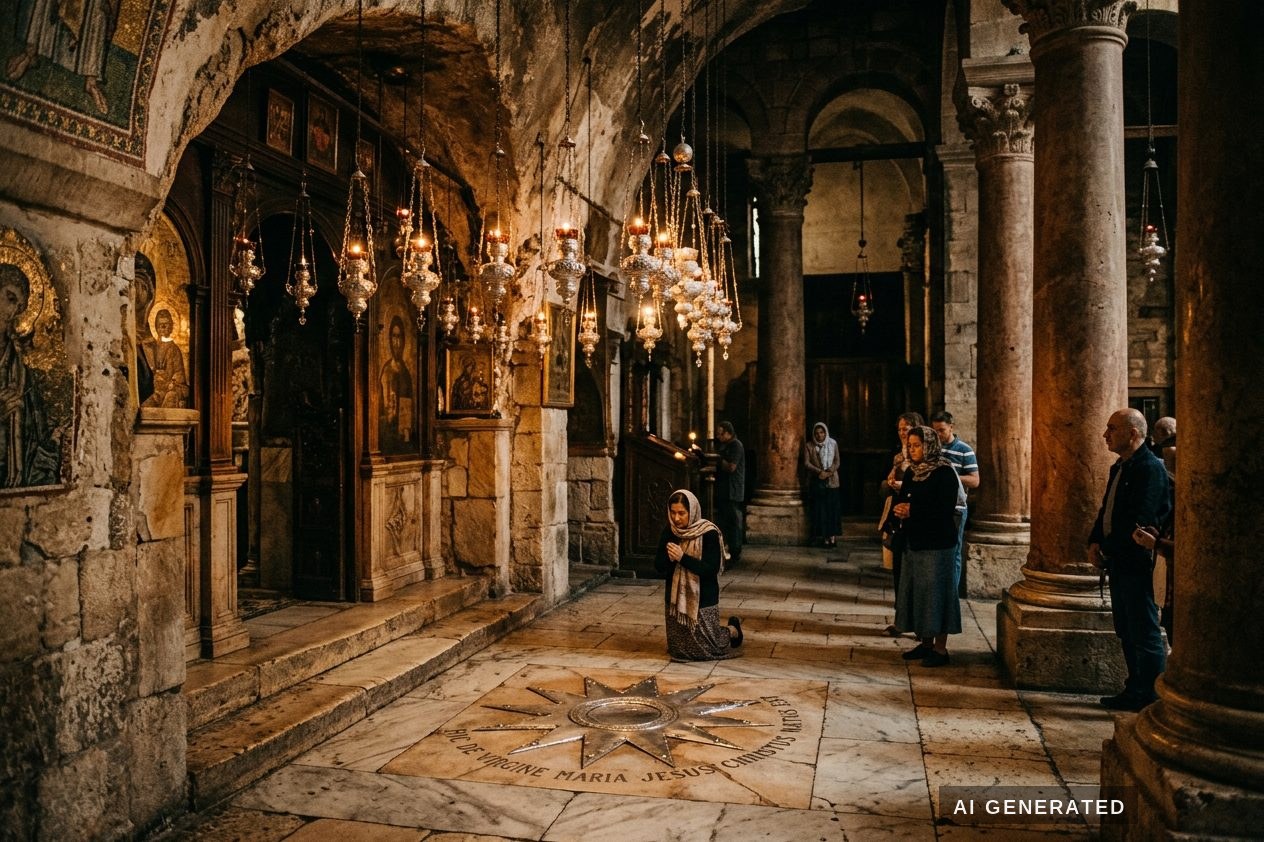
Church of the Nativity
The oldest church still used every day. It stands over the cave where Jesus is believed to have been born, marked with a silver star.