Guide
Christian Pilgrimage Sites: The Definitive Guide
The complete guide to Christian pilgrimage sites — Jerusalem, Rome, Santiago and Sinai — ranked, dated and mapped on the Christrails significance scale.
Christian pilgrimage is older than Christian architecture. Long before cathedrals, believers walked to the places where the events of Scripture happened — the tomb outside Jerusalem's walls, the apostles' graves in Rome, the mountain where the Law was given. That instinct never stopped: millions still travel each year to pray where the church remembers.
This guide ranks the sites that matter most, in the order a first-time pilgrim should consider them. Every entry links to a full Christrails dossier with scripture references, best season, visitor logistics and coordinates on the atlas.
How Christrails rates significance
Every destination carries a 1–5 significance score. It weighs three things: how directly Scripture attests the location, how strong the archaeological or continuous-worship evidence is, and how central the site has been to Christian devotion across centuries. A 5 means all three are unambiguous — the Holy Sepulchre, Sinai, Galilee. A 3 means a site of real spiritual weight whose association is traditional rather than textual.
01 · Israel · 5/5 significance
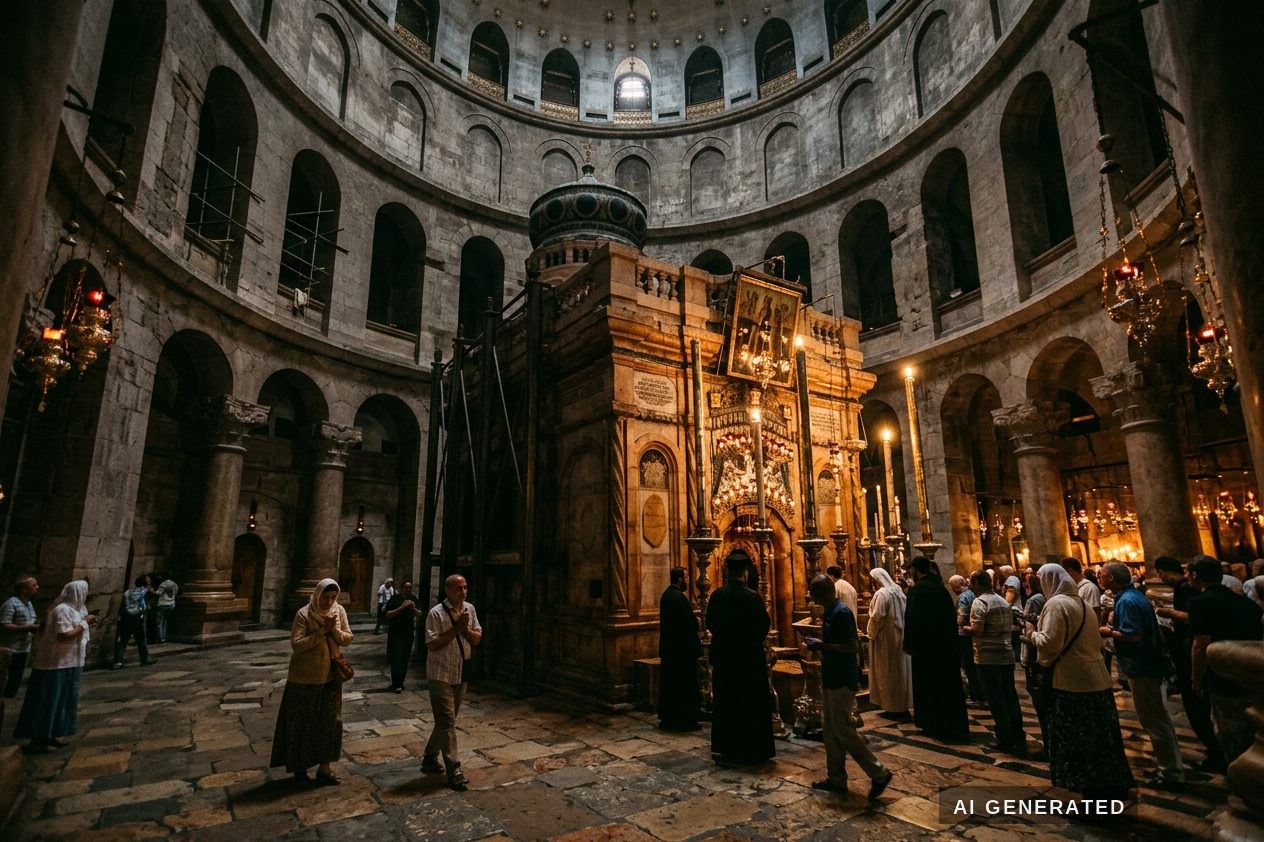
Jerusalem — the Holy Sepulchre
No Christian pilgrimage site carries more weight. Built over the rock of Golgotha and the empty tomb, the Holy Sepulchre has drawn pilgrims continuously since Constantine's builders uncovered the site in the 320s. Six denominations share the church under the Status Quo, so a single morning can move you through Greek, Armenian, Coptic and Latin liturgy within a few metres of stone.
02 · Israel · 4/5 significance
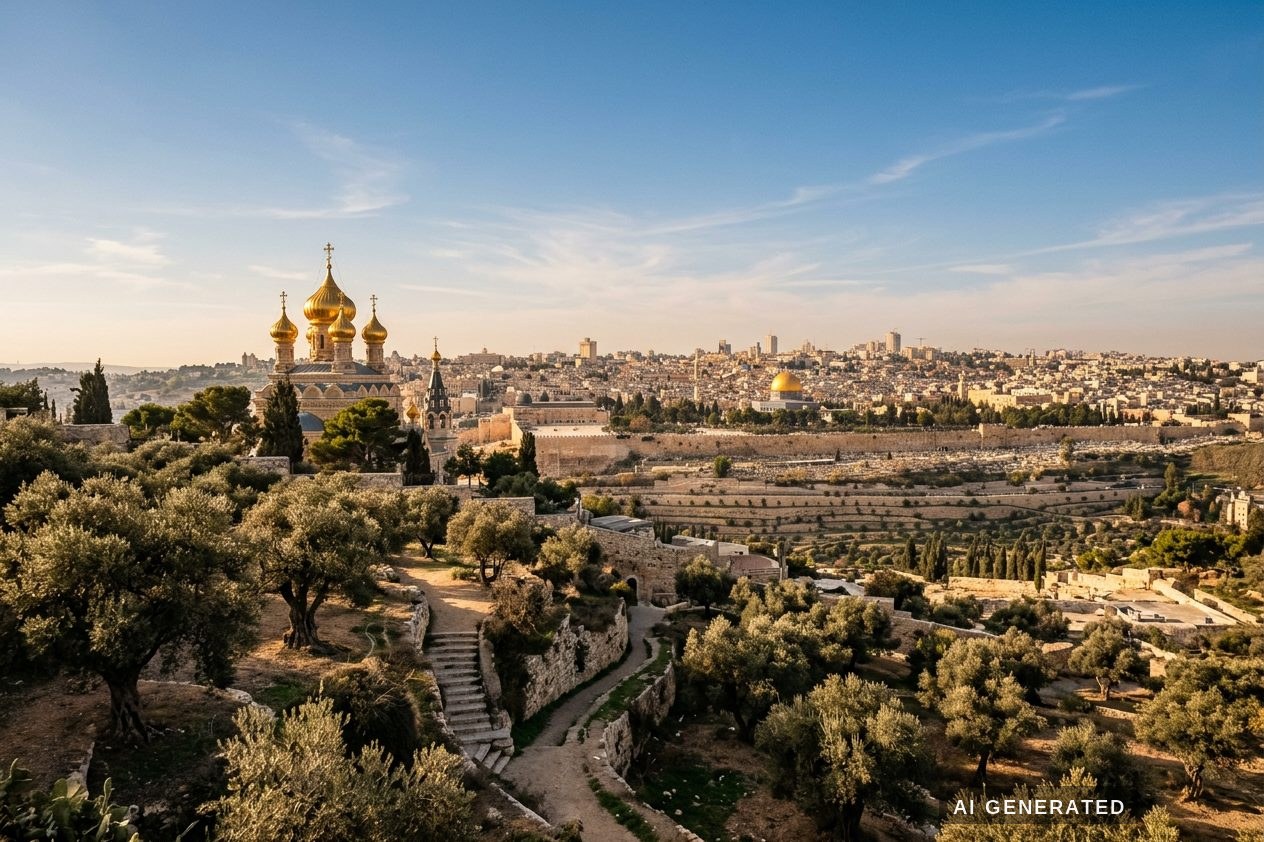
The Via Dolorosa
The traditional route from the Antonia Fortress to Calvary is the oldest walked devotion in Christendom. Fourteen stations thread the Old City's markets; the Franciscan procession leaves Saint Stephen's Gate every Friday afternoon and is the simplest way to walk it with a community rather than a map.
03 · Palestine · 5/5 significance
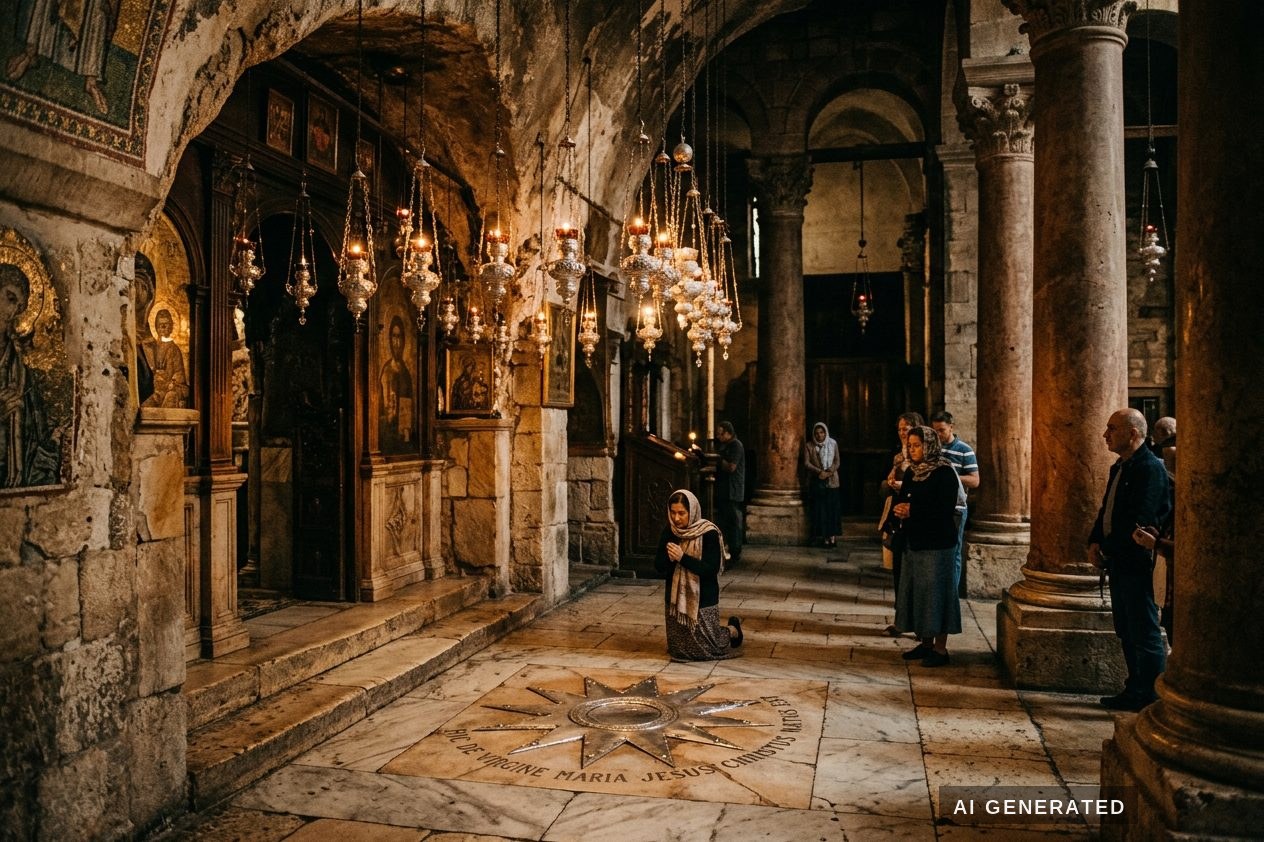
Bethlehem — the Church of the Nativity
The oldest church in the Holy Land still in daily use. Justinian's basilica stands over the cave venerated as Christ's birthplace since at least the second century, and the fourth-century mosaic floor is visible beneath trapdoors in the nave.
04 · Israel · 5/5 significance
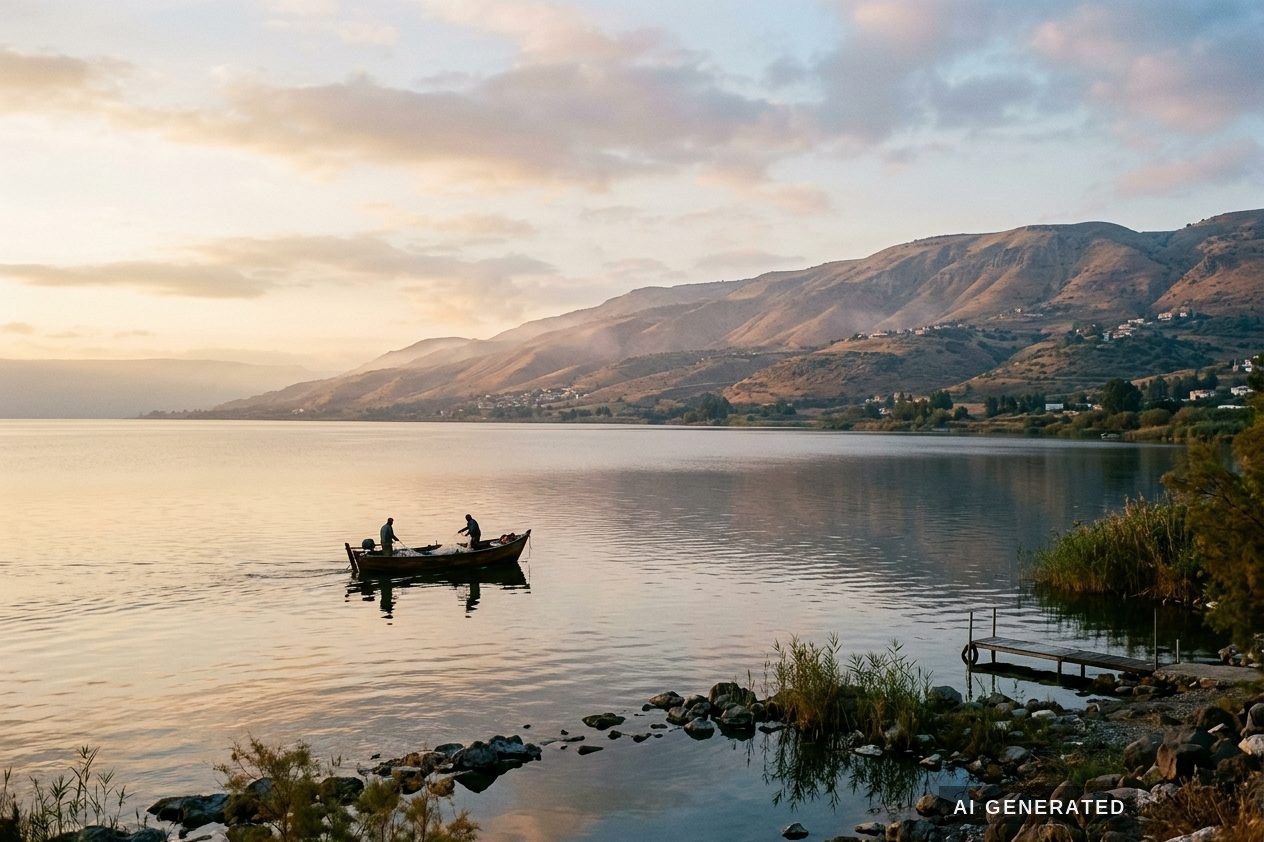
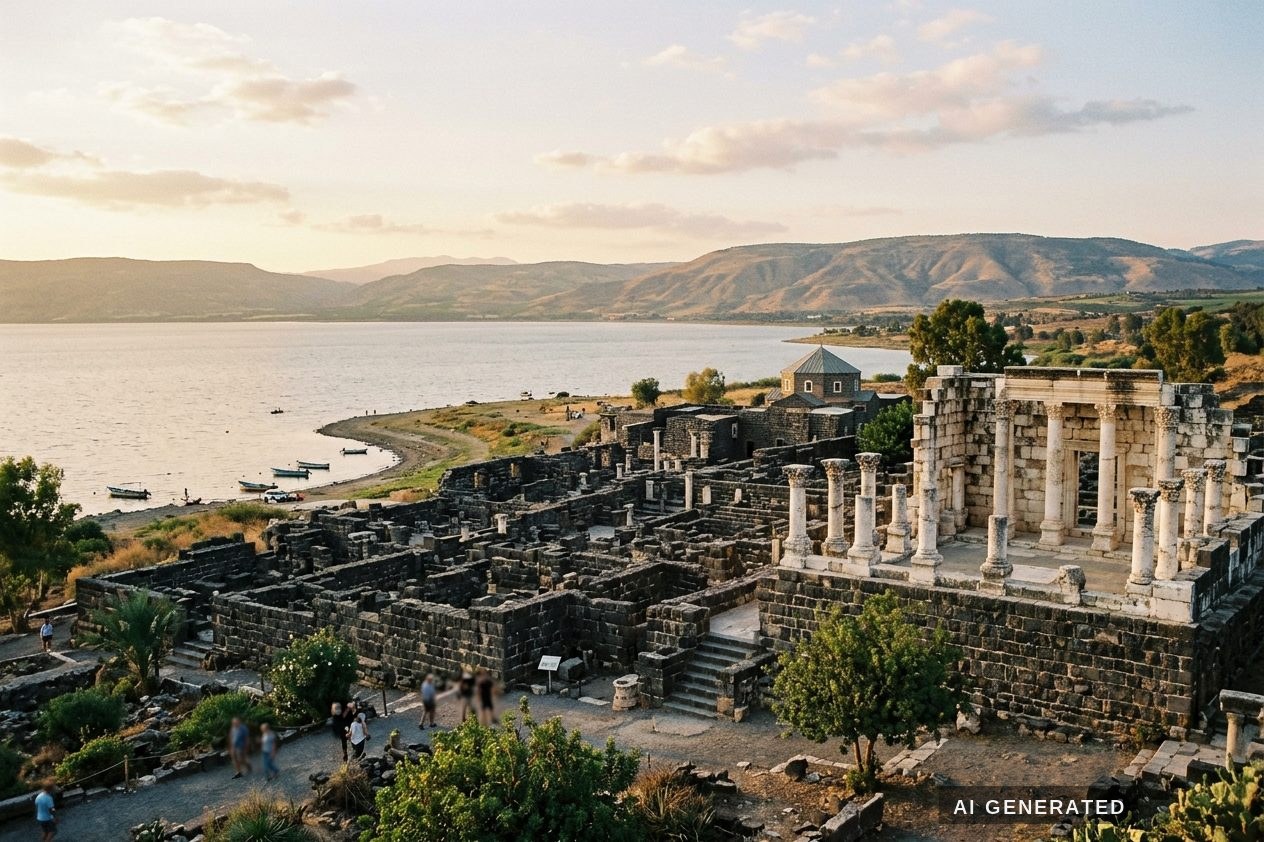
The Sea of Galilee and Capernaum
Most of the public ministry happened along this shoreline. Capernaum, Tabgha, the Mount of Beatitudes and Magdala sit within a short drive of each other, which makes Galilee the most concentrated stretch of Gospel geography anywhere.
05 · Vatican City · 4/5 significance
Rome — Saint Peter's and the pilgrim basilicas
Rome is the second pole of Christian pilgrimage. The classic devotion is the Seven Churches walk laid out by Philip Neri: Saint Peter's, Saint Paul Outside the Walls, Saint John Lateran, Saint Mary Major and the three lesser basilicas. Beneath Saint Peter's, the Scavi tour reaches the first-century necropolis and the shrine over the apostle's grave.
06 · Italy · 4/5 significance
The catacombs of the martyrs
Before basilicas, pilgrims went underground. San Callisto's galleries hold the crypt of the popes and the tomb of Saint Cecilia — the plainest surviving evidence of how the early church buried and remembered its dead.
07 · Spain · 4/5 significance
The Camino de Santiago
The great walking pilgrimage of Western Europe. The Camino Francés runs roughly 780 km from Saint-Jean-Pied-de-Port to Santiago; a Compostela certificate requires the final 100 km on foot from Sarria. Spring and early autumn give the best balance of weather and open albergues.
08 · Spain · 4/5 significance
Santiago de Compostela
The destination of the Camino, and the reliquary church of Saint James the Greater. Pilgrims still queue to embrace the apostle's bust behind the high altar before descending to the silver casket in the crypt.
Read the full dossier on Cathedral of Santiago de Compostela →
09 · Egypt · 5/5 significance
Mount Sinai and Saint Catherine's
The traditional mountain of the Law, climbed overnight so pilgrims reach the summit chapel at dawn. At its foot, Saint Catherine's Monastery has been inhabited without interruption since the sixth century and holds the world's oldest continuously used library.
10 · Turkey · 5/5 significance
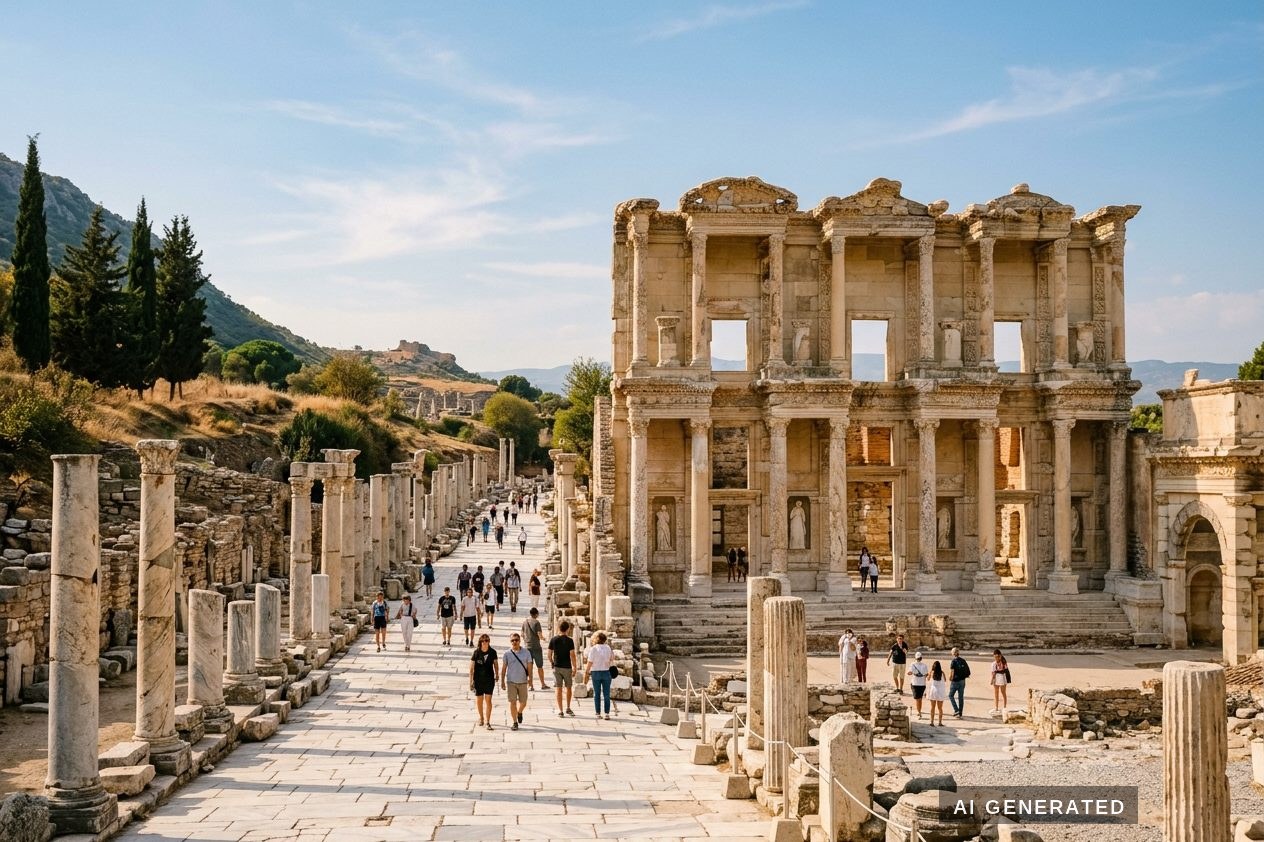
Ephesus and the apostolic cities
Paul spent nearly three years here, John is traditionally buried above the city, and the Council of 431 met in its church. Ephesus anchors a wider apostolic circuit through Antioch, Patmos and Damascus.
11 · Greece · 5/5 significance
Patmos — the island of the Revelation
The Cave of the Apocalypse and the fortified Monastery of Saint John make Patmos the most contemplative stop in the Aegean, and the easiest place to read Revelation where it was received.
12 · Jordan · 5/5 significance
Bethany Beyond the Jordan
The archaeologically identified baptism site on the Jordanian bank, with Byzantine churches and pilgrim steps down to the river. Renewal of baptismal vows here is the reason most groups come.
Planning a first pilgrimage
Most first journeys take one of three shapes. A Holy Land circuit of ten days covers Jerusalem, Bethlehem, Galilee and the Jordan. A Roman week covers the four papal basilicas, the catacombs and Assisi. A walking pilgrimage — usually the final week of the Camino — trades breadth for the discipline of arriving on foot.
Shoulder seasons are worth planning around: March–May and September–November keep desert heat manageable and avoid the Easter and Christmas crush at the major shrines. Modest dress is required at nearly every site in this guide, and several monasteries close to visitors on feast days.
Frequently asked questions
- What is the most important Christian pilgrimage site?
- The Church of the Holy Sepulchre in Jerusalem, which stands over both the crucifixion rock and the tomb of Christ. It is the only site Christrails rates 5/5 on every dimension of the significance scale.
- What are the three classic Christian pilgrimages?
- Historically, Jerusalem, Rome and Santiago de Compostela. Medieval pilgrims who completed all three were entitled to wear the palm, the keys and the scallop shell together.
- How long does the Camino de Santiago take?
- The full Camino Francés takes about 30–35 days on foot. Walking the final 100 km from Sarria takes 5–7 days and still qualifies for the Compostela.
- When is the best time to visit the Holy Land?
- March to May and September to November. Summer in the Jordan Valley and the Judean desert regularly exceeds 40 °C, and the major feasts crowd Jerusalem heavily.
Keep exploring