Saint Catherine, Egypt
Mount Sinai
The 2,285-metre mountain where, according to Jewish, Christian and Muslim tradition, Moses received the Ten Commandments.
Biblical significance
Since at least the 300s, Christians have believed this mountain is the one where Moses received the Ten Commandments. Other mountains have been suggested and nobody can prove which is right, but this is the peak pilgrims have climbed for 1,500 years.
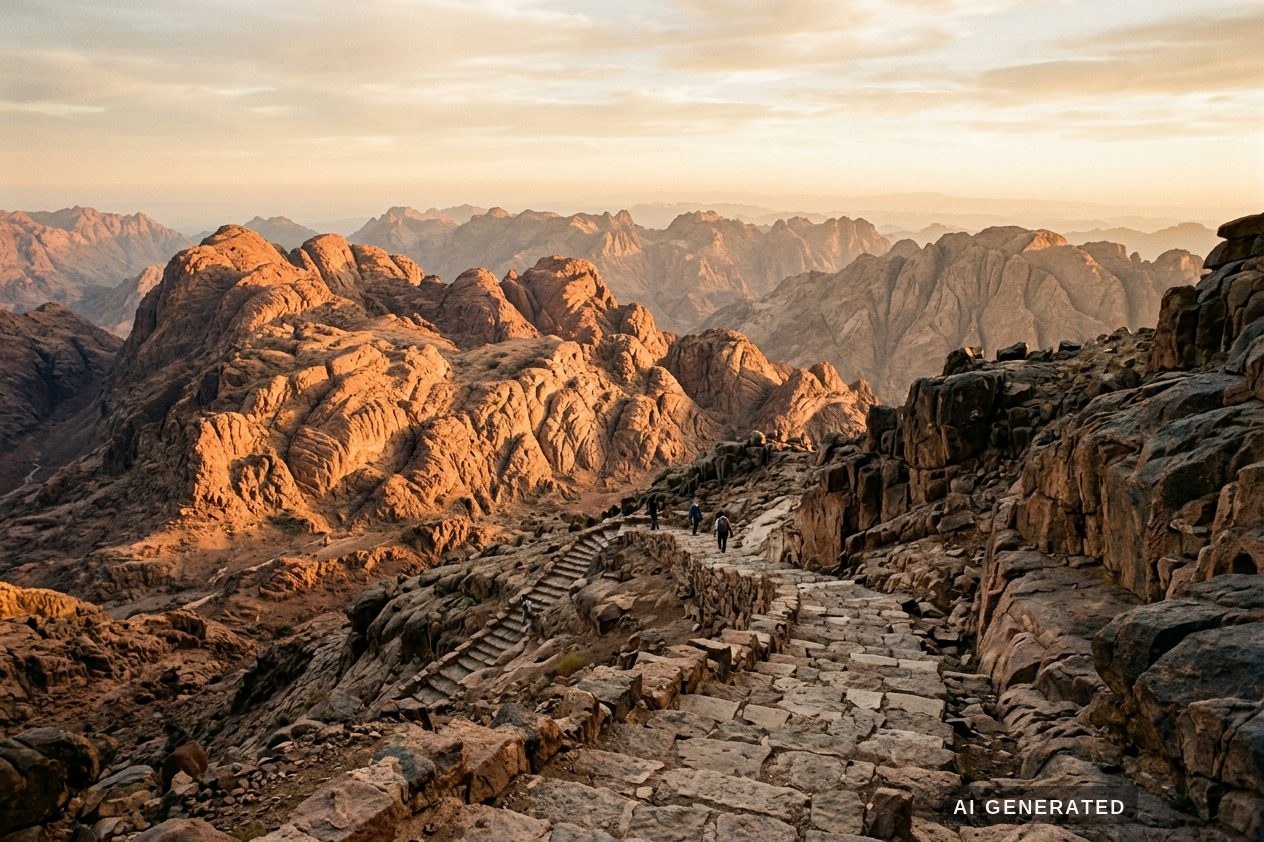
The climb is the main reason people come: walking up in the dark with torches, watching the sun rise over a sea of rocky peaks, and finding St Catherine's Monastery waiting at the bottom.
Jebel Musa rises above the Sinai wilderness at the traditional site of the giving of the Ten Commandments. Pilgrims climb overnight, either by the camel path or the 3,750 Steps of Repentance cut by a penitent monk, to reach the summit chapel before dawn. The route passes Elijah's Basin, where a cypress marks the cave tradition assigns to the prophet.
Scripture
Loading the passage…
Open in YouVersion →Loading the passage…
Open in YouVersion →Loading the passage…
Open in YouVersion →Excerpts from the World English Bible. Full text opens in the YouVersion Bible app.
History
The story of Mount Sinai
The biblical account
Exodus places the giving of the Law at Sinai or Horeb, after the burning bush encounter. The Bible does not locate the mountain geographically, and scholars have proposed sites across the Sinai Peninsula and north-west Arabia.
Christian identification
Hermits settled the valley in the third and fourth centuries, and the pilgrim Egeria described climbing the mountain in the 380s. Helena is said to have ordered a chapel built at the site of the burning bush around 330.
Justinian's fortress monastery
Between 548 and 565 Justinian enclosed the site in the granite walls that still stand, making St Catherine's the oldest continuously inhabited Christian monastery in the world.
The Steps of Repentance
Some 3,750 rough stone steps up the gorge behind the monastery were cut by monks over centuries as an act of penance — still the steeper, harder and more atmospheric of the two routes up.
On the ground
What you can see today
The summit chapel and mosque
A small Greek Orthodox chapel of 1934 on Byzantine foundations, and a mosque, sharing the 2,285 m peak.
Elijah's Basin
A plateau below the summit with an ancient cypress and a chapel, where the camel path and the steps meet for the final 750 steps.
The dawn view
Granite ridges in every direction turning red and gold — the reason for the night climb.
St Catherine's Monastery
At the foot: Justinian's walls, the sixth-century Transfiguration mosaic, the icon collection, the library, the charnel house and the descendant of the burning bush.
The visit
What to expect when you arrive
- Time needed
- 3–4 hours up, 2–3 down, plus waiting for sunrise
- Ascent
- About 750 m of climbing to 2,285 m
- Routes
- Camel path (longer, gentler) or 3,750 Steps of Repentance (steep)
- Temperature
- Freezing at the summit before dawn even in summer
- Crowds
- Hundreds climb together on the night ascent in season
- Fitness
- Genuinely demanding; the final 750 steps are steep and rough
Practicalities
Step by step: how to get there
- 1
Nearest bases
St Catherine village at the foot of the mountain, or the Red Sea resorts of Dahab and Sharm el-Sheikh, two to three hours away by road.
- 2
By air
Sharm el-Sheikh airport is the main gateway; there is also a small airport at St Catherine with very limited service.
- 3
Organised trips
Almost everyone climbs with a tour from Dahab or Sharm, leaving around 23:00 to reach the summit for dawn, then visiting the monastery when it opens.
- 4
Guides and permissions
A local Bedouin guide is required for the ascent, and travel in South Sinai involves checkpoints — check your government's current travel advice before booking.
Checklist
Before you go
- Warm layers, hat and gloves for the summit, whatever the season — blankets can be hired at the top but supply runs out.
- Head torch with spare batteries; the camel path is unlit.
- Two litres of water per person, plus snacks; there are Bedouin tea huts along the route but do not depend on them.
- Real walking shoes — the final steps are uneven rock.
- The monastery opens only for a few morning hours and closes on Sundays, Fridays and Orthodox feasts.
- Bring cash in Egyptian pounds for guides, tea huts and the monastery museum.
- Camels can be hired for part of the camel path but not for the final steps.
Etiquette
Visiting respectfully
- The summit chapel is normally locked; do not attempt to enter or climb its walls.
- Modest dress and covered shoulders for the monastery — it is a working Orthodox community, not a museum.
- No photography inside the monastery church.
- Take all litter down with you; the mountain has no waste collection.
- Bedouin guides live from this work — agree the fee first and pay it in full.
Best time to go
October to April. Summer heat and winter ice both make the climb dangerous.
Visitor notes
Guides are compulsory. Start around 2am for sunrise. Bring layers — the summit is bitterly cold before dawn.
Coordinates
28.5392, 33.9750
On the map
Open the world atlasKeep going
Continue the trail
- Saint Catherine's MonasterySaint Catherine, EgyptAt the foot of the mountain — visit the same morning.
- Mount NeboMadaba, JordanWhere Moses saw the promised land, across in Jordan.
- Bethany Beyond the JordanAl-Maghtas, JordanContinues the exodus-to-Jordan narrative.
- Wadi El NatrunWadi El Natrun, EgyptEgypt's other great desert monastic centre.
Watch the site
Mount Sinai on film
This chapter of the documentary begins at Mount Sinai.
Watch on YouTubeFind it on Google Maps
Mount Sinai on the map
Open directionsPlan your pilgrimage
Getting to Mount Sinai
Everything you need to turn this holy place into a journey. We may earn a commission from these partner links, at no extra cost to you.
Share your experience
Have you been here?
Rate this place and share your experience with other Christrails travellers.
Rate This Place
Be the first to rate this place
Visitor Experiences
No visitor experiences yet. Be the first to share yours.
Share this page
Nearby in this category
 5/5 Significance
Jerusalem, Israel
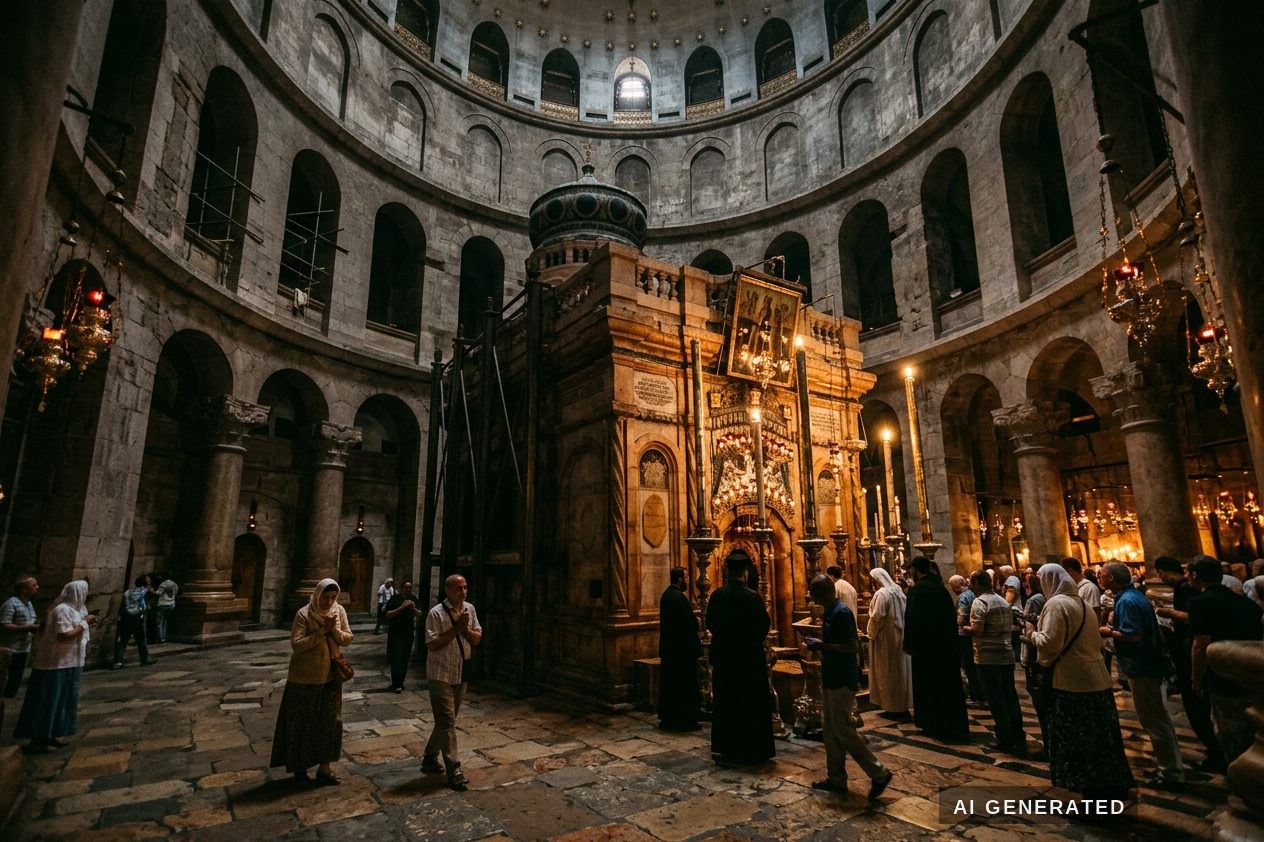
Church of the Holy Sepulchre
The church built where Christians believe Jesus was crucified and buried, and where he rose again. Six different churches share the same building.
 5/5 Significance
Bethlehem, Palestine
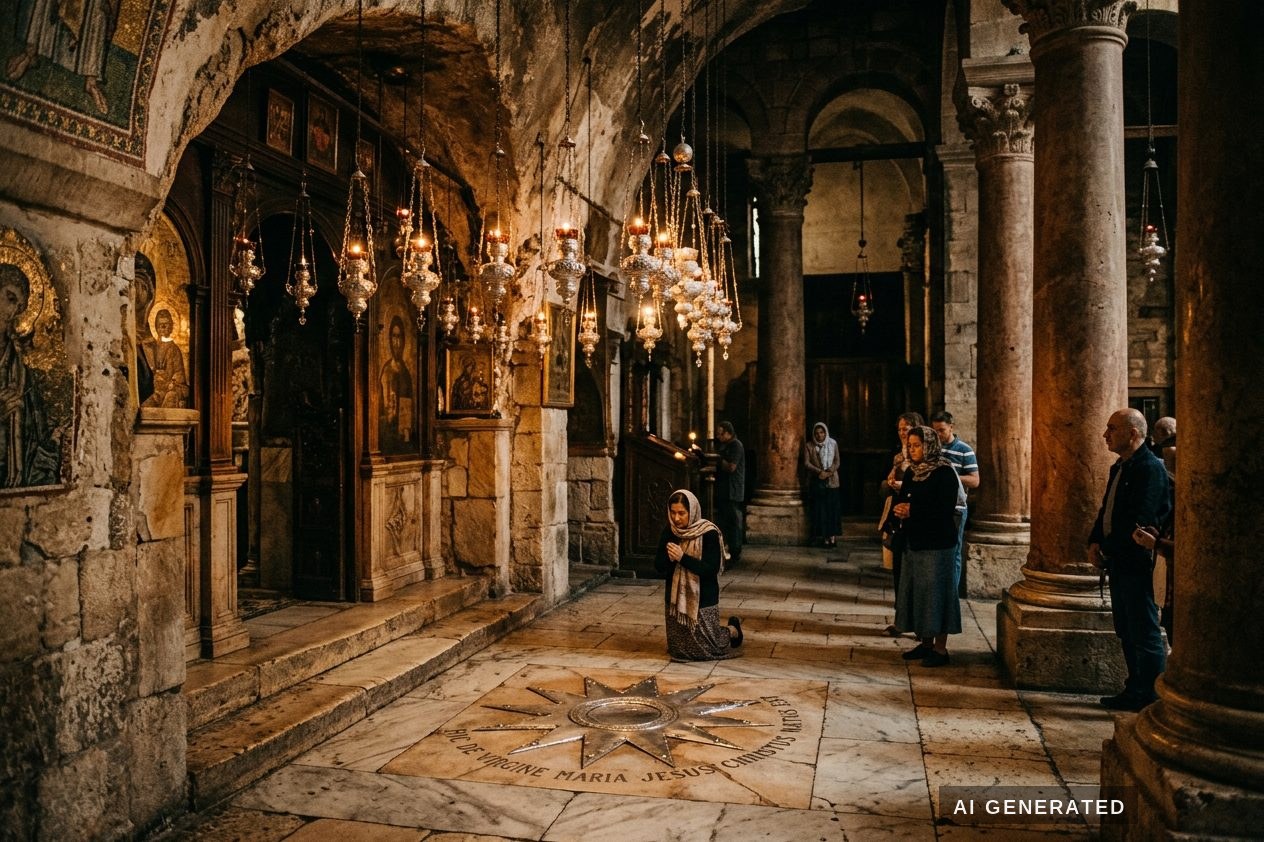
Church of the Nativity
The oldest church still used every day. It stands over the cave where Jesus is believed to have been born, marked with a silver star.
 5/5 Significance
Tiberias, Israel
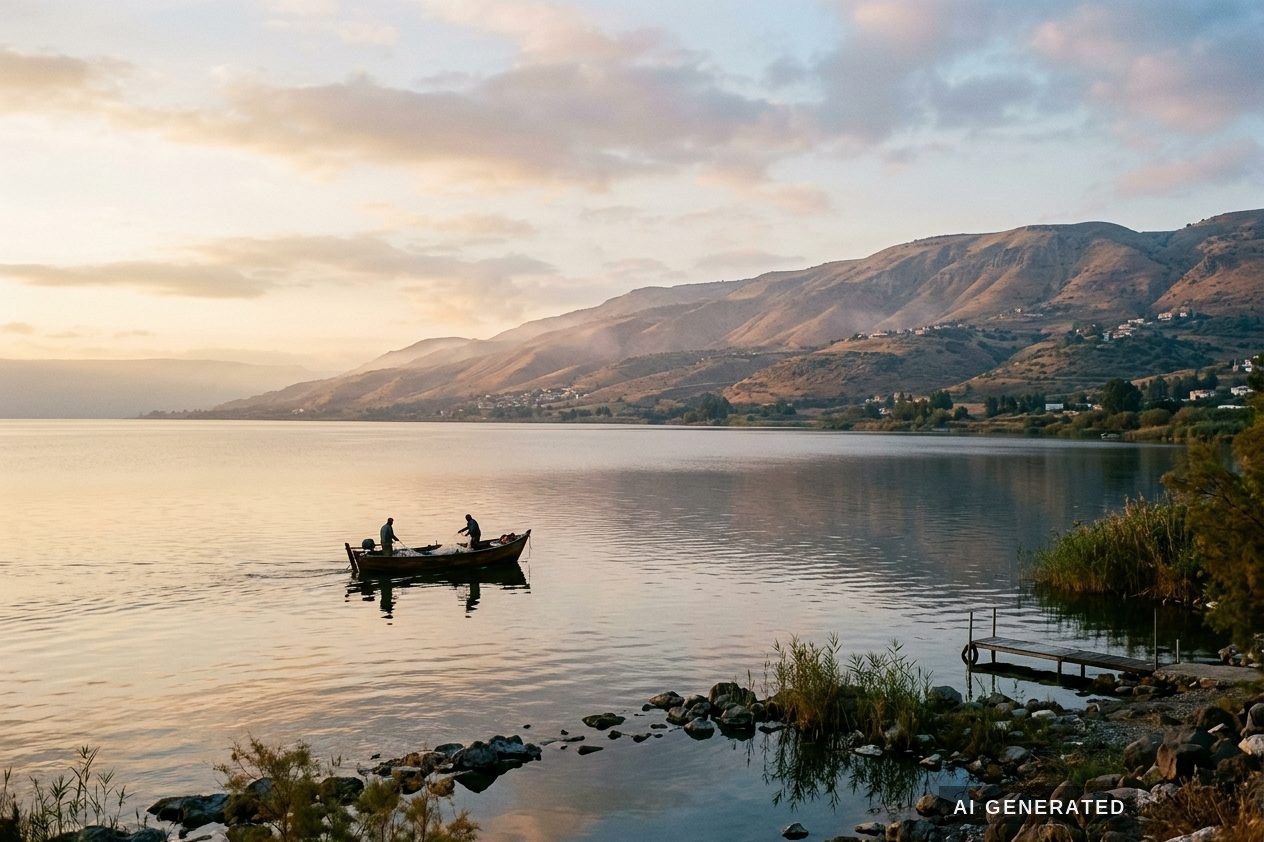
Sea of Galilee
A large freshwater lake, 210 metres below sea level, where Jesus did most of his teaching and healing.