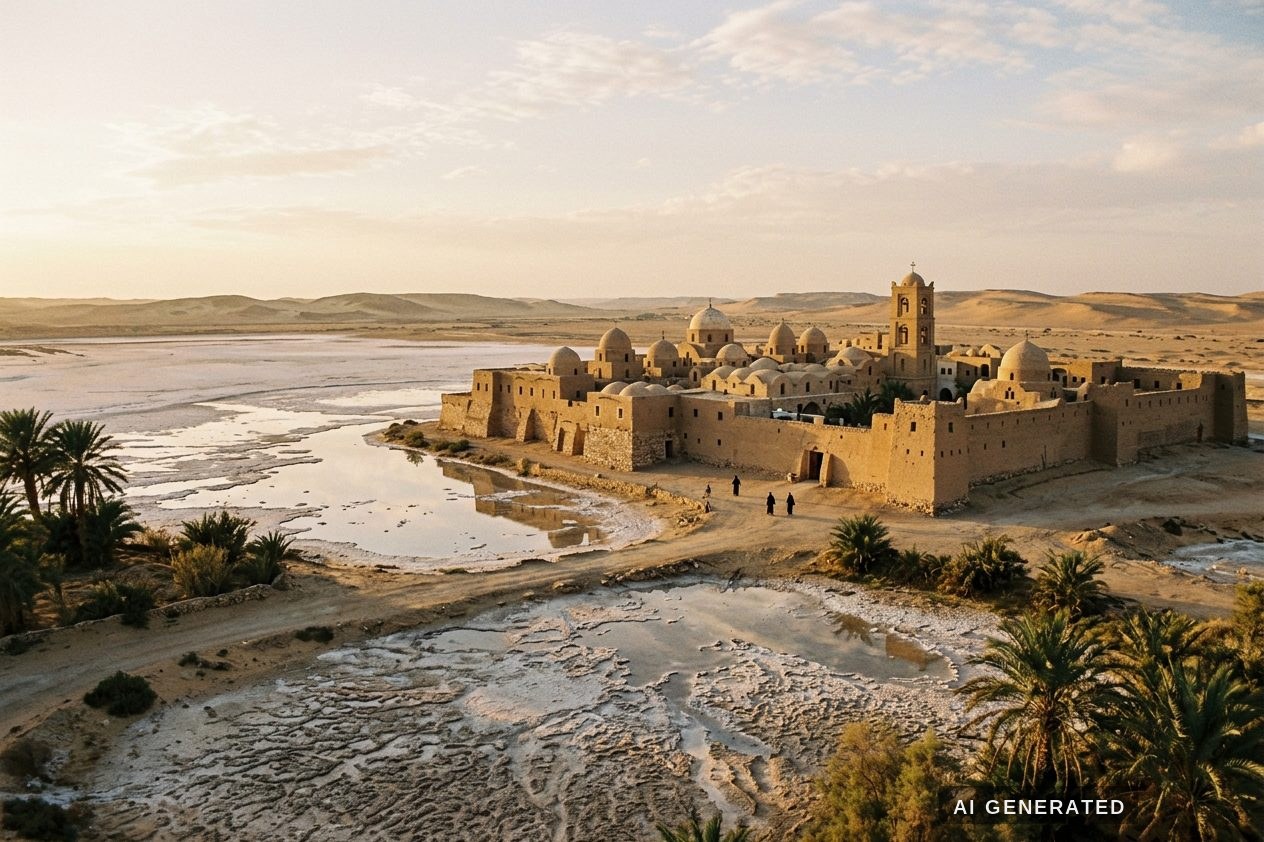
Wadi El Natrun, Egypt
Wadi El Natrun
The Egyptian desert where monk life began. Four Coptic monasteries still work the same land today.
Biblical significance
From the fourth century thousands of hermits filled this depression between Cairo and Alexandria, and the Sayings of the Desert Fathers were collected from their cells. Four monasteries survive: Deir Anba Bishoi, Deir el-Baramus, Deir el-Suriani and Deir Abu Maqar. Fortified keeps built against Bedouin raids still stand inside the walls, reached by drawbridge.
Scripture
Loading the passage…
Open in YouVersion →Loading the passage…
Open in YouVersion →Excerpts from the World English Bible. Full text opens in the YouVersion Bible app.
Best time to go
November to March.
Visitor notes
Reachable in a day from Cairo. Some monasteries close to visitors during fasts — check first.
Coordinates
30.4000, 30.3333
On the map
Open the world atlasFind it on Google Maps
Wadi El Natrun on the map
Open directionsPlan your pilgrimage
Getting to Wadi El Natrun
Everything you need to turn this holy place into a journey. We may earn a commission from these partner links, at no extra cost to you.
Share your experience
Have you been here?
Rate this place and share your experience with other Christrails travellers.
Rate This Place
Be the first to rate this place
Visitor Experiences
No visitor experiences yet. Be the first to share yours.
Share this page
Nearby in this category
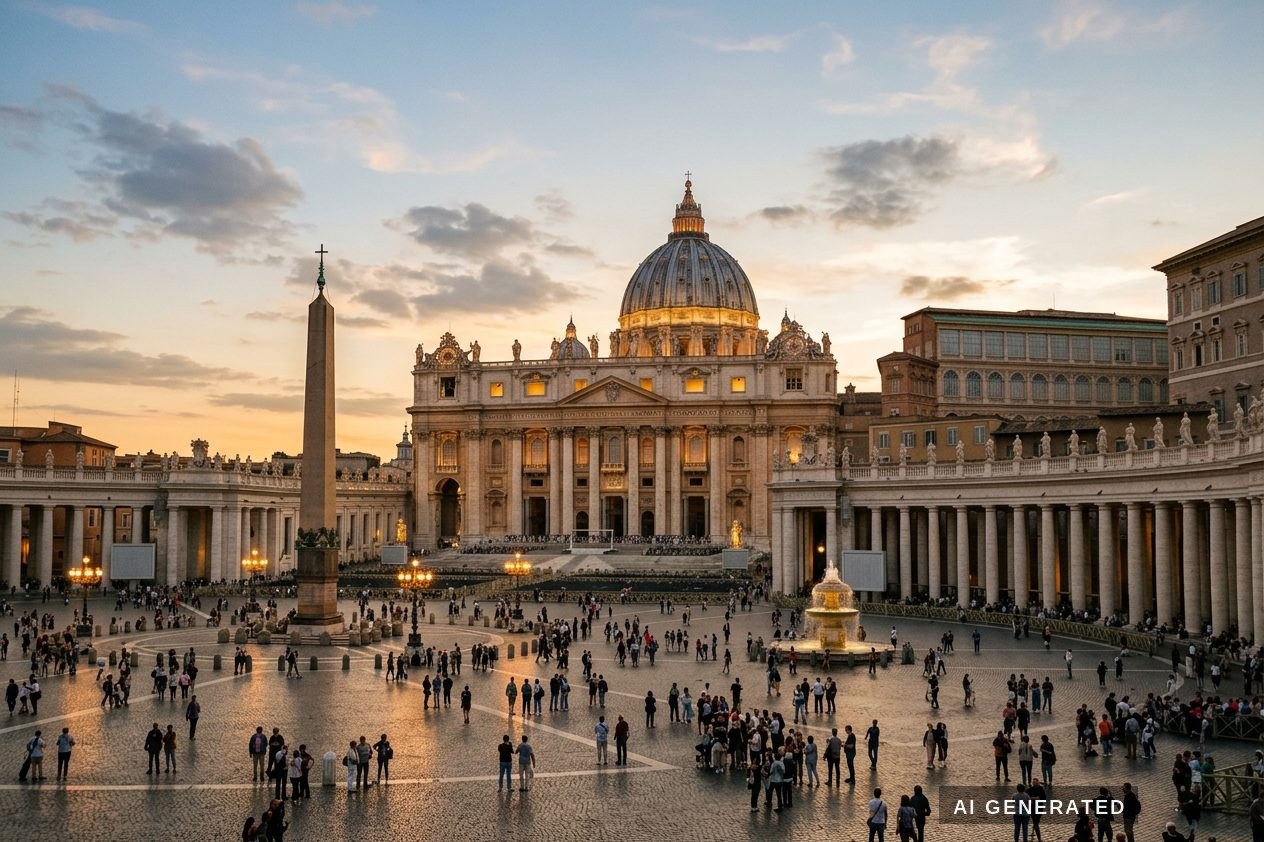 4/5 Significance
Vatican City, Vatican City
St Peter's Basilica
The biggest church ever built, with Michelangelo's dome over the tomb of Peter the fisherman.
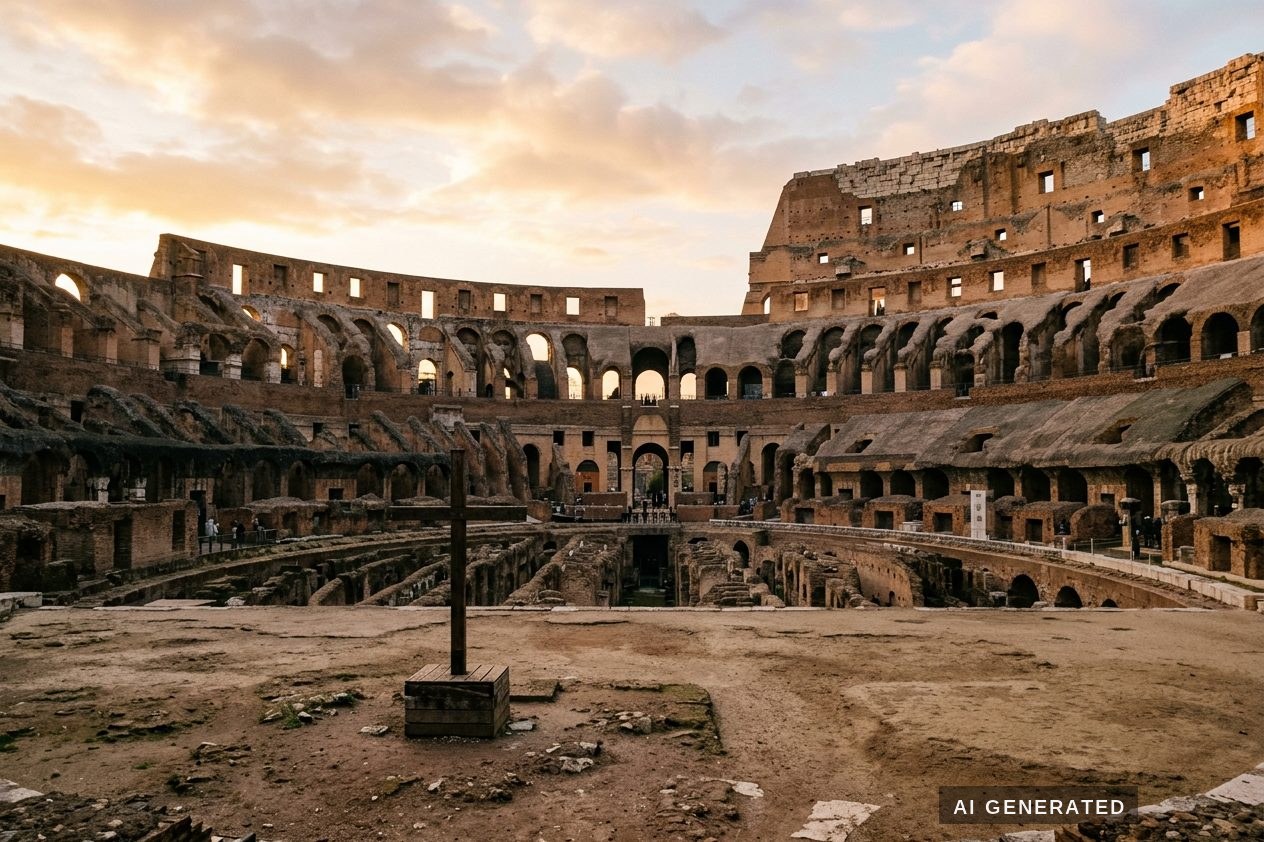 2/5 Significance
Rome, Italy
The Colosseum
The huge Roman arena. We are not sure Christians died here, but Rome did kill many Christians for their faith.
 3/5 Significance
Kalambaka, Greece
Meteora
Six monasteries built on top of tall rock towers, 300 metres above the plains of Greece.