Kalambaka, Greece
Meteora
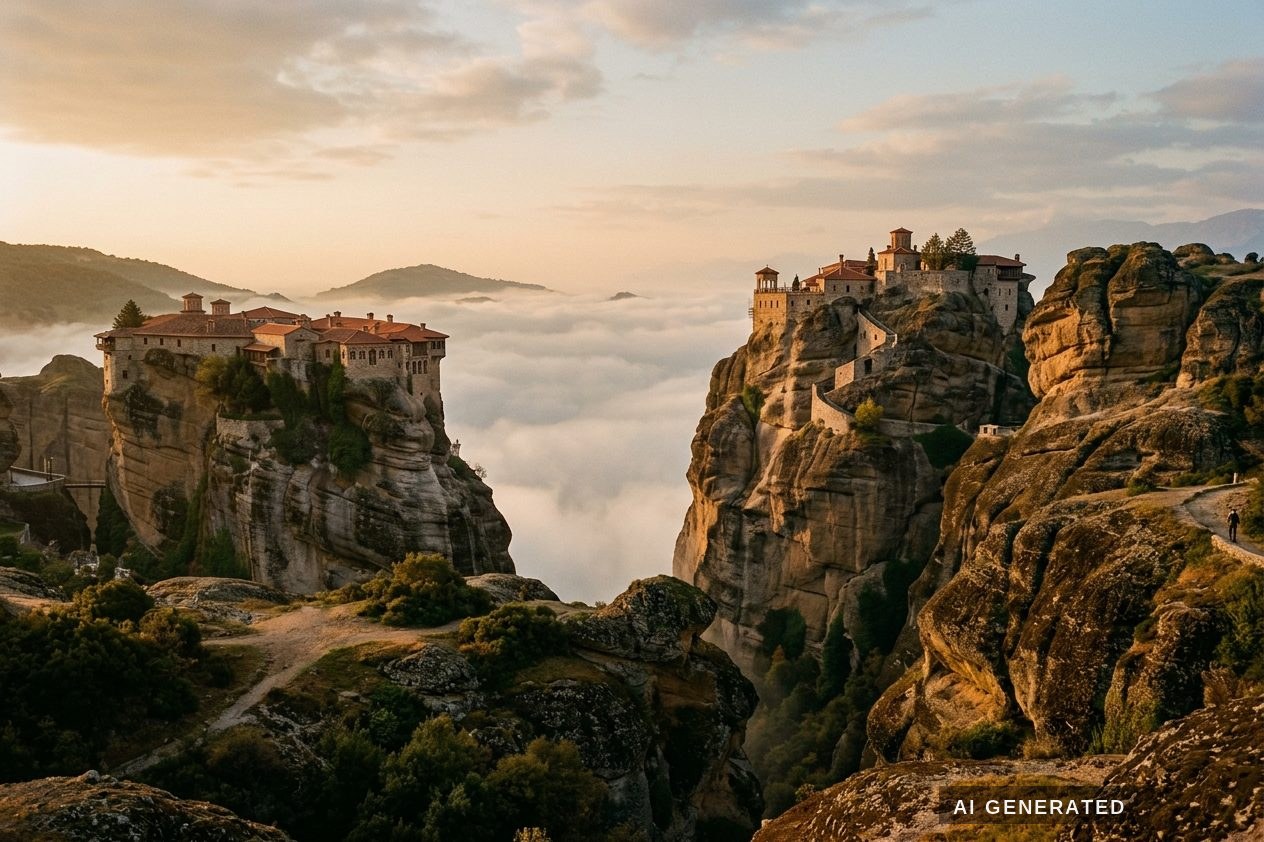
Six monasteries built on top of tall rock towers, 300 metres above the plains of Greece.
Biblical significance
Six working monasteries sit on top of tall rock pillars, some up to 400 metres above the plain below. The monks who first climbed up in the 1300s picked these rocks for a simple reason: almost nobody could follow them up there.
UNESCO protects it for both its nature and its history. Unlike many old monasteries in Greece, monks and nuns still live here, and the Byzantine wall paintings are still in the churches they were made for.
Hermits occupied the caves in these rock towers from the eleventh century; the monasteries were built from the fourteenth, accessible only by rope ladders and nets hauled up by windlass. The ropes, monks said, were replaced only when the Lord let them break. Twenty-four monasteries once stood here; six remain active. The frescoes at Great Meteoron and Varlaam are outstanding Cretan-school work.
Scripture
Loading the passage…
Open in YouVersion →Loading the passage…
Open in YouVersion →Excerpts from the World English Bible. Full text opens in the YouVersion Bible app.
History
The story of Meteora
Hermits in the rocks
Ascetics were living in caves and clefts in these pillars by the eleventh century, gathering for liturgy at a rock chapel on Sundays.
The monasteries, 14th–16th century
Athanasios the Meteorite founded the Great Meteoron around 1340, and over the next two centuries some twenty-four monasteries were built on the summits, funded partly by Serbian and Byzantine nobility fleeing Ottoman advance.
Nets, ladders and stairs
Until the 1920s access was by removable ladders or a rope net winched up by hand. The rock-cut staircases that visitors use today were carved in the interwar period.
Decline and survival
Only six of the monasteries remain in use, several with very small communities. The site was damaged during the Second World War and restored from the 1960s.
On the ground
What you can see today
Great Meteoron (Megalo Meteoro)
The largest and highest, with a katholikon of 1388 and 1552 frescoes, an old kitchen, a cooper's workshop and a museum with the winch tower.
Varlaam
Next door, with a superb sixteenth-century church, a huge wooden water barrel and the best-displayed net-and-winch system.
Roussanou
A small nunnery on a low pillar reached by footbridge — the easiest access and famously photogenic.
St Nicholas Anapausas
Tiny and vertical, with frescoes by the Cretan painter Theophanes Strelitzas from 1527.
Holy Trinity and St Stephen
Holy Trinity requires 140 steps up from the road and gives the best views; St Stephen, a nunnery, is the only one with level access from its car park.
Sunset viewpoints
Marked pull-ins on the ring road above Kastraki, and the walking trails between the pillars for anyone with a couple of hours.
The visit
What to expect when you arrive
- Time needed
- A full day for three or four monasteries; two days to walk the trails
- Steps
- 100–300 rock-cut steps at most monasteries
- Closing days
- Each monastery closes one or two fixed days a week — check before setting out
- Crowds
- Coach parties 10:00–14:00; early and late are far calmer
- Best season
- April–June and September–October; winter can bring snow and mist
- Accessibility
- Only St Stephen is realistically wheelchair-accessible
Practicalities
Step by step: how to get there
- 1
Base towns
Kalambaka (Kalabaka) at the foot of the rocks, or the smaller village of Kastraki directly beneath them.
- 2
By train
Direct services from Athens and Thessaloniki to Kalambaka take roughly four to five hours and are the most comfortable option.
- 3
By car
About 4.5 hours from Athens and 3 from Thessaloniki. A hire car makes it easy to combine several monasteries in a day; parking at each is small.
- 4
Local transport
A limited local bus runs up to the monasteries from Kalambaka a few times daily; taxis and half-day minibus tours fill the gaps.
- 5
On foot
Old monk paths link Kastraki with Great Meteoron and Holy Trinity — steep, shaded and the best way to see the rocks.
Checklist
Before you go
- Each monastery charges a small entrance fee, cash in euros, and each keeps its own closing day and seasonal hours.
- Dress code is enforced: long skirts for women (wraps are lent at the door) and long trousers for men, shoulders covered.
- Shorter opening hours from November to March.
- Good shoes for the steps and the trails; the rock gets slippery in rain.
- Water and a snack — there are only small kiosks at some monasteries.
- Start with the furthest monastery and work back to avoid the coach flow.
- Toilets exist at most monasteries but are basic.
Etiquette
Visiting respectfully
- These are inhabited communities, not museums — monks and nuns are going about their day.
- No photography inside the churches, which is strictly enforced to protect the frescoes.
- Quiet voices in courtyards and corridors; no phone calls.
- Do not enter areas marked private, and do not photograph the monastics without permission.
- Drones are banned across the whole protected site.
Best time to go
Spring and autumn; winter mist is beautiful but hides everything.
Visitor notes
Each monastery has its own opening days. Skirts required for women, long trousers for men — wraps provided.
Coordinates
39.7217, 21.6306
On the map
Open the world atlasKeep going
Continue the trail
- Mount AthosKaryes, GreeceGreece's other great monastic republic, on the Halkidiki peninsula.
- Hagia SophiaIstanbul, TurkeyThe Byzantine capital's great church, a short flight east.
- PatmosChora, GreeceMonastic island in the Aegean.
- Saint Catherine's MonasterySaint Catherine, EgyptDesert monasticism from the same Orthodox tradition.
Find it on Google Maps
Meteora on the map
Open directionsPlan your pilgrimage
Getting to Meteora
Everything you need to turn this holy place into a journey. We may earn a commission from these partner links, at no extra cost to you.
Share your experience
Have you been here?
Rate this place and share your experience with other Christrails travellers.
Rate This Place
Be the first to rate this place
Visitor Experiences
No visitor experiences yet. Be the first to share yours.
Share this page
Nearby in this category
 5/5 Significance
Saint Catherine, Egypt
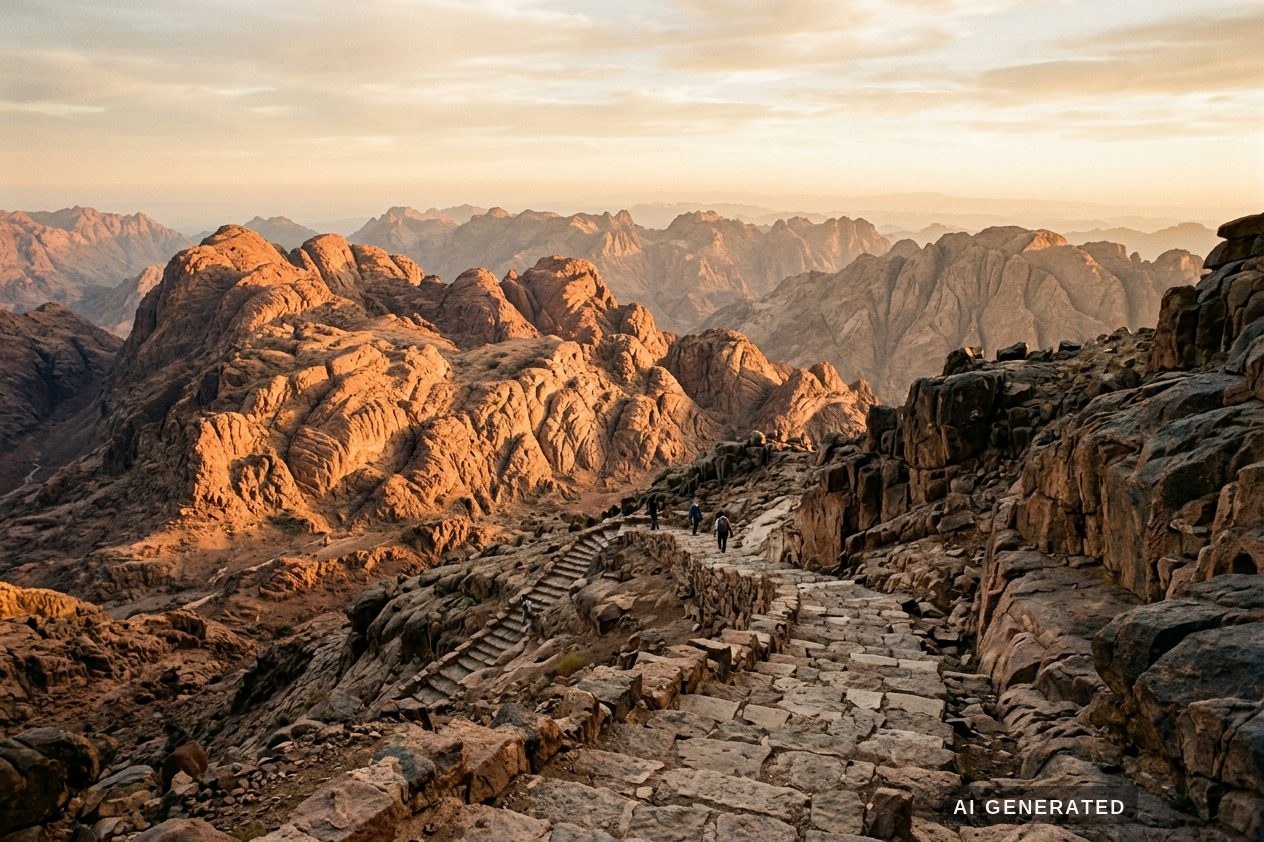
Mount Sinai
The 2,285-metre mountain where, according to Jewish, Christian and Muslim tradition, Moses received the Ten Commandments.
 5/5 Significance
Saint Catherine, Egypt
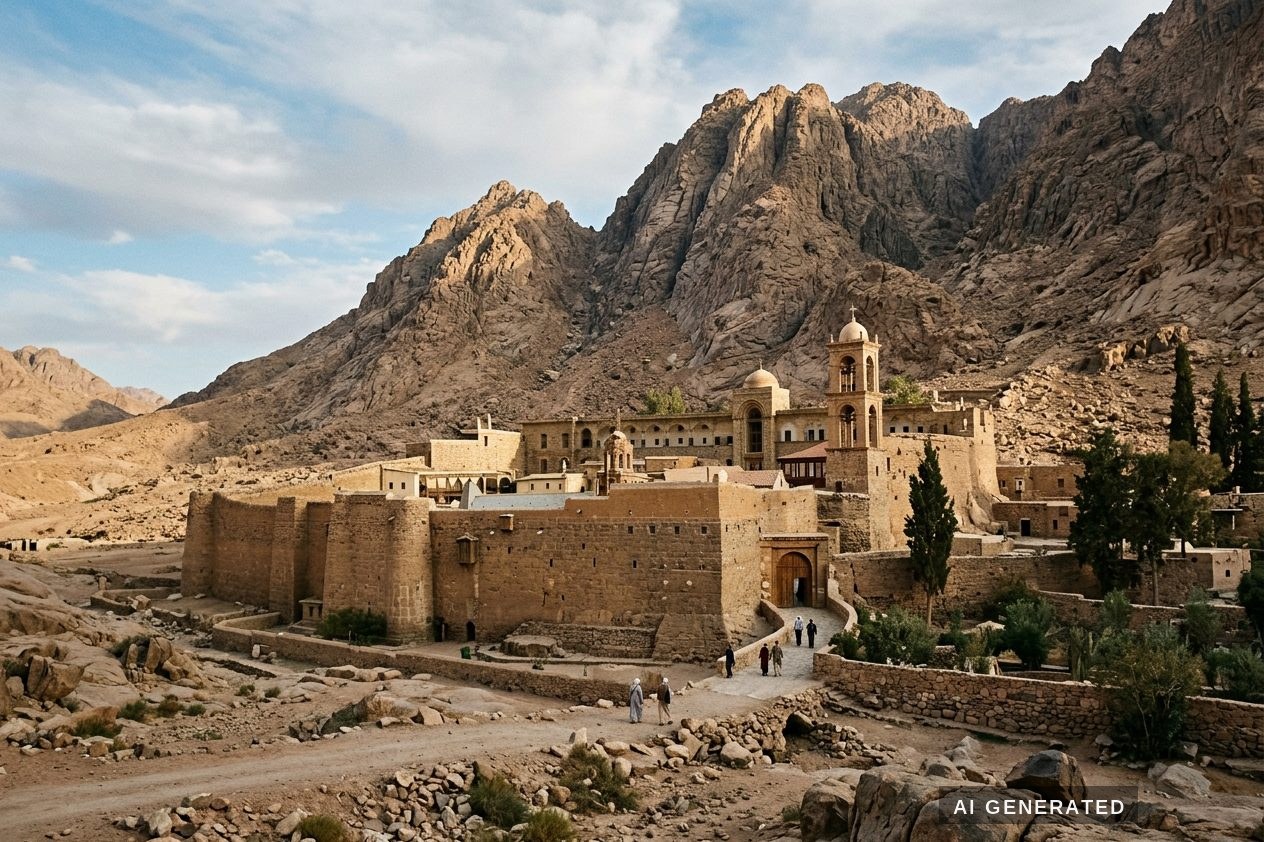
Saint Catherine's Monastery
The oldest monastery still in use, built around the bush where God spoke to Moses. It holds a world-famous library.
 5/5 Significance
Qumran, Israel
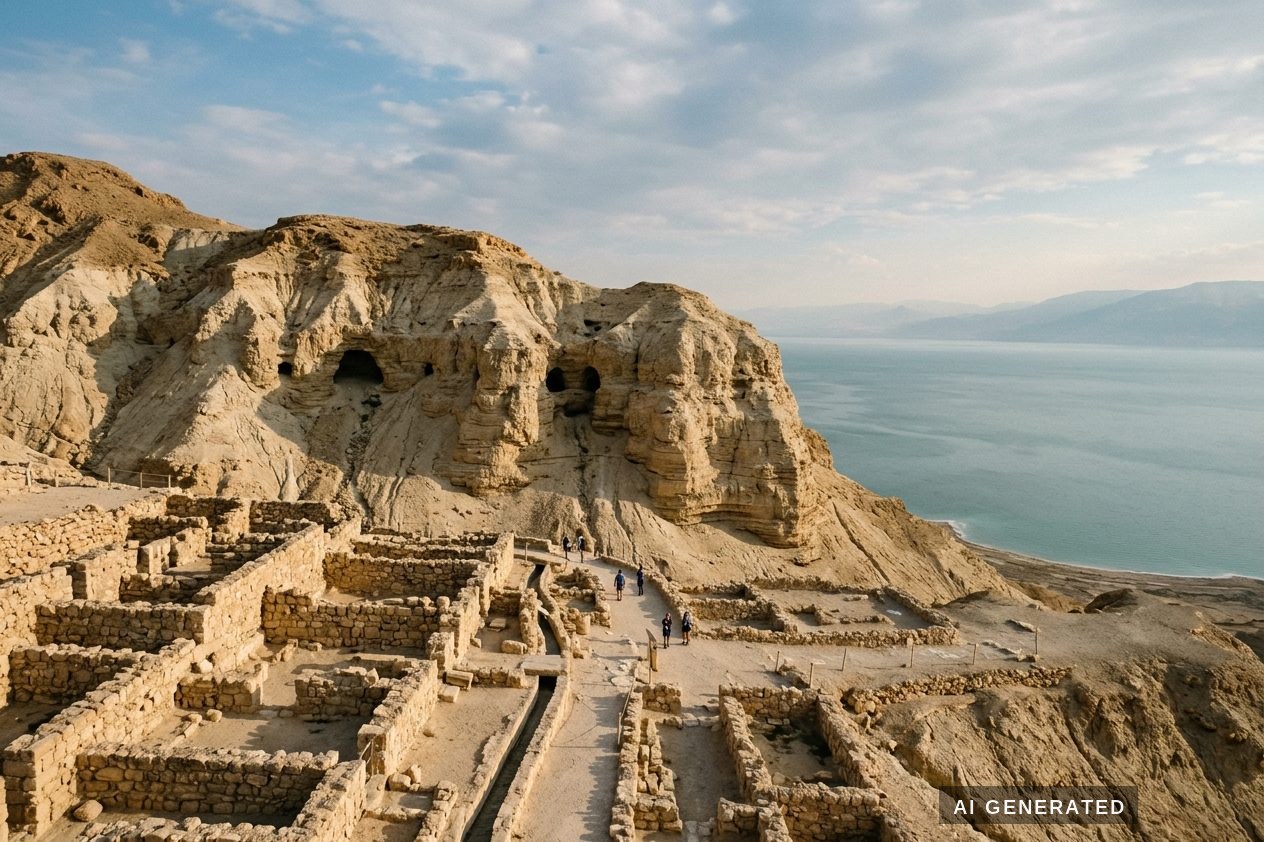
Qumran
Caves above the Dead Sea where a shepherd boy found the Dead Sea Scrolls, the oldest Bible texts we have.