Jerusalem, Israel
Via Dolorosa
The route Jesus is believed to have walked to the cross: 14 stops through the narrow streets of Jerusalem.
Biblical significance
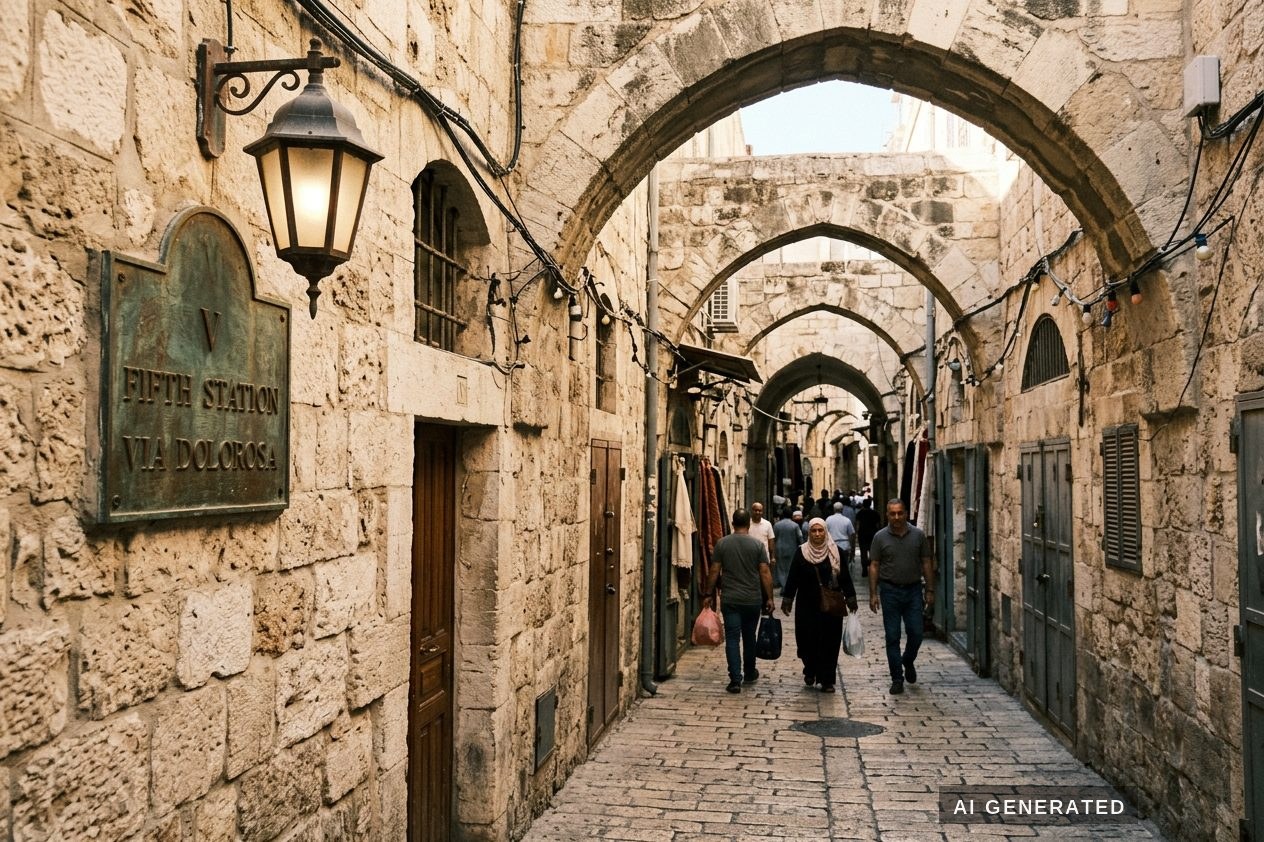
The Via Dolorosa is not a building — it is a walk. It runs about 600 metres through the narrow streets of Jerusalem's Old City, past fourteen Stations of the Cross, and ends inside the Church of the Holy Sepulchre.
Part of what makes it powerful is how everyday it feels. You pray the stations while market stalls, delivery carts and children on their way to school go past you. That is probably much closer to the original scene than a quiet church would be.
The devotional route took its present form in the eighteenth century, though pilgrims have walked a Way of the Cross in Jerusalem since the Byzantine era. It begins near the Lions' Gate at the Antonia Fortress and ends at Calvary and the tomb. Franciscans lead a public procession every Friday afternoon, and the route runs straight through a working market — falafel stands, hardware shops, and the eighth station.
Scripture
Loading the passage…
Open in YouVersion →Loading the passage…
Open in YouVersion →Excerpts from the World English Bible. Full text opens in the YouVersion Bible app.
History
The story of Via Dolorosa
Where the route came from
The Gospels give no itinerary. Byzantine and early medieval pilgrims followed various paths; the present route was fixed by the Franciscans from the fourteenth century onward, and the fourteen-station scheme was standardised in Europe before being mapped back onto Jerusalem's streets.
The starting point
Tradition begins the walk at the Antonia Fortress site near the Lions' Gate, identified with Pilate's praetorium. Many historians think Pilate more likely judged Jesus at Herod's palace near today's Jaffa Gate, which would place the historical route on the other side of the city. Both views are honestly held.
Street level then and now
The paving you walk on is largely medieval and Ottoman, several metres above the first-century surface. The flagstones shown in the Convent of the Sisters of Zion, once presented as the Lithostrotos of John's Gospel, are now generally dated to Hadrian's second-century rebuilding.
Stations without buildings
Nine stations are marked in the street by small plaques or Roman numerals on walls; the last five are inside the Holy Sepulchre. Four stations — the falls and the meeting with Mary — come from devotional tradition rather than the Gospel text.
On the ground
What you can see today
Stations I–II near the Lions' Gate
The Franciscan Church of the Flagellation and the Chapel of the Condemnation, with a quiet courtyard that is the best place to gather before setting off.
Ecce Homo Arch
A Hadrianic arch spanning the lane, with the Convent of the Sisters of Zion and its Roman pavement and cistern beneath.
The market stretch
Stations III to IX thread through Al-Wad Street and the souk — small chapels, a Polish chapel, an Armenian church, and a column drum marking the ninth station beside the Coptic patriarchate.
Ethiopian rooftop monastery
Between the ninth station and the church, a rooftop village of monks' cells above the Chapel of St Helena — one of the Old City's quietest corners.
Stations X–XIV
Inside the Holy Sepulchre: the stripping, nailing and crucifixion chapels on Calvary, the Stone of Unction, and the tomb.
The visit
What to expect when you arrive
- Time needed
- 1.5–2 hours walking and praying, plus time in the church
- Distance
- About 600 m, but slow going through crowds
- Terrain
- Polished stone, steps, occasional steep ramps; slippery when wet
- Accessibility
- Difficult for wheelchairs — steps and narrow market lanes
- Crowds
- Busiest Friday afternoon during the Franciscan procession and in Lent
- Atmosphere
- A working market street, not a quiet sanctuary
Practicalities
Step by step: how to get there
- 1
To the start
Enter the Old City at the Lions' (St Stephen's) Gate on the eastern wall. Bus and taxi drop-offs are just outside; from the Damascus Gate light-rail stop it is about 15 minutes on foot.
- 2
Walking the route
Follow the Roman numerals on the walls westward; the lanes are signposted but easy to lose in the souk — stay on Al-Wad Street until the ninth station turn.
- 3
Joining the Friday procession
The Franciscans lead a public procession from the first station on Friday afternoons, earlier in winter than in summer. Anyone may join.
- 4
Finishing
The route ends inside the Church of the Holy Sepulchre; from there Jaffa Gate and the Jewish Quarter are ten minutes away.
Checklist
Before you go
- Free and open street — no ticket, though the Sisters of Zion convent and some chapels charge a small fee.
- Chapels close for a long lunch break; a full walk works best in the morning.
- Shops shut on Friday around midday prayers and on Sunday in the Christian Quarter.
- Sturdy shoes with grip; the stone is worn glassy.
- Bags are screened at the Old City gates.
- Carry water and small change; there are plenty of juice stalls but few toilets.
- Printed or app station guides help — the plaques are small and easy to miss.
Etiquette
Visiting respectfully
- Groups praying the stations block the lane; wait rather than pushing through a station.
- You are walking through Palestinian residential and commercial streets — ask before photographing people, especially children.
- Keep processional singing to your own group's chapel stops rather than in front of shops.
- Modest dress is needed for the chapels and the Holy Sepulchre at the end.
Best time to go
Friday afternoon for the Franciscan procession; Lent for the atmosphere.
Visitor notes
Free and self-guided. Station markers are small Roman numerals — a map helps.
Coordinates
31.7800, 35.2340
On the map
Open the world atlasKeep going
Continue the trail
- Church of the Holy SepulchreJerusalem, IsraelWhere the last five stations are.
- Mount of OlivesJerusalem, IsraelGethsemane and the arrest, where the Passion narrative begins.
- Pool of BethesdaJerusalem, IsraelJust inside the Lions' Gate, metres from the first station.
- JerusalemJerusalem, IsraelThe Old City around the route.
Find it on Google Maps
Via Dolorosa on the map
Open directionsPlan your pilgrimage
Getting to Via Dolorosa
Everything you need to turn this holy place into a journey. We may earn a commission from these partner links, at no extra cost to you.
Share your experience
Have you been here?
Rate this place and share your experience with other Christrails travellers.
Rate This Place
Be the first to rate this place
Visitor Experiences
No visitor experiences yet. Be the first to share yours.
Share this page
Nearby in this category
 5/5 Significance
Jerusalem, Israel
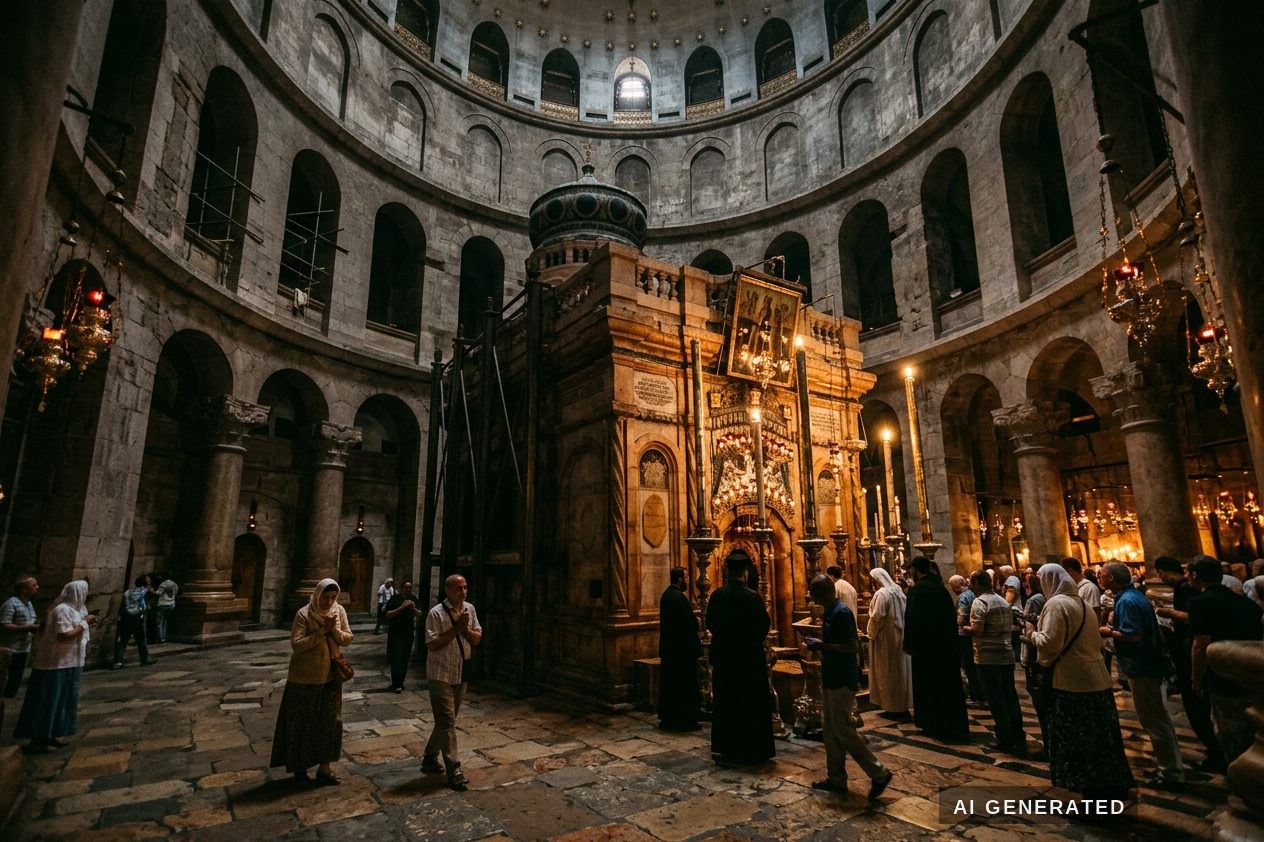
Church of the Holy Sepulchre
The church built where Christians believe Jesus was crucified and buried, and where he rose again. Six different churches share the same building.
 5/5 Significance
Bethlehem, Palestine
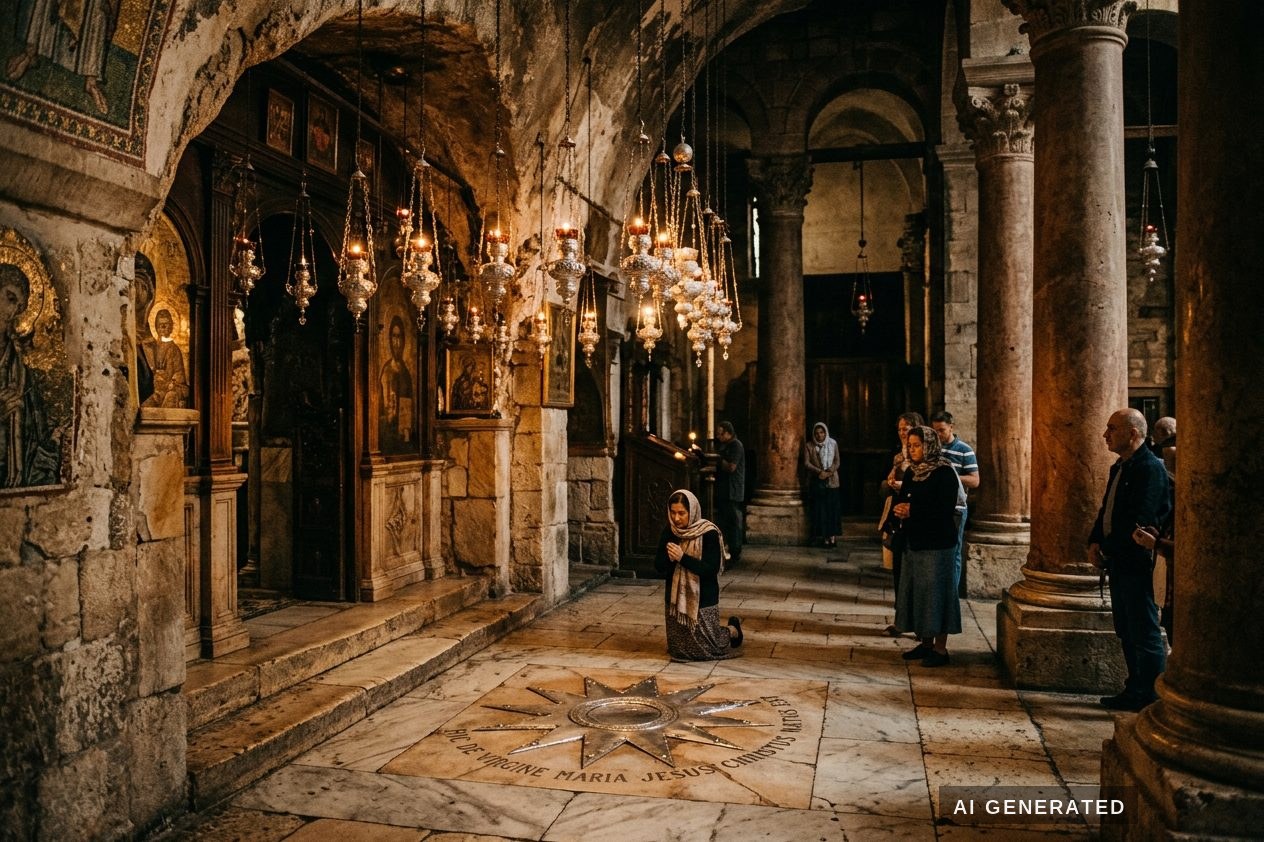
Church of the Nativity
The oldest church still used every day. It stands over the cave where Jesus is believed to have been born, marked with a silver star.
 5/5 Significance
Tiberias, Israel
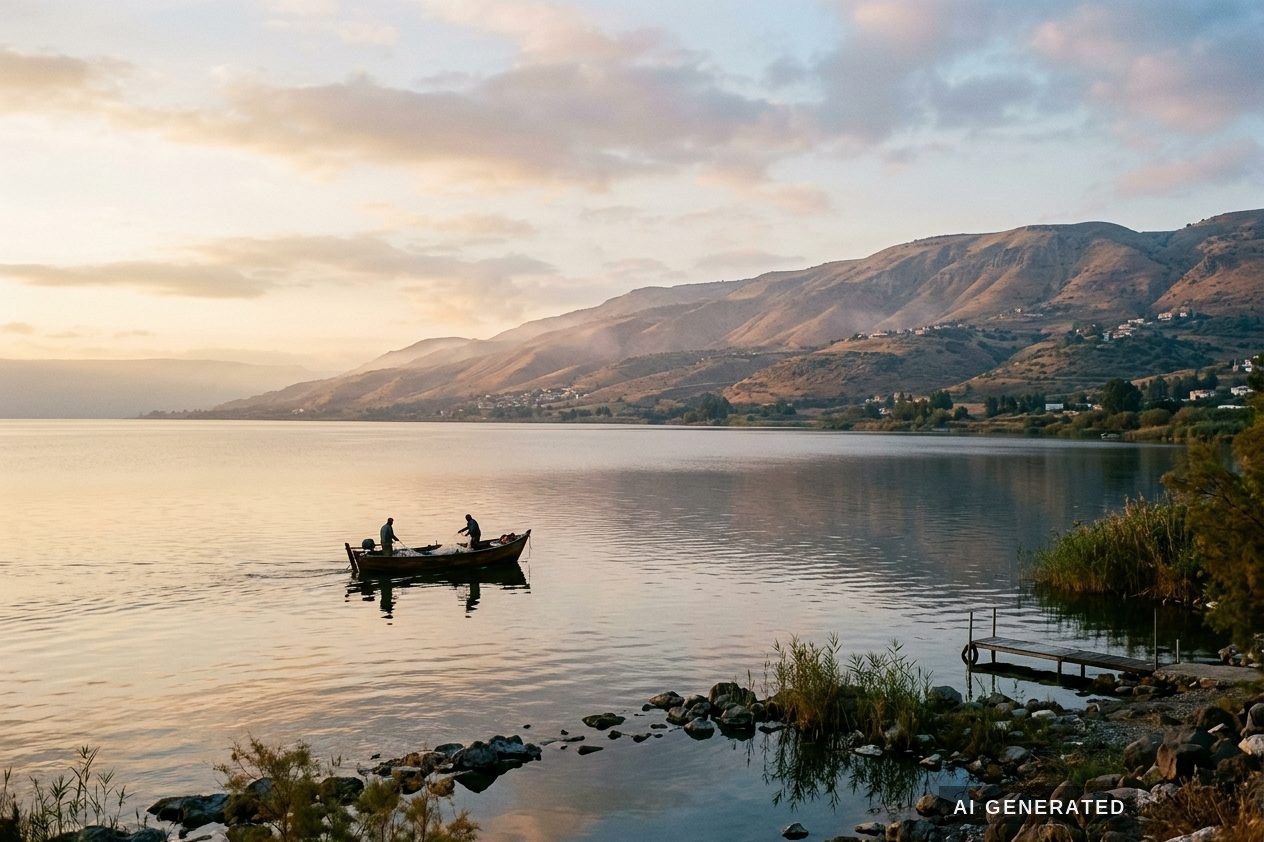
Sea of Galilee
A large freshwater lake, 210 metres below sea level, where Jesus did most of his teaching and healing.