Jerusalem, Israel
Mount of Olives
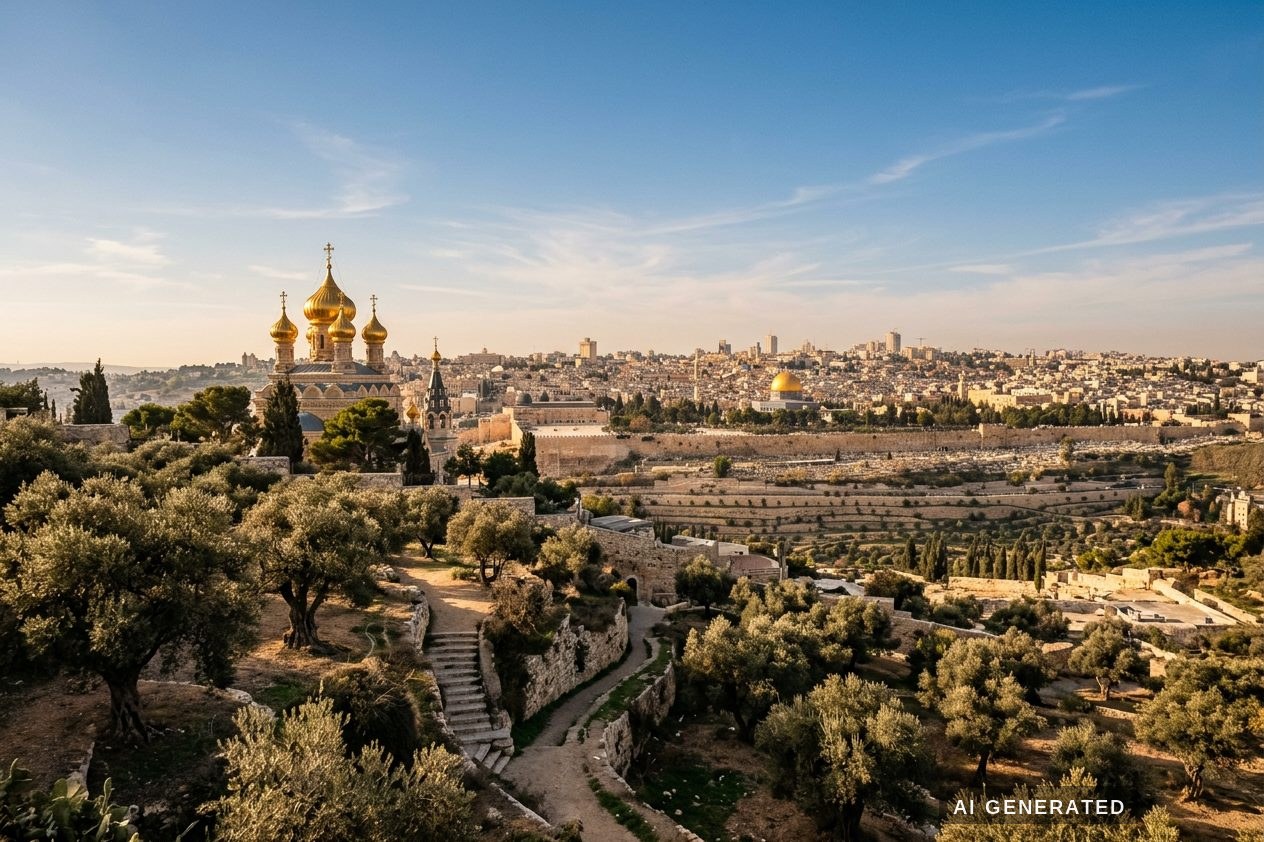
The hill just east of the Old City where Jesus cried, prayed, was arrested and went up to heaven. The view is famous.
Biblical significance
This ridge just east of Jerusalem gives the famous view over the Temple Mount, and a lot of the Gospel story happens here: the ride down into the city on Palm Sunday, Jesus weeping over Jerusalem, his teaching on the end times, the night of prayer in Gethsemane, his arrest, and the ascension.
It is also the oldest graveyard in the world still in use. Jews have been buried on the western slope for about three thousand years, because many believe the resurrection will begin right here.
A limestone ridge crowded with olive trees, tombs and churches. Gethsemane lies at its foot with olive trees carbon-dated to the twelfth century growing from far older root systems. Dominus Flevit, shaped like a teardrop, marks the traditional spot where Jesus wept over the city. The Jewish cemetery on the western slope is the oldest in continuous use in the world.
Scripture
Loading the passage…
Open in YouVersion →Loading the passage…
Open in YouVersion →Loading the passage…
Open in YouVersion →Excerpts from the World English Bible. Full text opens in the YouVersion Bible app.
History
The story of Mount of Olives
Old Testament ground
David crossed the mount in flight from Absalom, and Zechariah prophesied that the Lord's feet would stand on it. That prophecy is why Jewish burial on the slope has been sought for millennia.
Gethsemane
An olive grove at the foot of the hill, named for an oil press. Some of the gnarled trees in the enclosure have been radiocarbon-dated to the twelfth century, with root systems possibly far older — impressive, but not trees from the first century.
Byzantine building
From the fourth century the slope filled with churches: the Eleona over the teaching cave, the Imbomon at the ascension site, and a basilica at Gethsemane whose fourth-century mosaic floor is visible in today's Church of All Nations.
Later centuries
Most Byzantine churches fell in the Persian and later invasions. The Crusaders rebuilt; the ascension chapel became a mosque after 1187 and is still administered as one, though Christians are admitted and celebrate there annually.
Modern churches
The Church of All Nations was built 1919–1924 on the Byzantine and Crusader foundations, and the Russian Orthodox Mary Magdalene church with its gold onion domes went up in 1888.
On the ground
What you can see today
The summit viewpoint
The panorama over the Old City, the Dome of the Rock and the Kidron Valley — best in early morning light, when the sun is behind you.
Chapel of the Ascension
A small octagonal Crusader structure with a stone bearing what tradition calls a footprint.
Pater Noster (Eleona)
Cloisters tiled with the Lord's Prayer in more than 150 languages, over the cave where tradition places Jesus teaching it.
Dominus Flevit
A teardrop-shaped chapel of 1955 whose altar window frames the Temple Mount — the most photographed window in Jerusalem, and built over Second Temple period tombs.
Gethsemane and the Church of All Nations
The ancient olive garden and a deliberately dim mosaic-domed basilica around the Rock of the Agony.
Tomb of the Virgin and the Jewish cemetery
A deep Crusader stair down to the traditional tomb of Mary, and above it the vast field of white tombstones on the slope.
The visit
What to expect when you arrive
- Time needed
- Half a day for the full descent with church stops
- Terrain
- A steep 1.5 km walk down from the summit on tarmac, hard on knees
- Direction
- Always walk downhill — take a taxi to the top and walk back to the Old City
- Shade
- Limited on the road; the churches are cool
- Crowds
- Coaches at the viewpoint mid-morning; Gethsemane is busiest at midday
- Closures
- All churches shut for a midday break of one to two hours
Practicalities
Step by step: how to get there
- 1
By taxi to the top
The standard approach: a short taxi from the Old City to the summit viewpoint on Rehavam Ze'evi Road, then walk down.
- 2
By bus
Arab buses from near Damascus Gate run up towards At-Tur; the stop leaves a walk of several minutes to the viewpoint.
- 3
On foot from the Old City
Out of the Lions' Gate, across the Kidron Valley and up — about 30–40 minutes of steady climbing, best avoided in summer heat.
- 4
Ending the walk
The descent finishes at Gethsemane, a few minutes from the Lions' Gate and the start of the Via Dolorosa.
Checklist
Before you go
- Churches are free; the Pater Noster and the Ascension chapel charge a small fee, cash only.
- Plan around the midday closures — a morning start covers most sites in one go.
- Modest dress for all churches; the Ascension chapel is a mosque and needs it too.
- Good shoes: the descent is steep and the road surface is uneven in places.
- Water, hat and sunscreen; there are no shops between the summit and Gethsemane.
- Agree the taxi fare before setting off.
Etiquette
Visiting respectfully
- The slope is an active Jewish cemetery — stay on the roads and paths, and do not walk between or photograph mourners at graves.
- Silence inside the Church of All Nations is asked for and largely kept; it is the quietest major site in Jerusalem.
- No photography during services at Gethsemane, and none at all in the Tomb of the Virgin during Orthodox liturgy.
- Do not touch or take cuttings from the old olive trees.
Best time to go
Sunrise, for the light on the Dome of the Rock.
Visitor notes
Walk down from the top past Pater Noster, Dominus Flevit and Gethsemane. Steep — good shoes.
Coordinates
31.7784, 35.2455
On the map
Open the world atlasKeep going
Continue the trail
Find it on Google Maps
Mount of Olives on the map
Open directionsPlan your pilgrimage
Getting to Mount of Olives
Everything you need to turn this holy place into a journey. We may earn a commission from these partner links, at no extra cost to you.
Share your experience
Have you been here?
Rate this place and share your experience with other Christrails travellers.
Rate This Place
Be the first to rate this place
Visitor Experiences
No visitor experiences yet. Be the first to share yours.
Share this page
Nearby in this category
 5/5 Significance
Jerusalem, Israel
Church of the Holy Sepulchre
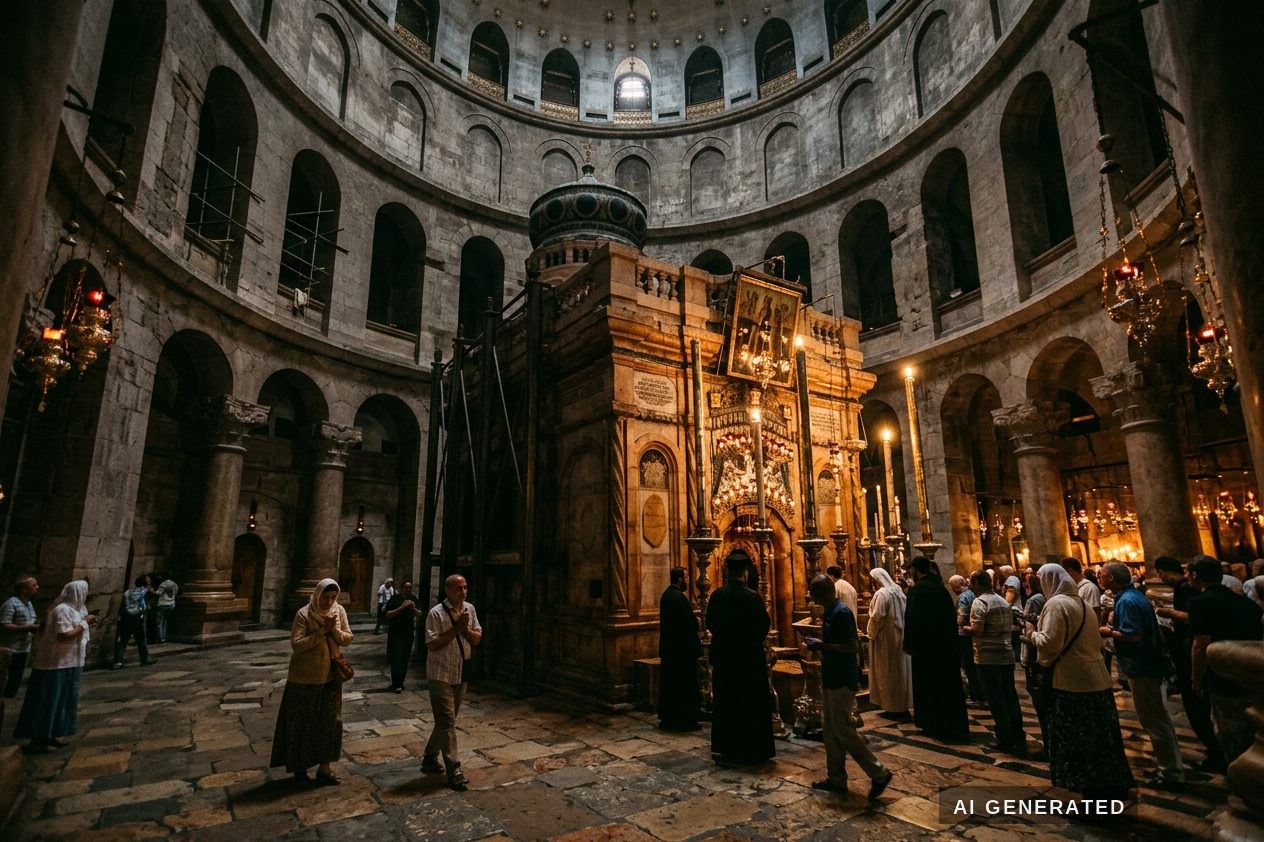
The church built where Christians believe Jesus was crucified and buried, and where he rose again. Six different churches share the same building.
 5/5 Significance
Bethlehem, Palestine
Church of the Nativity
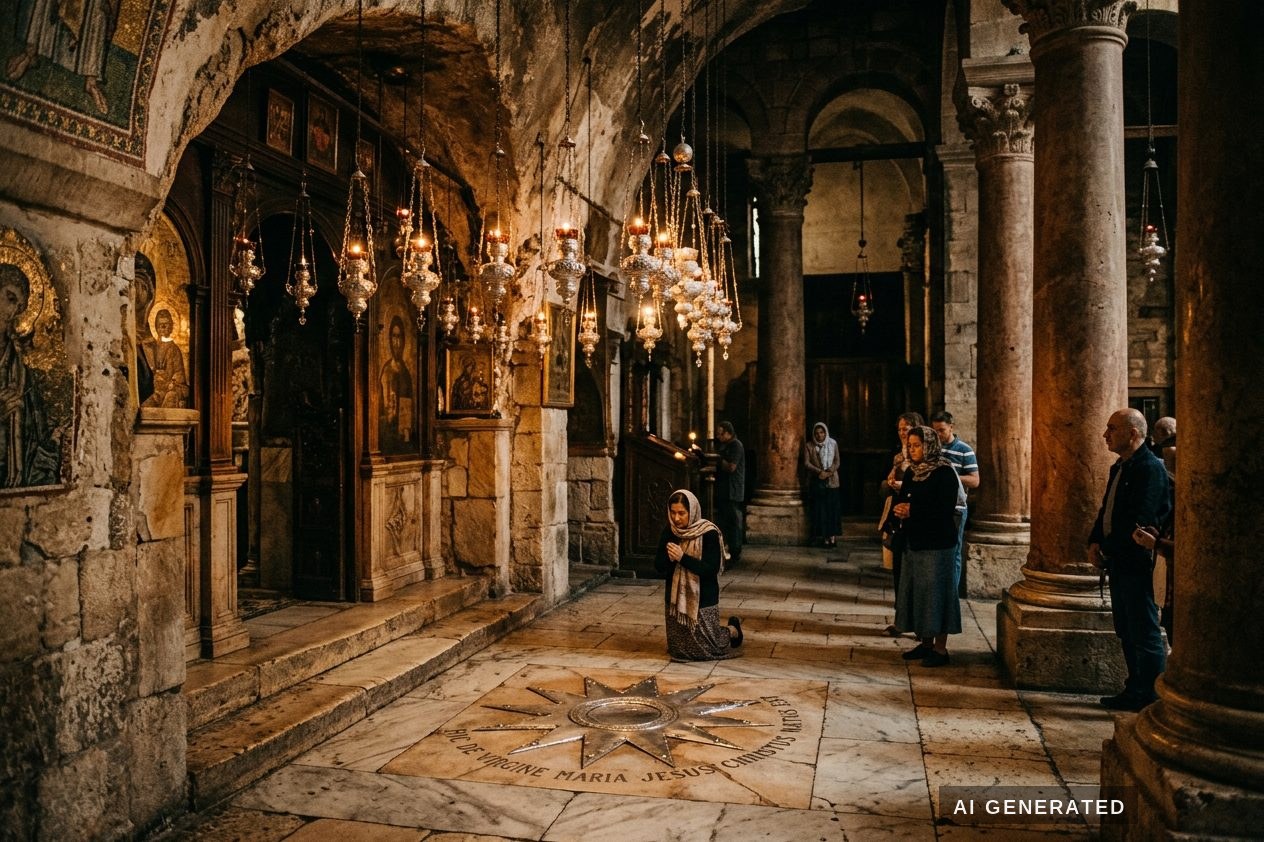
The oldest church still used every day. It stands over the cave where Jesus is believed to have been born, marked with a silver star.
 5/5 Significance
Tiberias, Israel
Sea of Galilee
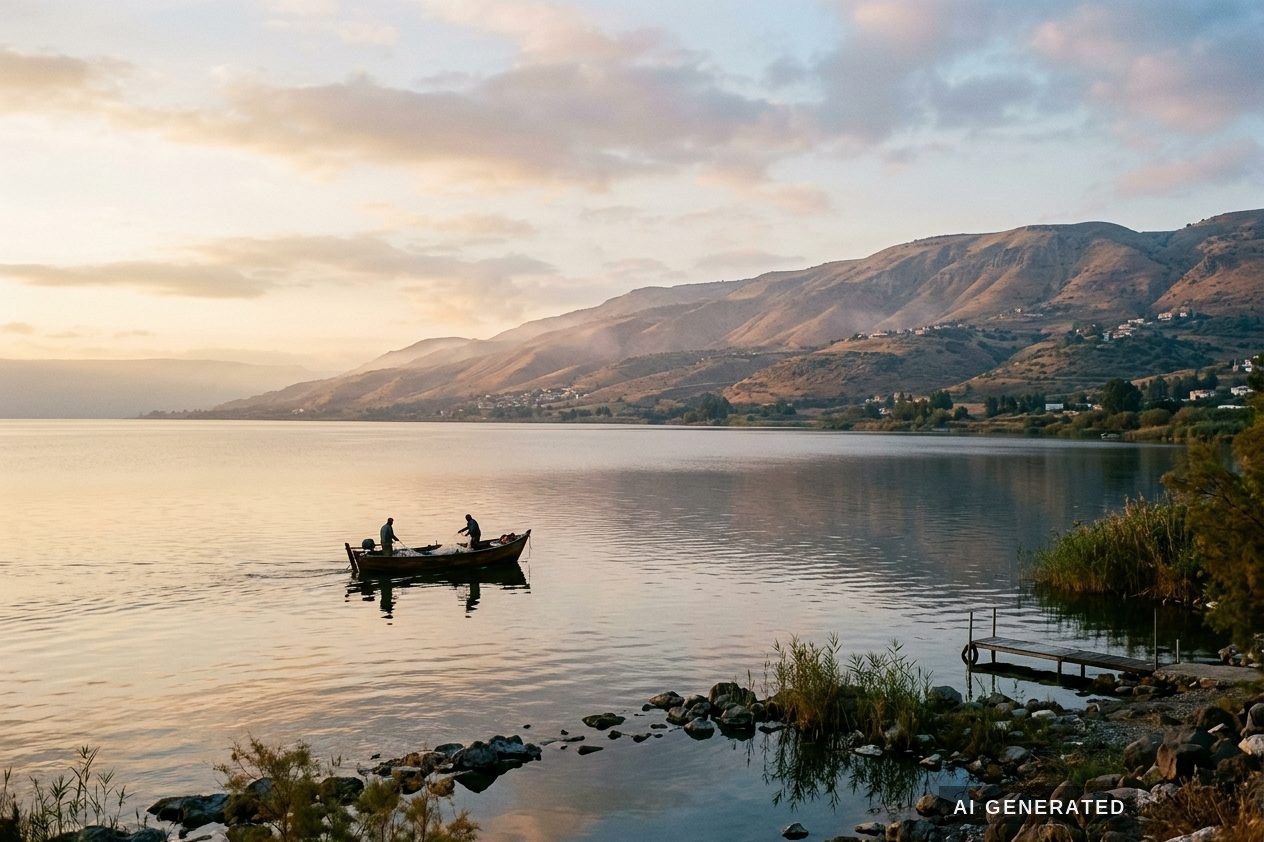
A large freshwater lake, 210 metres below sea level, where Jesus did most of his teaching and healing.