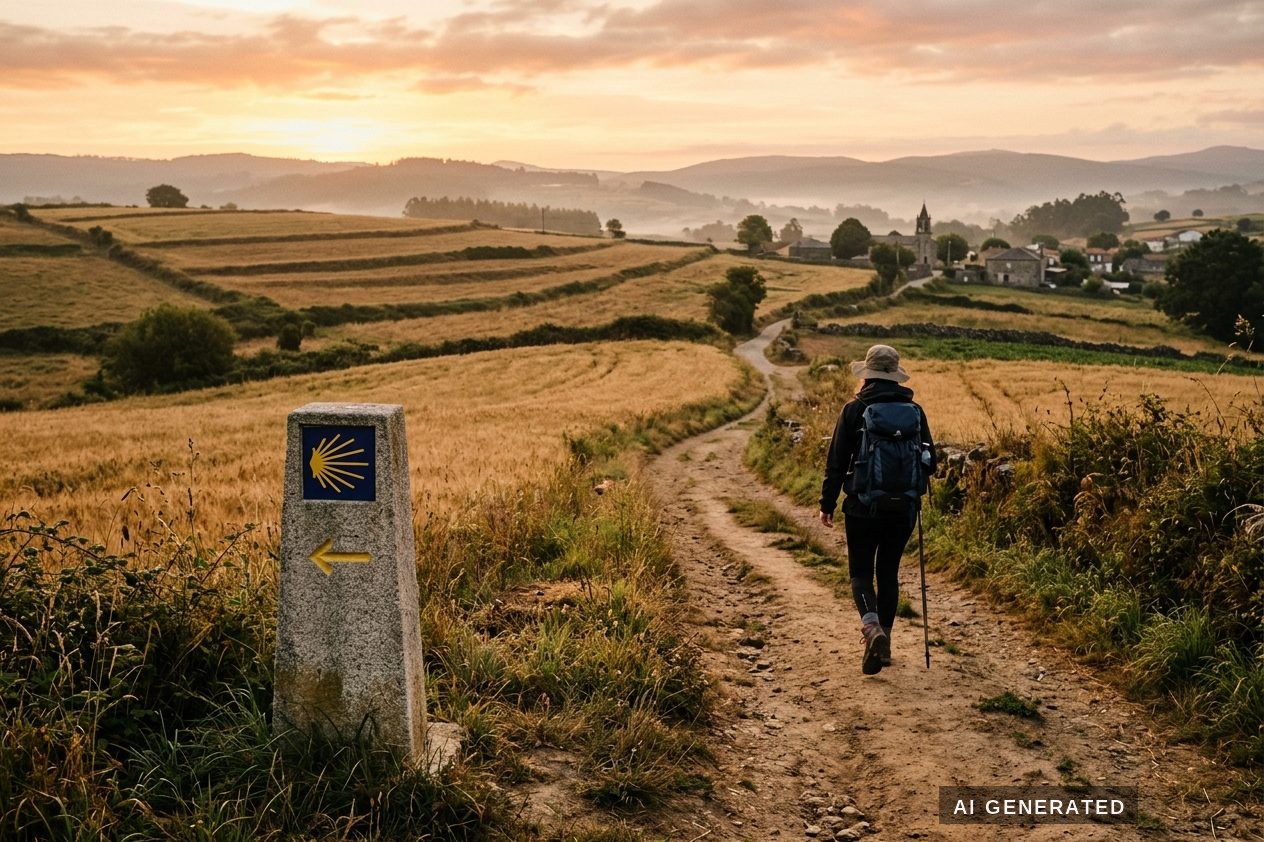
Santiago de Compostela, Spain
Camino de Santiago
A walking route of about 800 km across northern Spain to the tomb of Saint James. People have walked it for over 1,000 years.
Biblical significance
The Camino is Europe's oldest pilgrimage route that people have never stopped walking. Many paths join together and lead to the tomb of St James in Santiago de Compostela. Over 400,000 people walk at least the last part every year — some deeply religious, some not religious at all.
The reason it is worth doing is the rhythm of it: weeks of walking, cheap pilgrim hostels, the same friendly faces every evening, and old stone churches every few kilometres along the way.
The Camino Francés runs from Saint-Jean-Pied-de-Port over the Pyrenees and across Navarre, La Rioja, the Meseta and Galicia to the cathedral of Santiago de Compostela, where tradition places the apostle's remains. Over 400,000 people complete a Camino each year. Carry a credencial, collect stamps, walk the last 100 kilometres, and the Pilgrim's Office issues the Compostela in Latin.
Scripture
Loading the passage…
Open in YouVersion →Loading the passage…
Open in YouVersion →Excerpts from the World English Bible. Full text opens in the YouVersion Bible app.
History
The story of Camino de Santiago
The tomb, 9th century
Around 820 a hermit reported lights over a Roman-era burial site in Galicia; the local bishop identified it as the grave of the apostle James. The claim that James preached in Spain is medieval tradition, not documented history, but the shrine that grew around it reshaped Europe.
The medieval boom
By the twelfth century Santiago rivalled Rome and Jerusalem. The Codex Calixtinus of about 1140 includes what is effectively the first guidebook, listing stages, water sources and the character of the locals.
Decline and revival
War, plague and the Reformation emptied the roads; by the 1980s only a few hundred pilgrims a year arrived. Waymarking with yellow arrows from 1984, UNESCO listing and a series of Holy Years turned that around completely.
The routes
The Camino Francés from Saint-Jean-Pied-de-Port (about 780 km) remains the classic. The Portugués, Norte, Primitivo, Inglés and Vía de la Plata each have their own character, crowds and difficulty.
On the ground
What you can see today
The Camino Francés stages
The Pyrenees crossing to Roncesvalles, the Navarrese vineyards, the flat and demanding Meseta, the climb to the Cruz de Ferro, and the green hills of Galicia.
Cathedral towns
Pamplona, Burgos and León on the French route alone, each with a cathedral worth a rest day.
Albergues
Municipal, parish and private pilgrim hostels — bunk rooms, shared kitchens and communal dinners, open only to those carrying a credencial.
Arrival in Santiago
The Praza do Obradoiro, the Pórtico da Gloria, the pilgrim Mass, and the Botafumeiro censer when it is swung.
Finisterre
Three further days west to the Atlantic cape that many pilgrims add as a coda.
The visit
What to expect when you arrive
- Time needed
- About 5 weeks for the full Francés; 5–7 days from Sarria
- Daily distance
- 20–30 km, roughly 5–8 hours of walking
- Terrain
- Farm tracks, forest paths, some road walking; steep in the Pyrenees and Galicia
- Minimum for the Compostela
- The last 100 km on foot or 200 km by bicycle
- Crowds
- Very busy June–September, especially Sarria to Santiago
- Weather
- Meseta heat in summer, Galician rain in any month
Practicalities
Step by step: how to get there
- 1
To the classic start
Saint-Jean-Pied-de-Port is reached by train from Bayonne, itself linked to Paris by TGV and to Biarritz airport by bus.
- 2
Shorter starts
León and Ponferrada have good rail connections; Sarria, the usual 100 km start, is reached by train or bus via Lugo or Monforte.
- 3
Flying in and out
Santiago de Compostela airport connects to Madrid, Barcelona and several European cities, with buses into the city in about 30 minutes.
- 4
Getting home
Most pilgrims fly out of Santiago or take the train south to Vigo and Porto; luggage-transfer companies operate along all the main routes.
Checklist
Before you go
- Get a credencial (pilgrim passport) before you start — from a confraternity at home or the first albergue — and collect two stamps a day over the last 100 km.
- Book nothing on the quiet routes; book ahead in July and August on the Francés.
- Broken-in shoes matter more than anything else you pack; aim for under 10 % of body weight.
- Carry a sleeping-bag liner, earplugs, blister kit and a light rain shell year-round.
- Cash for small albergues and village bars; cards are patchy off the main route.
- Many pharmacies along the way handle pilgrim foot problems as routine.
- Bring your EHIC/GHIC or travel insurance, and know that many albergues close in winter.
Etiquette
Visiting respectfully
- Albergues have lights-out and quiet hours, usually 22:00 to 06:00 — pack your bag the night before if you leave early.
- Bunks are for walkers and cyclists with a credencial, not for car-based travellers.
- Give way and greet — 'Buen Camino' is the standard exchange, and it costs nothing.
- Leave donations at donativo hostels even when no amount is asked.
- The cathedral pilgrim Mass is a liturgy, not a show; no flash and no talking during it.
Best time to go
May-June and September; July-August is hot and crowded.
Visitor notes
Albergues cost 8-15 EUR a night. Book nothing on the Francés outside peak season; book everything in August.
Coordinates
42.8806, -8.5446
On the map
Open the world atlasKeep going
Continue the trail
- Cathedral of Santiago de CompostelaSantiago de Compostela, SpainThe tomb the whole route leads to.
- Via FrancigenaRome, ItalyThe other great medieval road, running to Rome.
- St Olav's WayTrondheim, NorwayThe northern equivalent, ending at Nidaros.
- Chartres CathedralChartres, FranceA classic stop for pilgrims travelling south through France.
Find it on Google Maps
Camino de Santiago on the map
Open directionsPlan your pilgrimage
Getting to Camino de Santiago
Everything you need to turn this holy place into a journey. We may earn a commission from these partner links, at no extra cost to you.
Share your experience
Have you been here?
Rate this place and share your experience with other Christrails travellers.
Rate This Place
Be the first to rate this place
Visitor Experiences
No visitor experiences yet. Be the first to share yours.
Share this page
Nearby in this category
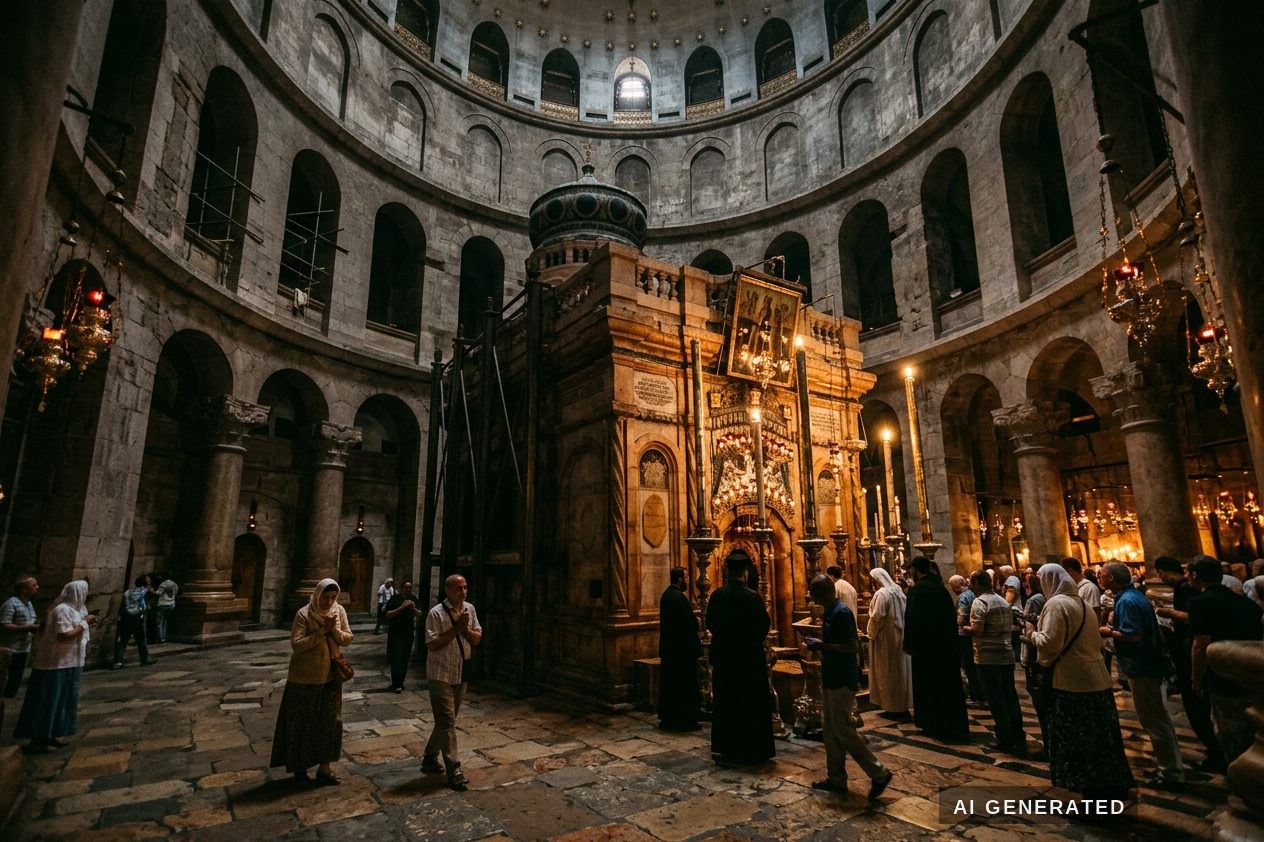 5/5 Significance
Jerusalem, Israel
Church of the Holy Sepulchre
The church built where Christians believe Jesus was crucified and buried, and where he rose again. Six different churches share the same building.
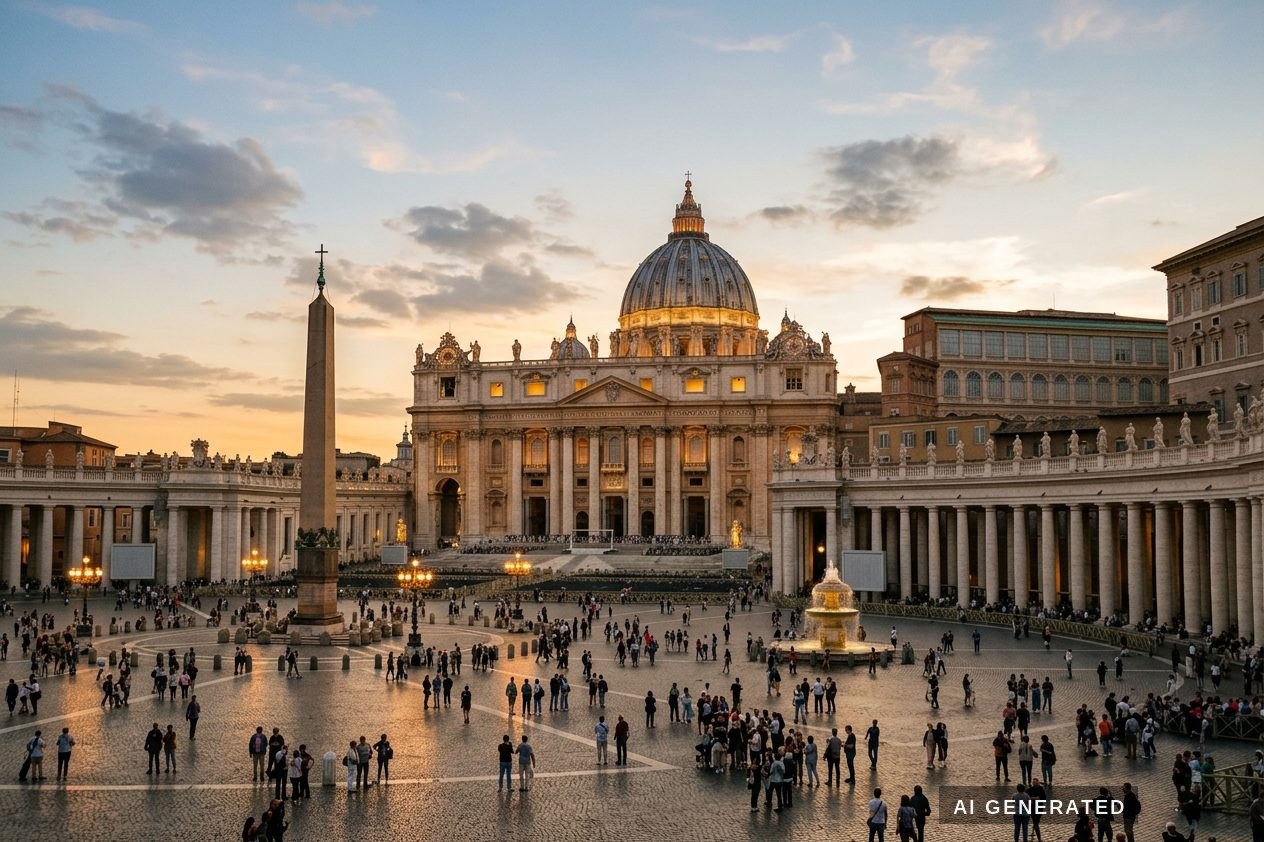 4/5 Significance
Vatican City, Vatican City
St Peter's Basilica
The biggest church ever built, with Michelangelo's dome over the tomb of Peter the fisherman.
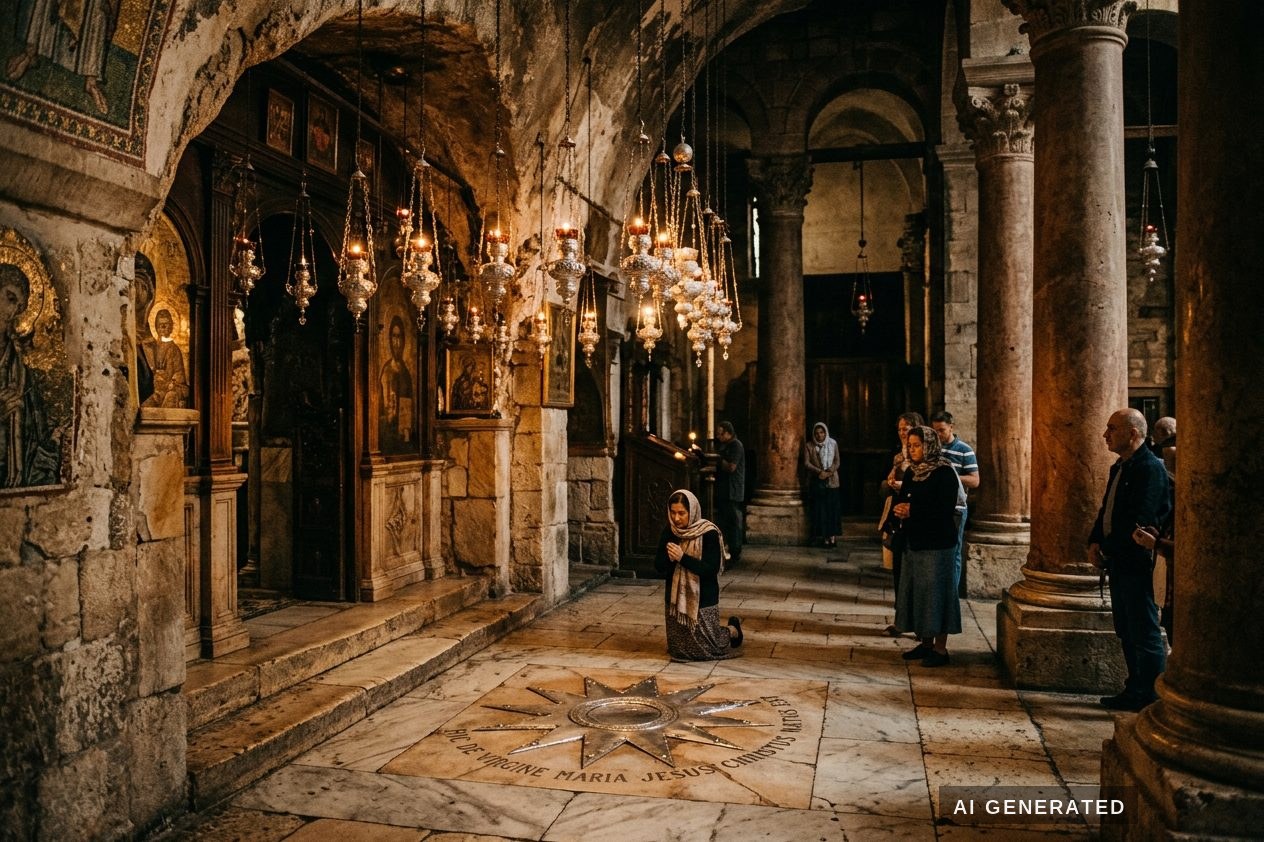 5/5 Significance
Bethlehem, Palestine
Church of the Nativity
The oldest church still used every day. It stands over the cave where Jesus is believed to have been born, marked with a silver star.