Rome, Italy
Via Francigena
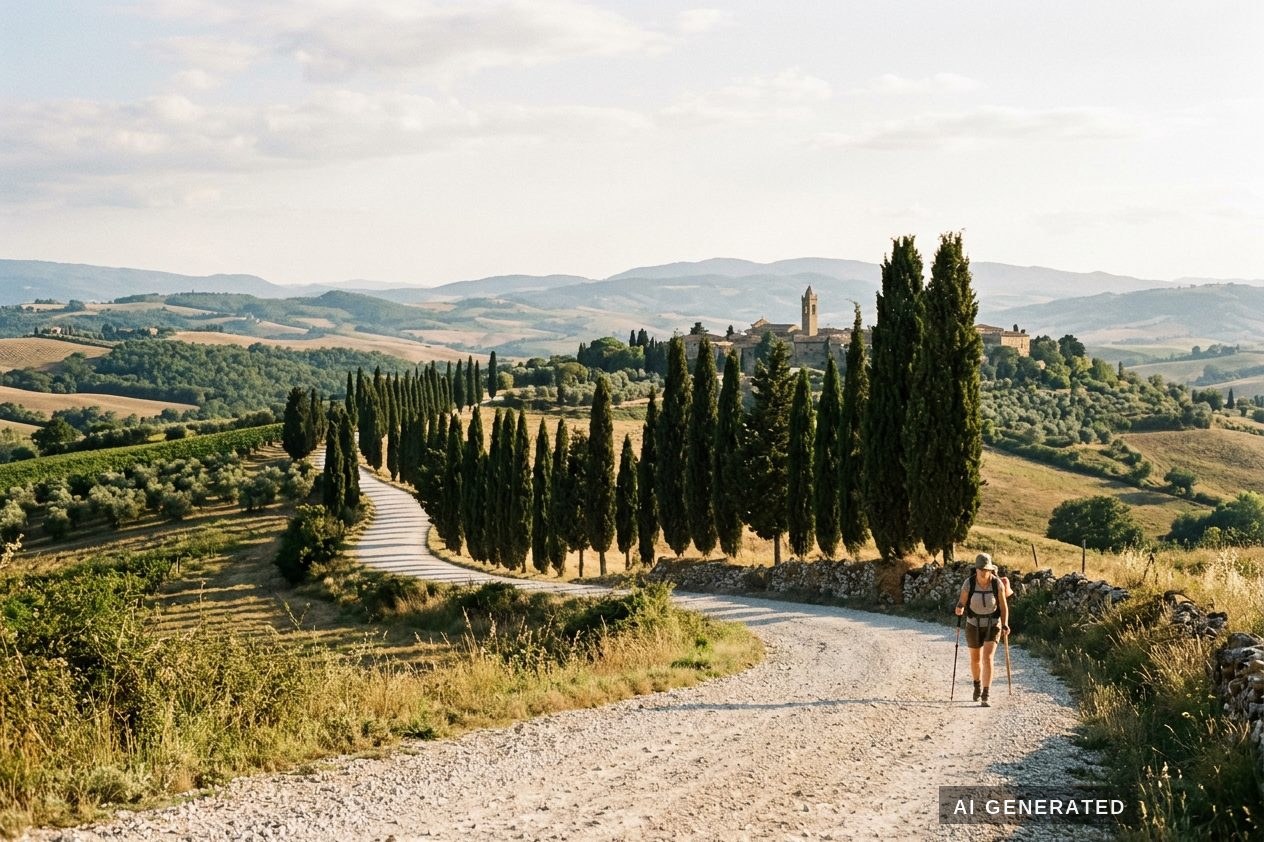
The old walking route from Canterbury to Rome. A traveller wrote down every stop in the year 990, and you can still follow it.
Biblical significance
Two thousand kilometres from Canterbury through France and Switzerland over the Great St Bernard Pass and down the spine of Italy to St Peter's. The Tuscan section through San Gimignano, Monteriggioni and Siena is the most walked. Sigeric's list of 79 overnight stops, recorded on his return from receiving the pallium, is the oldest surviving guide to the route.
Scripture
Loading the passage…
Open in YouVersion →Loading the passage…
Open in YouVersion →Excerpts from the World English Bible. Full text opens in the YouVersion Bible app.
Best time to go
April-June and September-October.
Visitor notes
Waymarked with pilgrim symbols. The Tuscan stretch has the best infrastructure; France requires more planning.
Coordinates
41.9022, 12.4539
On the map
Open the world atlasFind it on Google Maps
Via Francigena on the map
Open directionsPlan your pilgrimage
Getting to Via Francigena
Everything you need to turn this holy place into a journey. We may earn a commission from these partner links, at no extra cost to you.
Share your experience
Have you been here?
Rate this place and share your experience with other Christrails travellers.
Rate This Place
Be the first to rate this place
Visitor Experiences
No visitor experiences yet. Be the first to share yours.
Share this page
Nearby in this category
 5/5 Significance
Jerusalem, Israel
Church of the Holy Sepulchre
The church built where Christians believe Jesus was crucified and buried, and where he rose again. Six different churches share the same building.
 5/5 Significance
Bethlehem, Palestine
Church of the Nativity
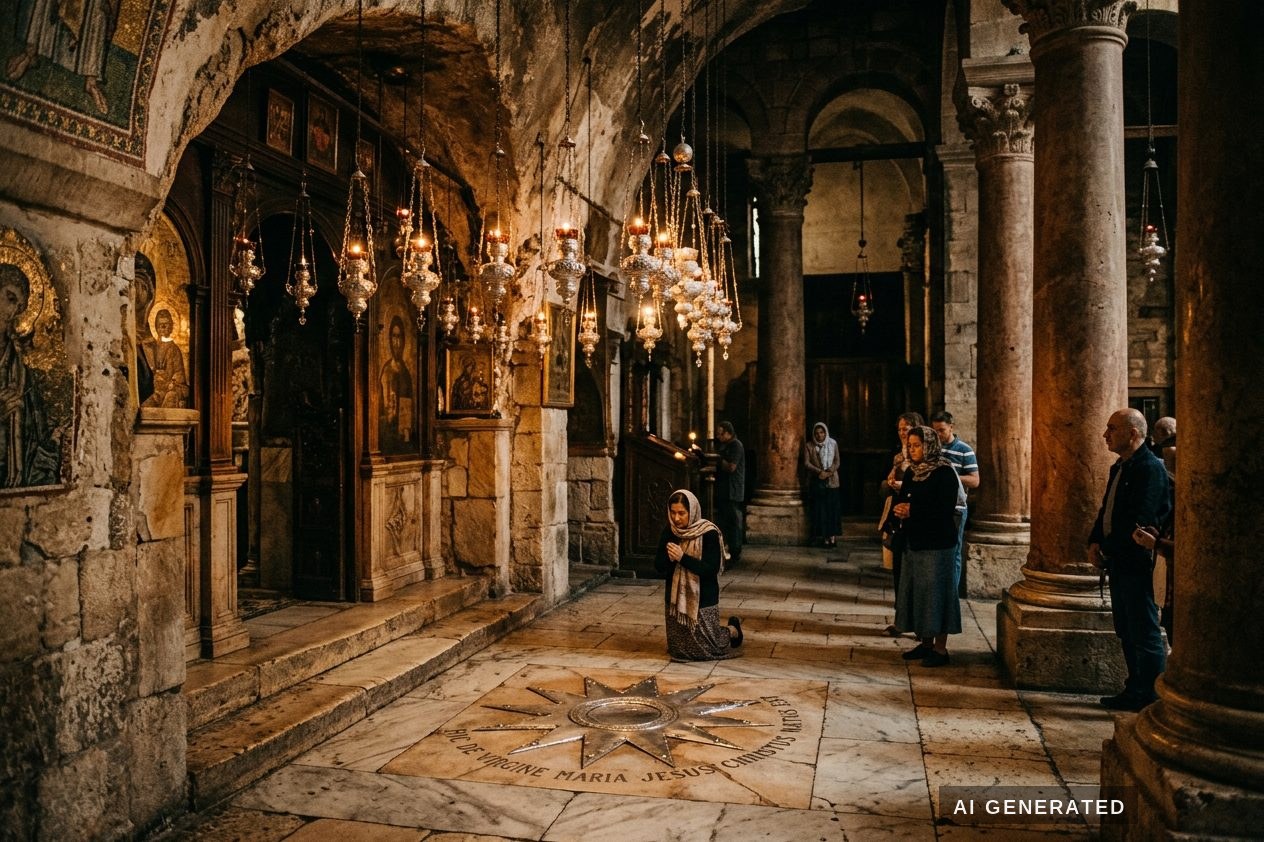
The oldest church still used every day. It stands over the cave where Jesus is believed to have been born, marked with a silver star.
 4/5 Significance
Santiago de Compostela, Spain
Camino de Santiago
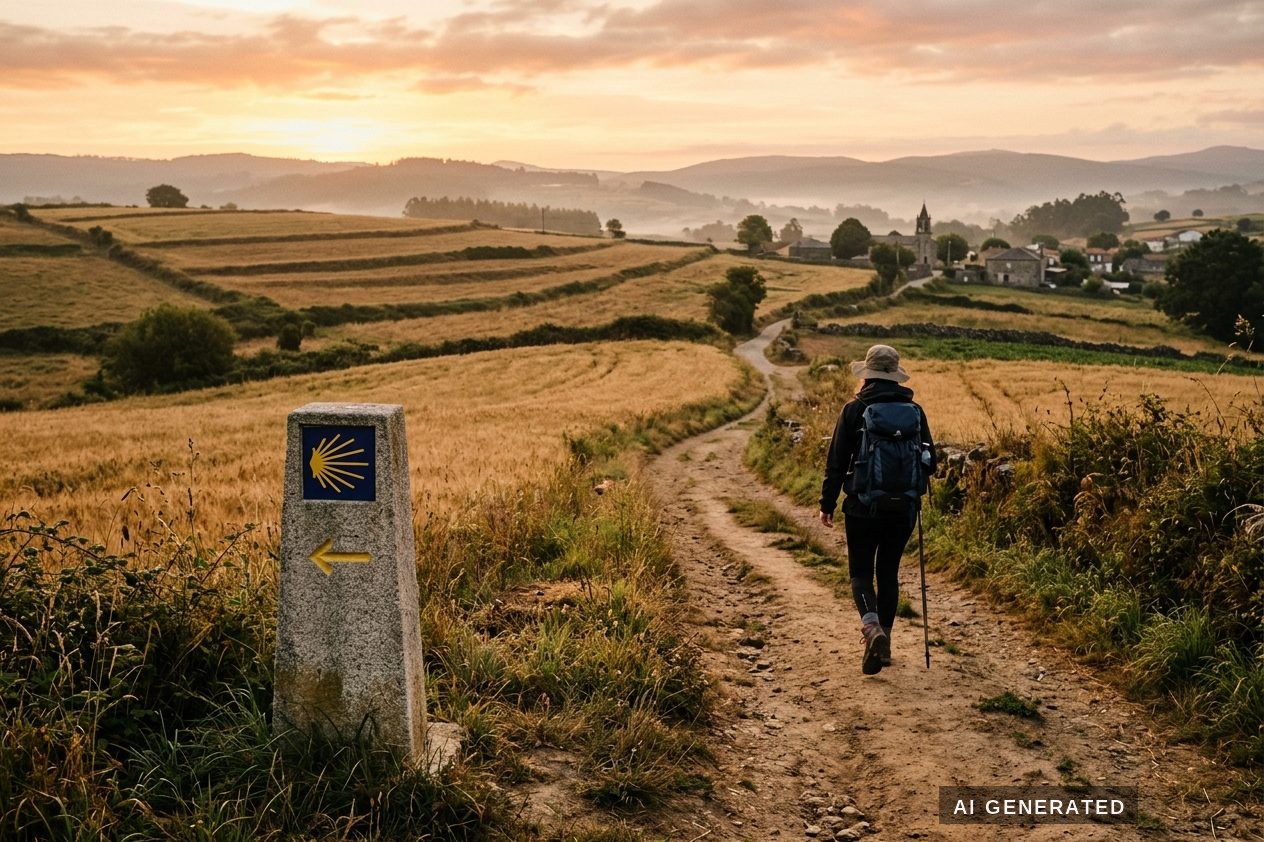
A walking route of about 800 km across northern Spain to the tomb of Saint James. People have walked it for over 1,000 years.