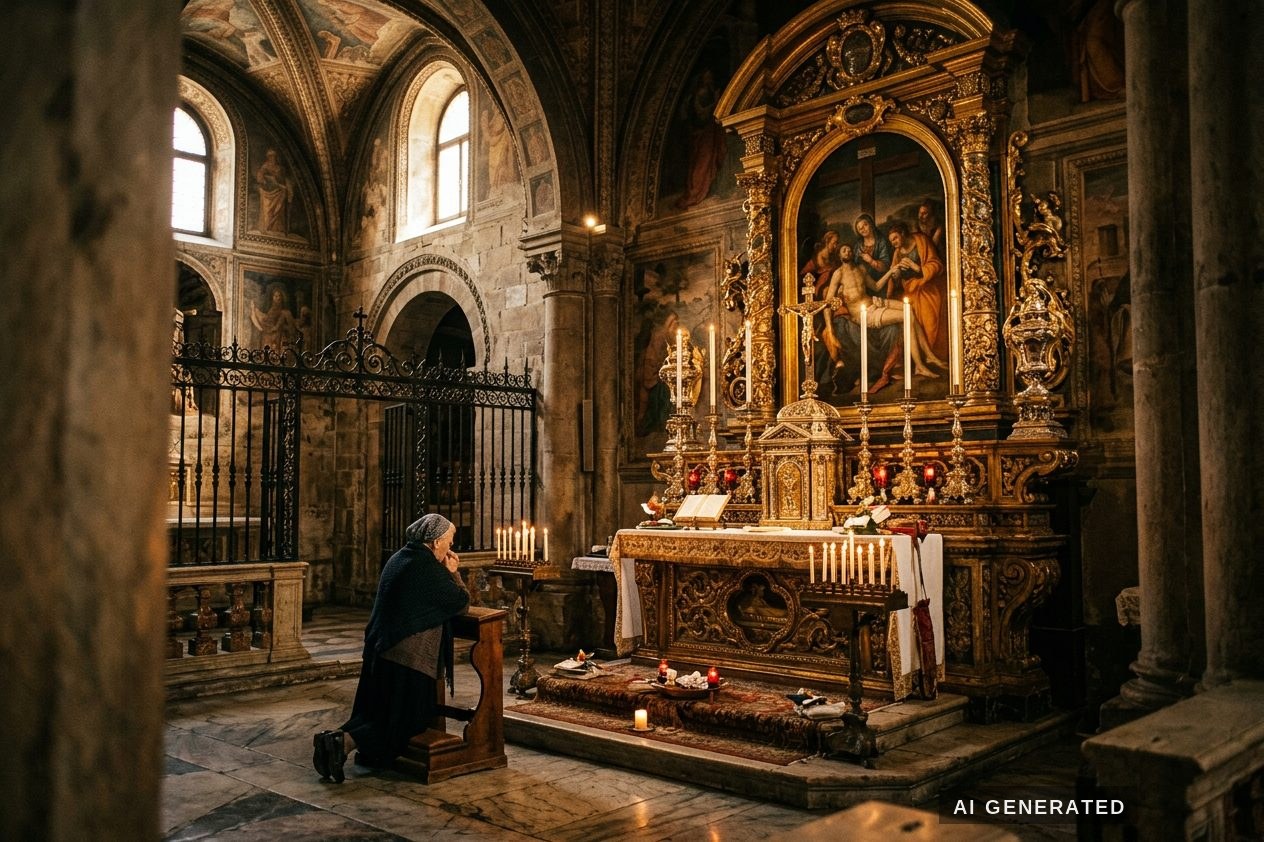
Turin, Italy
Turin Cathedral and the Shroud
A 4.4-metre linen cloth with the faint image of a crucified man. It is the most studied object in the world.
Biblical significance
The Shroud has been in Turin since 1578. Radiocarbon dating in 1988 gave a medieval range of 1260-1390; critics contest the sample site, and no one has convincingly reproduced the image by any medieval technique. The Church makes no ruling on authenticity and commends it as an icon of the Passion. It is kept sealed in an inert-gas case and shown publicly only rarely.
Scripture
Loading the passage…
Open in YouVersion →Loading the passage…
Open in YouVersion →Excerpts from the World English Bible. Full text opens in the YouVersion Bible app.
Best time to go
Only during a public ostension — the last was 2015; there is no fixed schedule.
Visitor notes
The cathedral is open year-round; a full-size photographic replica is displayed between ostensions.
Coordinates
45.0733, 7.6857
On the map
Open the world atlasFind it on Google Maps
Turin Cathedral and the Shroud on the map
Open directionsPlan your pilgrimage
Getting to Turin Cathedral and the Shroud
Everything you need to turn this holy place into a journey. We may earn a commission from these partner links, at no extra cost to you.
Share your experience
Have you been here?
Rate this place and share your experience with other Christrails travellers.
Rate This Place
Be the first to rate this place
Visitor Experiences
No visitor experiences yet. Be the first to share yours.
Share this page
Nearby in this category
 5/5 Significance
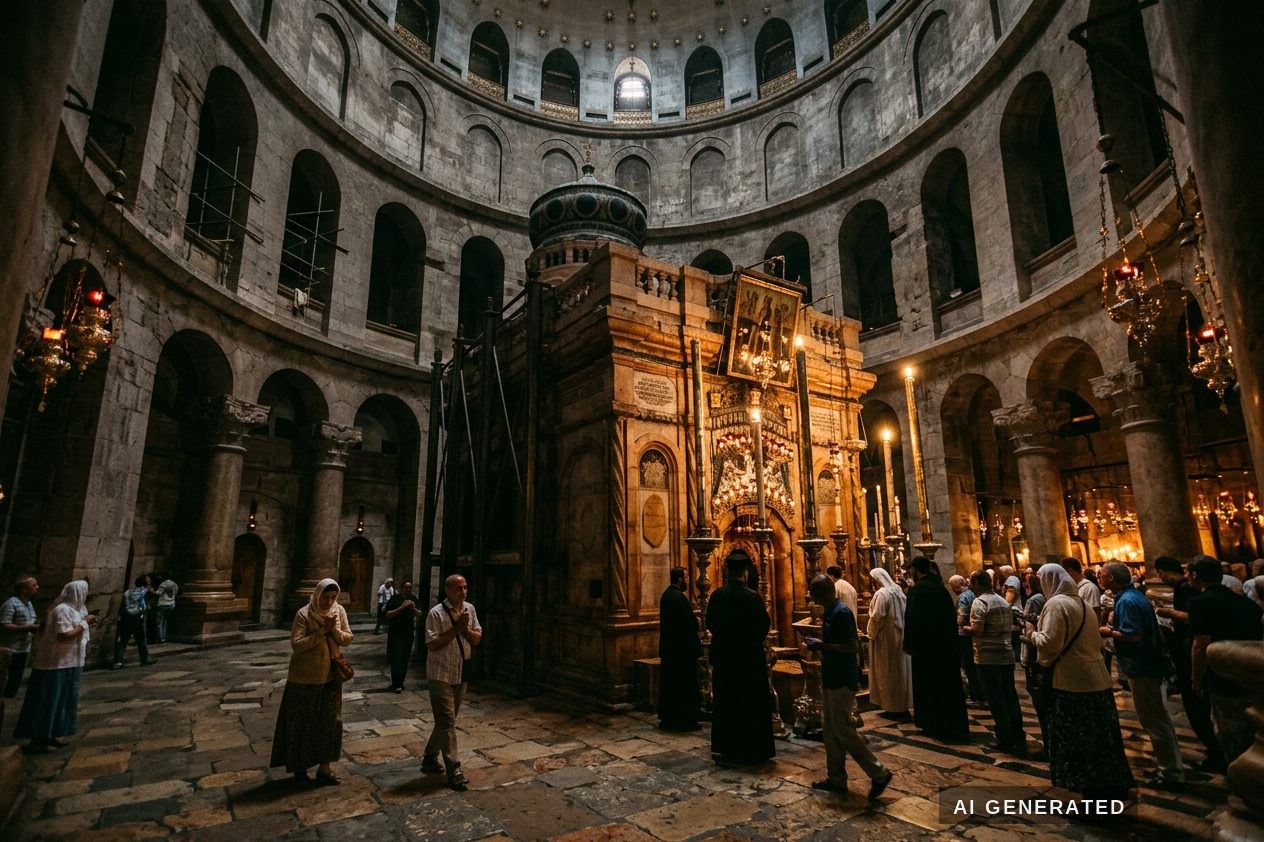
Jerusalem, Israel
Church of the Holy Sepulchre
The church built where Christians believe Jesus was crucified and buried, and where he rose again. Six different churches share the same building.
 4/5 Significance
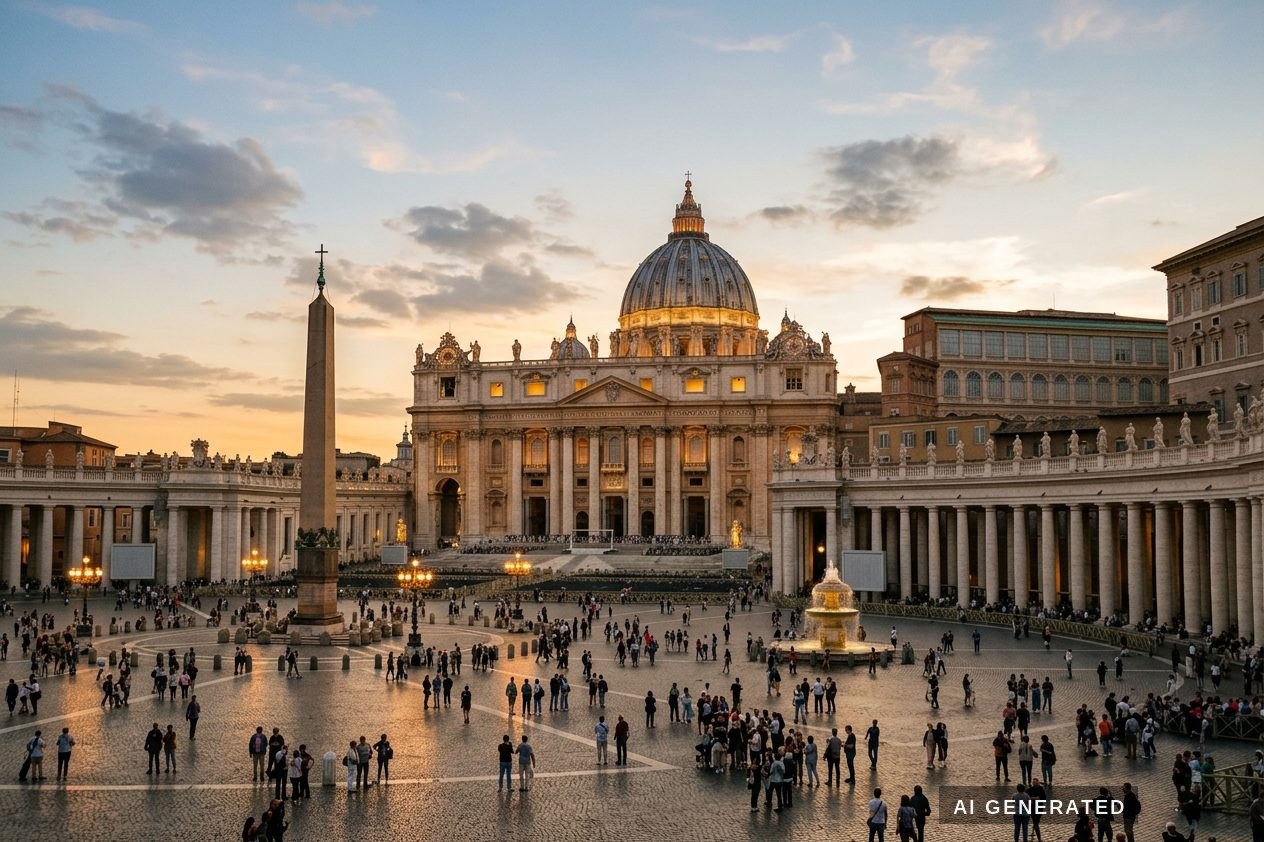
Vatican City, Vatican City
St Peter's Basilica
The biggest church ever built, with Michelangelo's dome over the tomb of Peter the fisherman.
 4/5 Significance
Santiago de Compostela, Spain
Camino de Santiago
A walking route of about 800 km across northern Spain to the tomb of Saint James. People have walked it for over 1,000 years.